The Veteran by Marie-François Firmin-Girard (French, 1838–1921)
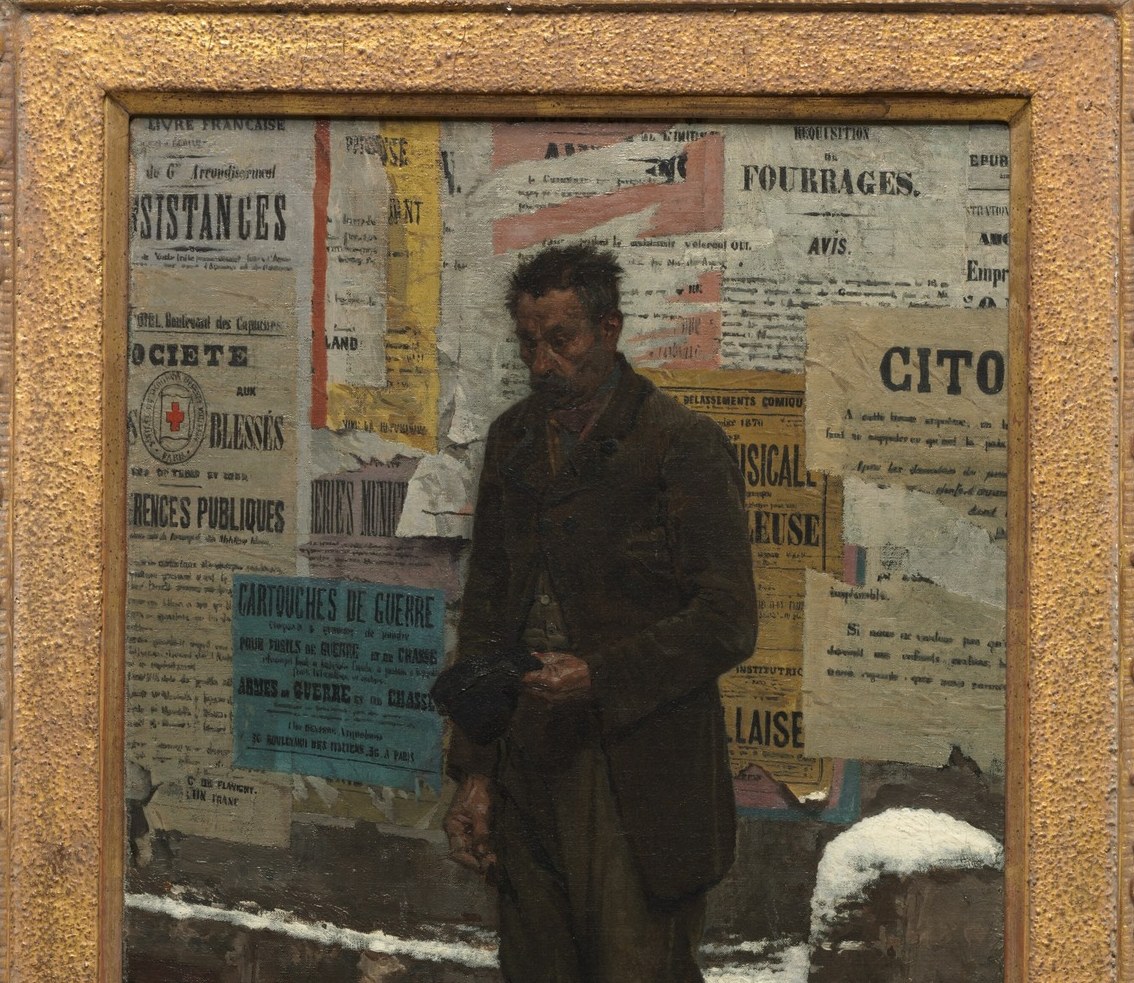
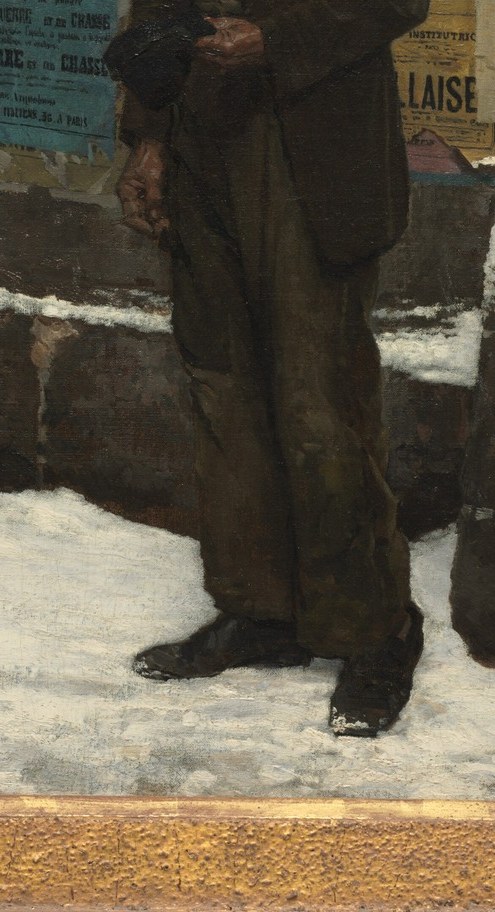
Marie-François Firmin-Girard’s 'The Veteran,' painted in 1870 and held at The Cleveland Museum of Art, captures a solitary figure on a snow-covered street corner, reflecting on the harsh realities of post-war life. The painting's deeper meaning lies in the subtle but significant details found on the wall behind him.
Look closely at the faded posters for 'ASSISTANCE' and 'SUPPLIES,' hinting at the social conditions and potential needs of returning soldiers. The man's weary expression and humble posture, holding his hat, invite contemplation of his past.
Created shortly after the Franco-Prussian War, this work speaks to contemporary concerns about veterans returning to civilian life. The explicit mention of 'CARTOUCHES DE GUERRE' (war cartridges) on one of the posters directly reinforces the painting's title and the subject's military background.
What other subtle details do you notice that add to the painting's poignant narrative?
Details
Transcript
This painting is called 'The Veteran,' from 1870. He stands alone on a cold, snow-covered street corner. But the details on the wall behind him tell a wider story. Look closely at the faded notices for 'ASSISTANCE' and 'SUPPLIES'. He holds his hat, his face showing quiet resignation or deep thought. The words 'CARTOUCHES DE GUERRE' confirm the artist's meaning.