Christ and the Adulteress by Lucas Cranach the Younger
View the artwork: Christ and the Adulteress →
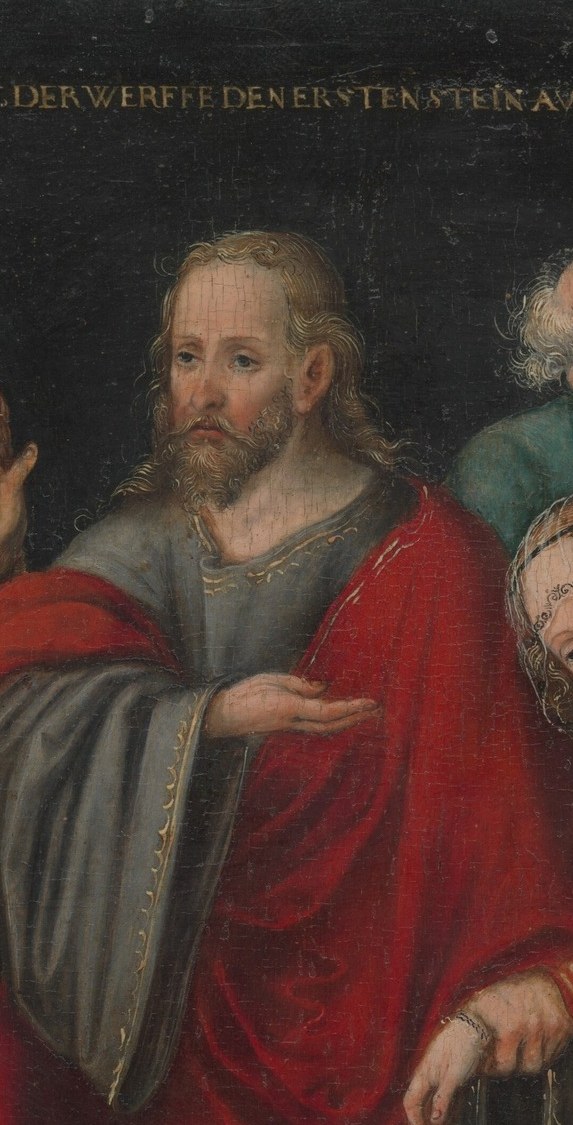
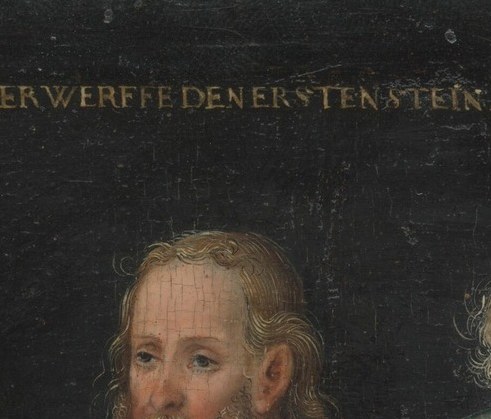
This is Lucas Cranach the Younger's Christ and the Adulteress, painted around 1550 during the height of the Lutheran Reformation. Cranach the Younger, son of the famous court painter to the Electors of Saxony, inherited not just his father's workshop but his role as the chief visual propagandist for the new Protestant faith. In Wittenberg, paintings replaced the didactic role of the pulpit for a largely illiterate congregation, encoding theology into visible objects anyone could read.
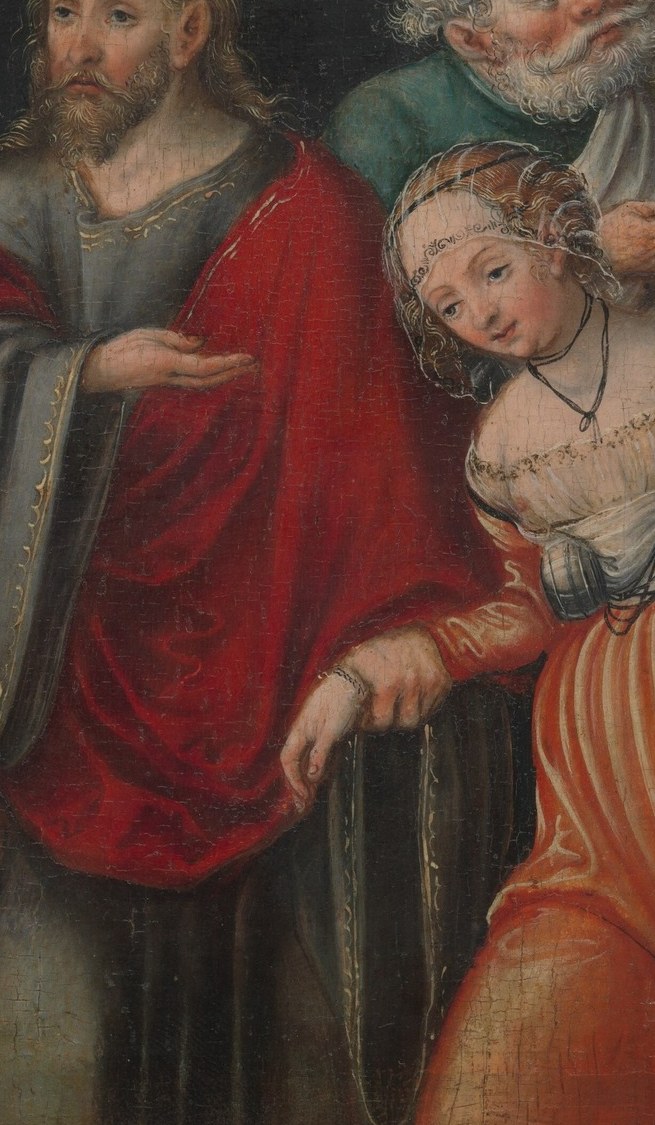
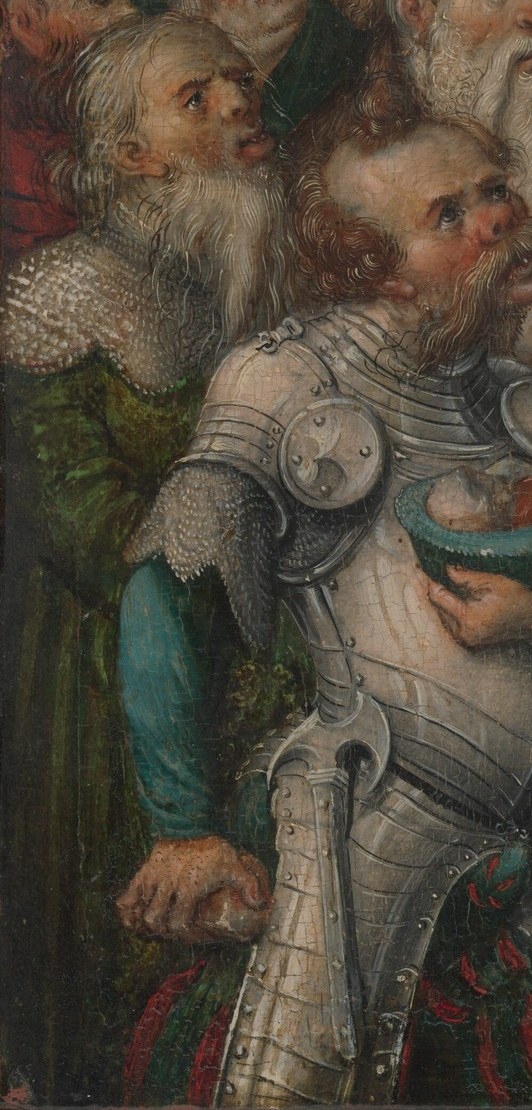
Look at the woman's vivid red dress: in Cranach's symbolic language, red was not merely decorative, it signified carnality, sensuality, and the stain of sin. Her hands, clasped tightly at her waist, speak the Lutheran doctrine of sola fide: faith alone, expressed through penitence rather than works. Meanwhile, the sword hanging at the soldier's hip remains sheathed, the old Mosaic law demanded her execution by stoning, but the weapon's stillness signals its suspension. Christ's raised hand halts both the crowd and the old covenant's violence.
Lucas Cranach the Younger ran one of the most prolific workshops in 16th-century Germany from Wittenberg, turning out hundreds of paintings, altarpieces, and portraits. He also served as mayor of Wittenberg for nearly two decades. This panel comes from late in his career, when the Cranach workshop had fully codified a visual vocabulary for Lutheran moral instruction, a system where a dress color, a hand gesture, and an undrawn sword together preached a complete sermon.
Next time you see a Renaissance biblical scene, ask what the objects are doing beyond the story itself. The code is almost always there.
#arthistory #renaissance #lutheranart
Details
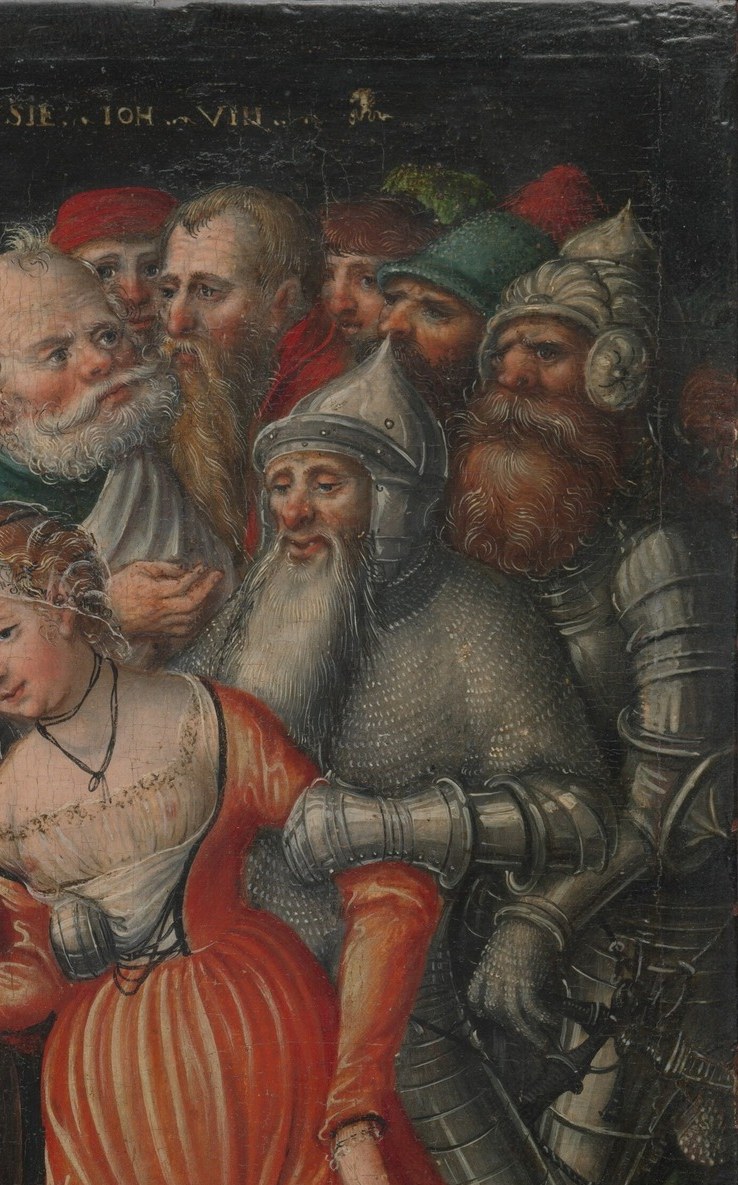
Transcript
This is not just a biblical scene. In 1550, every object here preached a sermon. Her red dress: not fashion, but a code. Red meant sin, danger, and the flesh in Lutheran Germany. Now look at her clasped hands. Hands folded together were the sign of penitence and faith alone. The sword at the soldier's hip is not drawn. It signals that the old law's violence is stayed, by mercy.