Artwork
Christ and the Adulteress
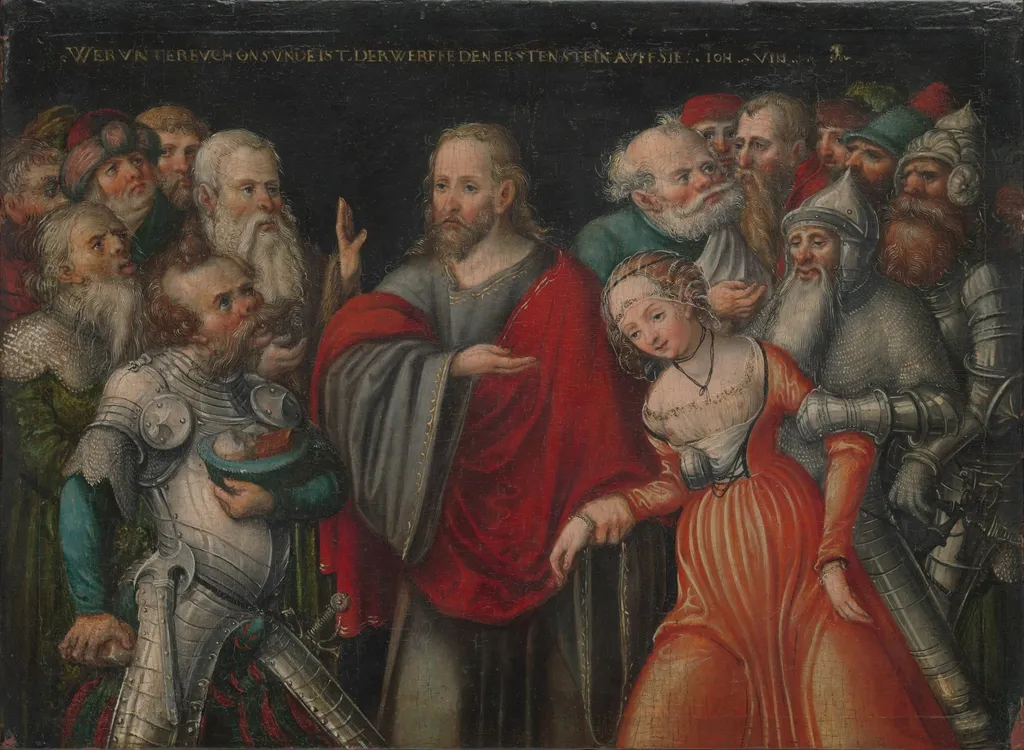
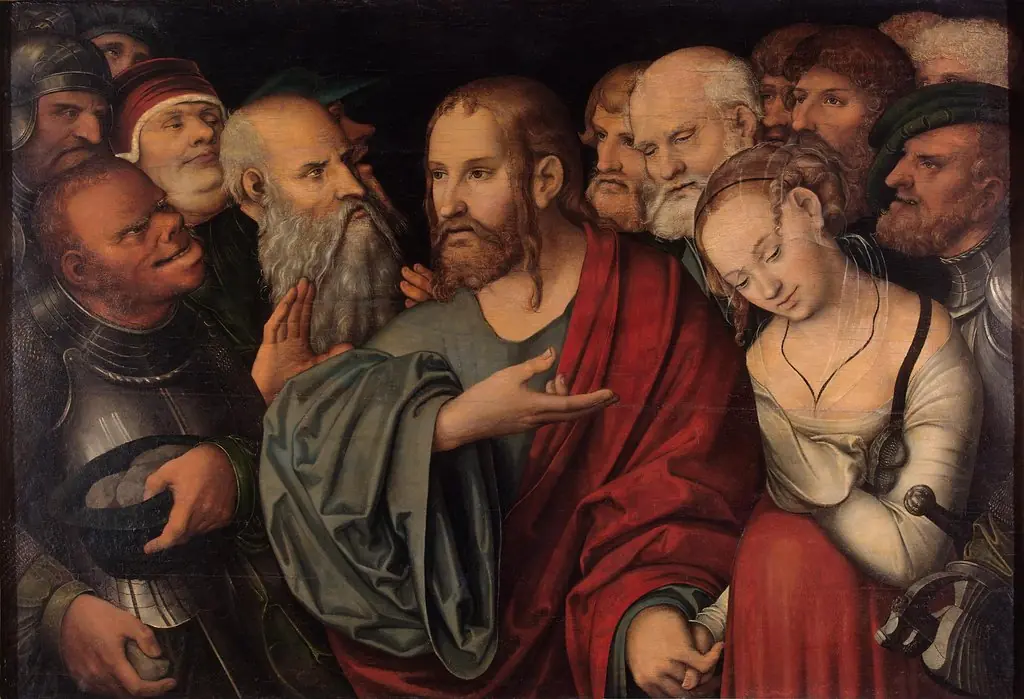
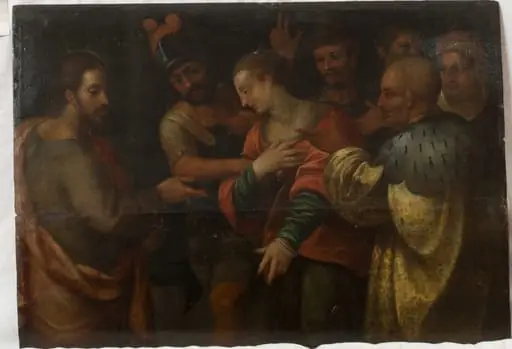
Christ and the Adulteress is a paint painting by the Northern Renaissance artist Lucas Cranach the Younger. It dates from 1550 and is held in the collection of the Metropolitan Museum of Art.
About this work
A crowd presses around Christ in a red robe, who reaches toward a woman touching his arm. Armored men with swords and hard faces fill the scene, the dark background pushing the figures forward. She clasps her hands like a plea while he stays calm. Lucas Cranach the Younger, 1550.
Subject & Meaning
The painting shows the biblical episode in which Jesus confronts a woman accused of adultery, a scene drawn from the Gospel of John.
The painting shows the biblical episode in which Jesus confronts a woman accused of adultery, a scene drawn from the Gospel of John. In the composition the central figure of Christ is positioned beside the accused woman, while a soldier and a bystander observe the encounter, emphasizing the tension between judgment and mercy. Cranach’s rendering uses contemporary dress to link the narrative to 16th‑century viewers, and the inclusion of armor and a sword underscores the legal and martial context of the law being invoked.
The work therefore symbolizes the theological theme of forgiveness over punishment, reflecting Renaissance concerns with personal conscience and divine compassion.
Technique & Style
Created in 1550, this religious painting is executed in paint on a beech wood panel. The work, attributed to Lucas Cranach the Younger and his workshop, measures 15.9 by 21.6 centimeters. As a panel painting from the mid-sixteenth century, the support consists of solid beech wood, a common material for Northern Renaissance artists of the Cranach circle.
The medium is oil paint applied to this wooden ground, forming a small-scale devotional image. The composition depicts the biblical scene of Jesus and the woman taken in adultery alongside soldiers and other figures, rendered in the characteristic style of the Cranach workshop. The physical dimensions indicate an intimate object intended for private contemplation or domestic display rather than a large public altarpiece.
History & Provenance
Christ and the Adulteress by Lucas Cranach the Younger, dated 1550, is held in the collection of the Metropolitan Museum of Art. The work, painted on a beech wood panel, is catalogued as part of the museum's holdings. No specific accession number or detailed exhibition history is recorded in the available sources.
Overview
This painting, titled Christ and the Adulteress, depicts a pivotal moment from the New Testament. The artist presents a crowded scene centered around the figure of Christ, illustrating a well-known biblical narrative. Through the use of paint, the work captures a dramatic interaction, making the prominent figures stand out against a subdued background.
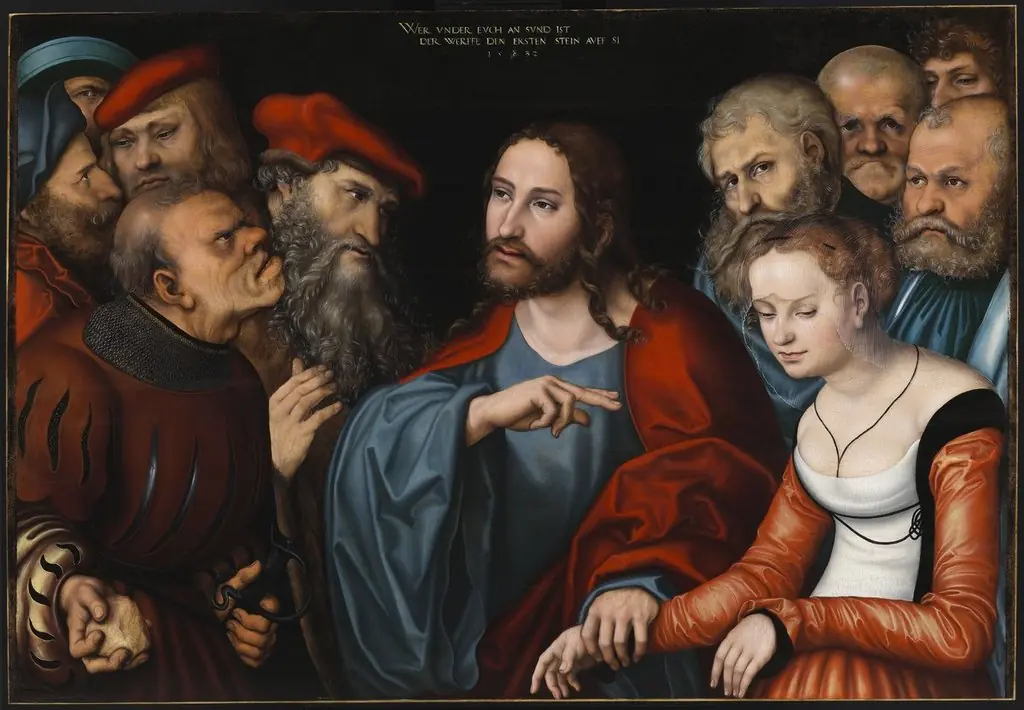
Own this work as a print
Artist & collection
Artist
Lucas Cranach the Younger (German: Lucas Cranach der Jüngere, IPA:; 4 October 1515 – 25 January 1586) was a German Renaissance painter and portraitist, the son of Lucas Cranach the Elder and brother of Hans Cranach.

 Christ and the Woman Taken in Adultery
 Christ and the Woman Taken in Adultery
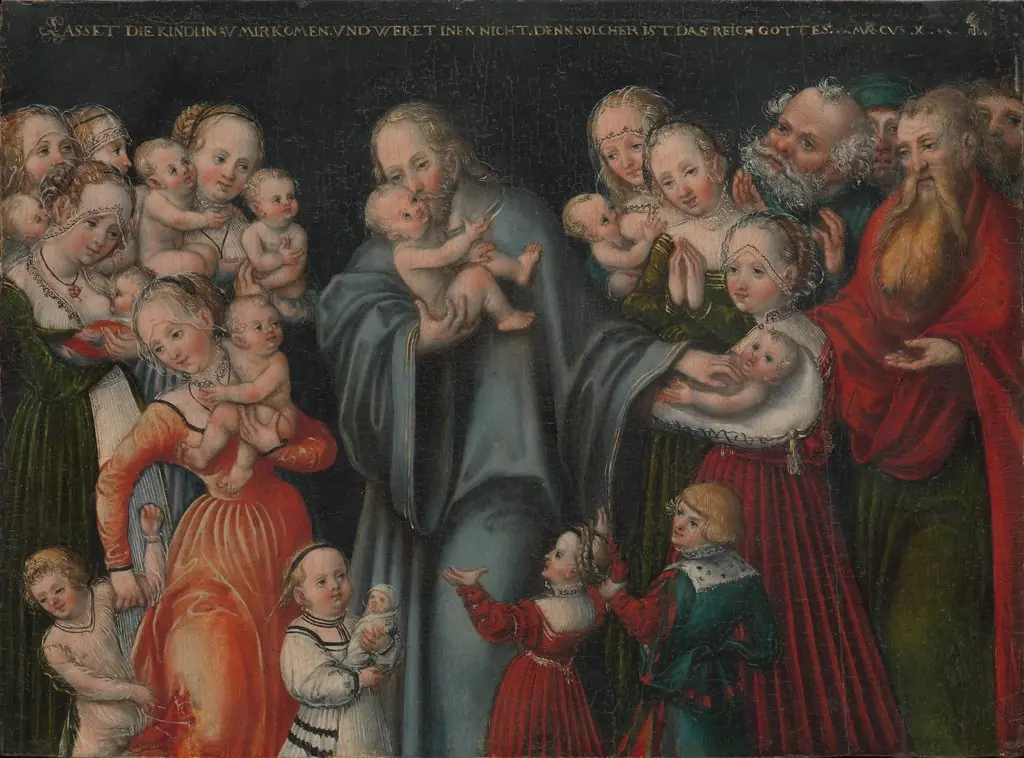
 Christ Blessing the Children
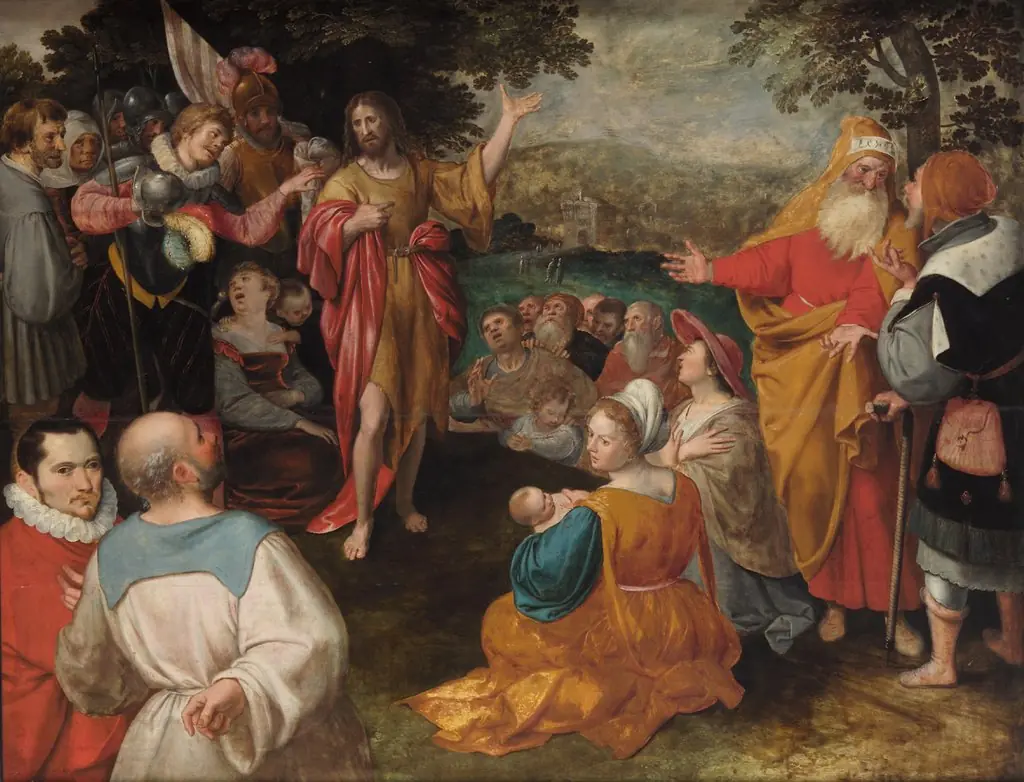 Predigt Johannes d. Täufers
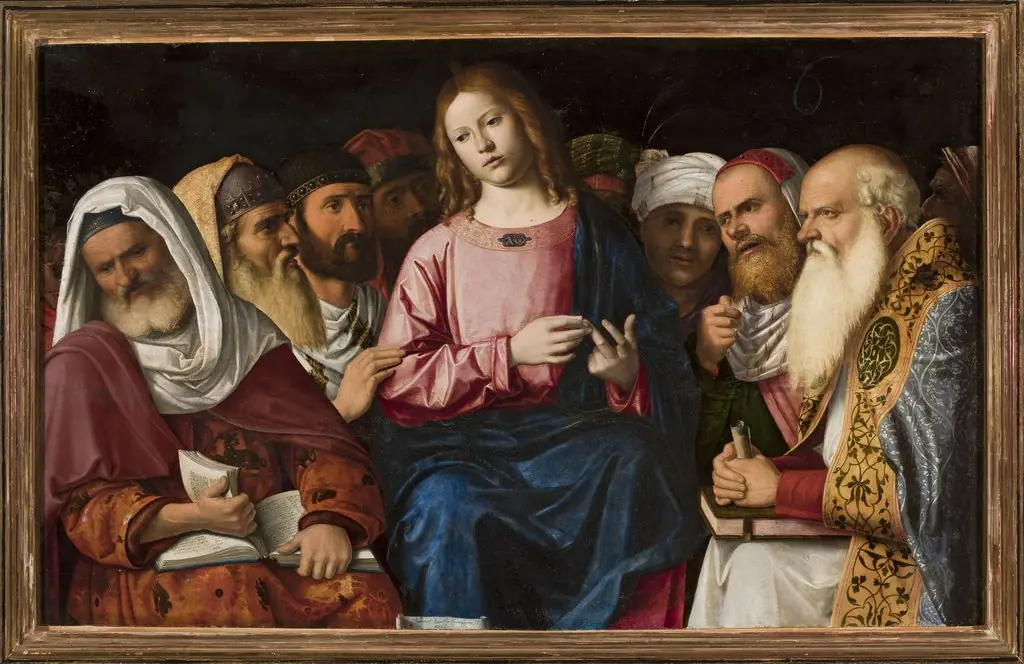 Christ among the Doctors
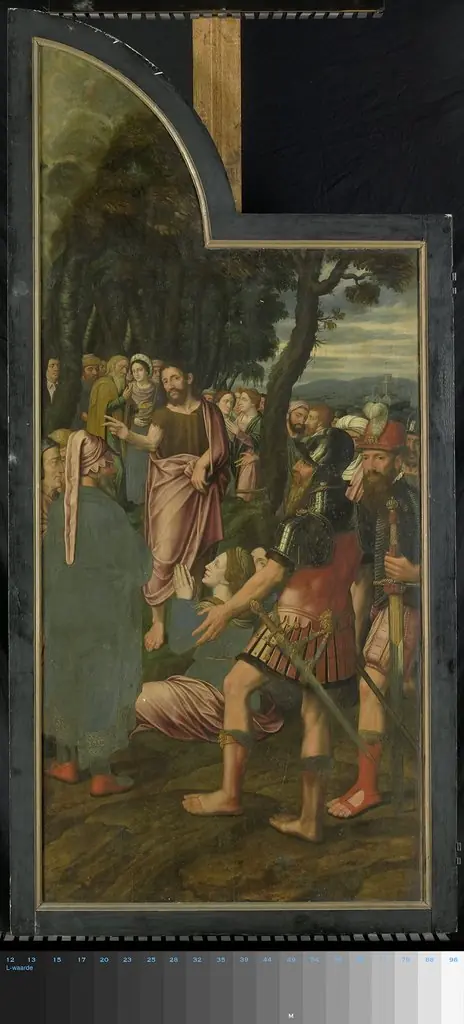 De prediking van Johannes de Doper, linkerpaneel van een drieluik
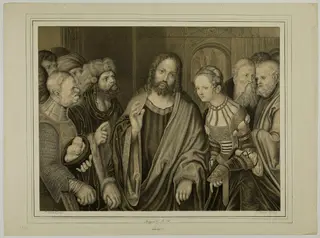 Christus und die Ehebrecherin
 Die Ehebrecherin vor Jesus
 The Raising of Lazarus
 The Raising of Lazarus