Return from the Hunt by Piero di Cosimo by Piero di Cosimo
View the artwork: Return from the Hunt by Piero di Cosimo →
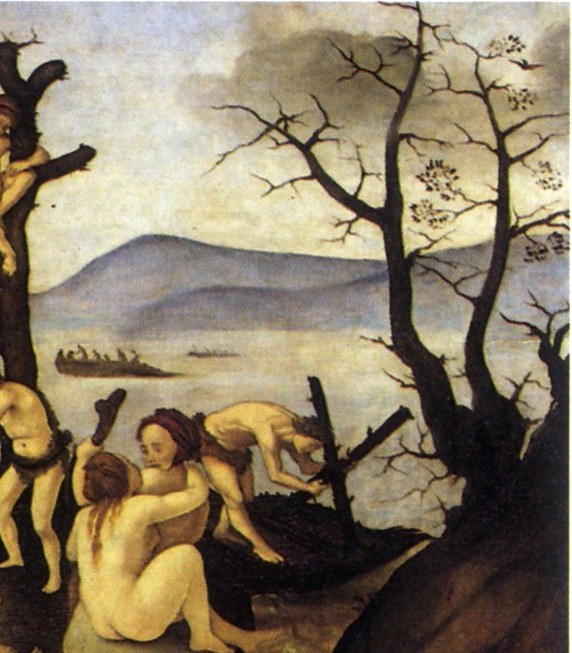
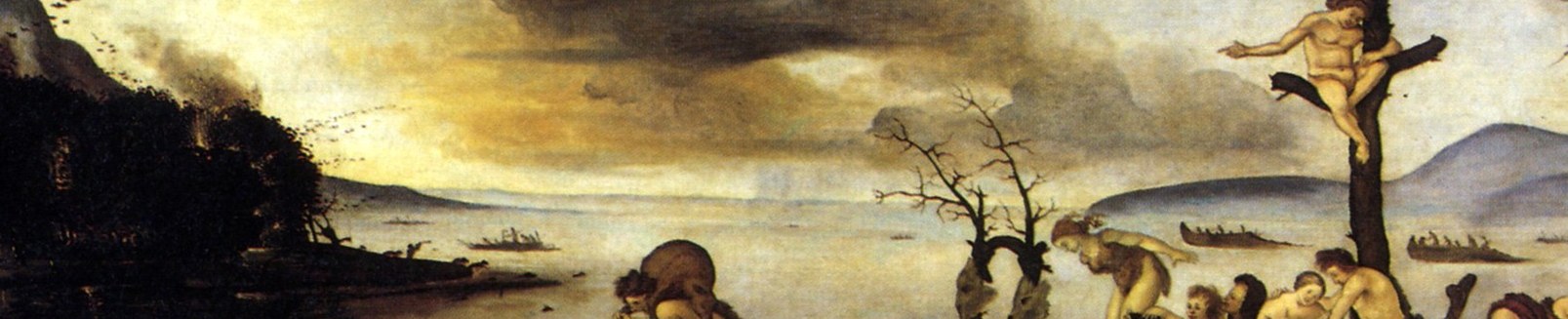
This is Piero di Cosimo's Return from the Hunt, painted around 1500 and now at the Metropolitan Museum of Art. It is one half of a pair of spalliere panels made for a wealthy Florentine merchant, possibly for a wedding chamber. The subject comes from the Roman poet Lucretius, whose vision of early humanity clawing its way out of bestial existence was rediscovered in fifteenth-century Italy and seized the Renaissance imagination.
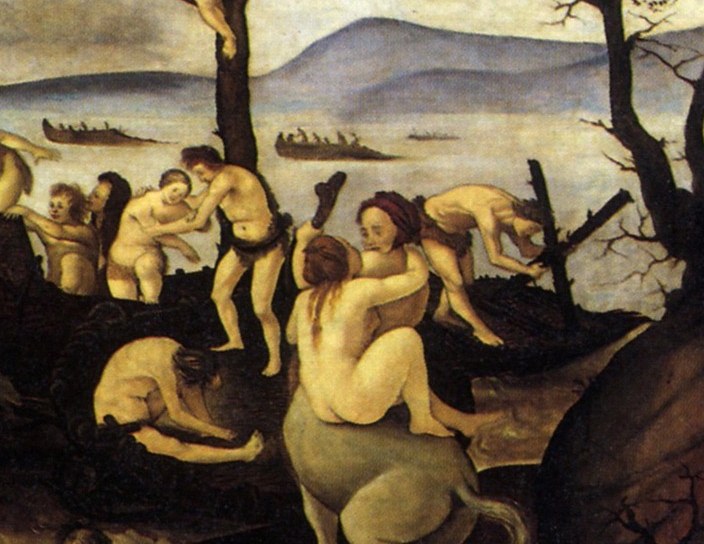
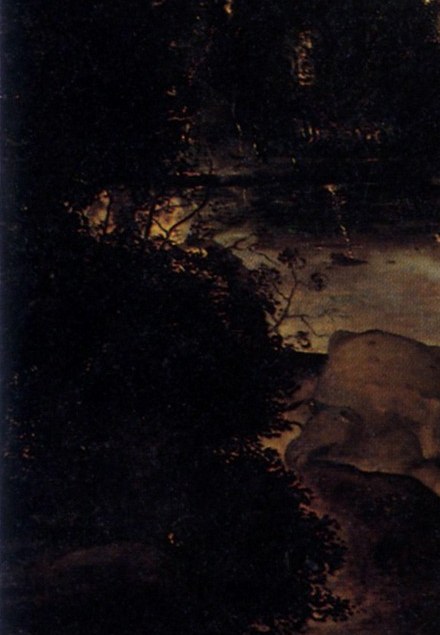
Look at the dogs in the lower left. Giorgio Vasari wrote that Piero painted animals more vividly than he ever painted people, and you can see it here: every muzzle and ear has individual character, rendered with a naturalist's attention that his human faces do not always receive. Then let your eye move to the water. The glowing amber surface is oil paint built in thin, warm glazes, producing a depth of light that tempera alone could not achieve. A single white bird sits in the bare trees at the right margin, a signature Piero placed in multiple paintings as a silent observer outside the human story.
The elongated horizontal format marks these as spalliere, decorative panels set into furniture or wall paneling. Commissioned by Francesco del Pugliese, they translate Lucretius's argument into paint: the companion panel shows savage combat, while this quieter sequel depicts hunters bringing prey ashore, women waiting, and, at the far right, a woman climbing onto a centaur's back, a crossing of the human-animal boundary that lies at the core of the Lucretian arc.
Next time you see a Renaissance hunting scene, check whether the animals outshine the people. Piero di Cosimo made a career of it.
#arthistory #PieroDiCosimo #ItalianRenaissance
Details

Transcript
Around 1500, most Florentine painters put the story in the people. Piero di Cosimo put it in the dogs. Each face is a portrait. Each ear a different kind of attention. Vasari said Piero painted animals more vividly than he painted humans. Now look at the water. It glows like amber glass. That light is oil paint built in thin, warm layers. Tempera could not do this. A single white bird watches from the bare trees on the right. Piero put a silent witness like this in painting after painting.