Portrait of a Man by Edme Quenedey des Ricets
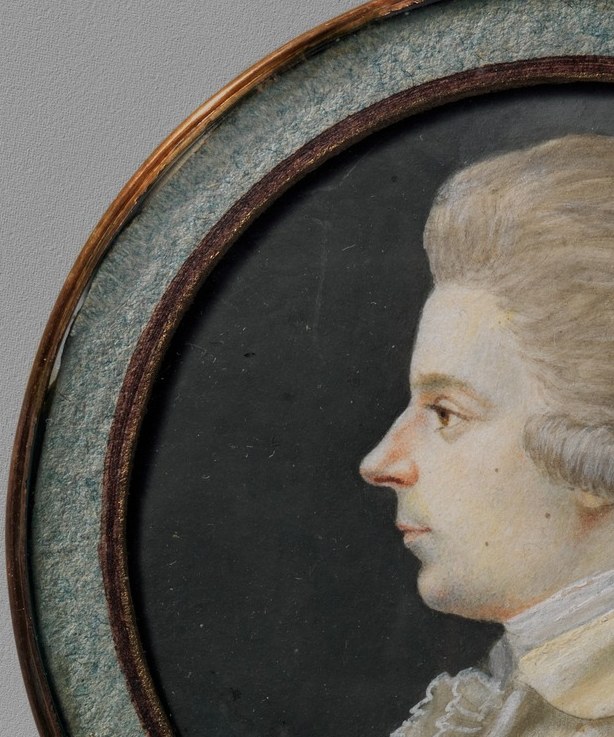
This is "Portrait of a Man," painted around 1790 by the French miniaturist Edmé Quenedey des Ricets. It is not just a tiny, delicate portrait, it is physical evidence of a late 18th-century invention that was briefly the most exciting portrait technology in the world. The painting is in the collection of The Metropolitan Museum of Art.
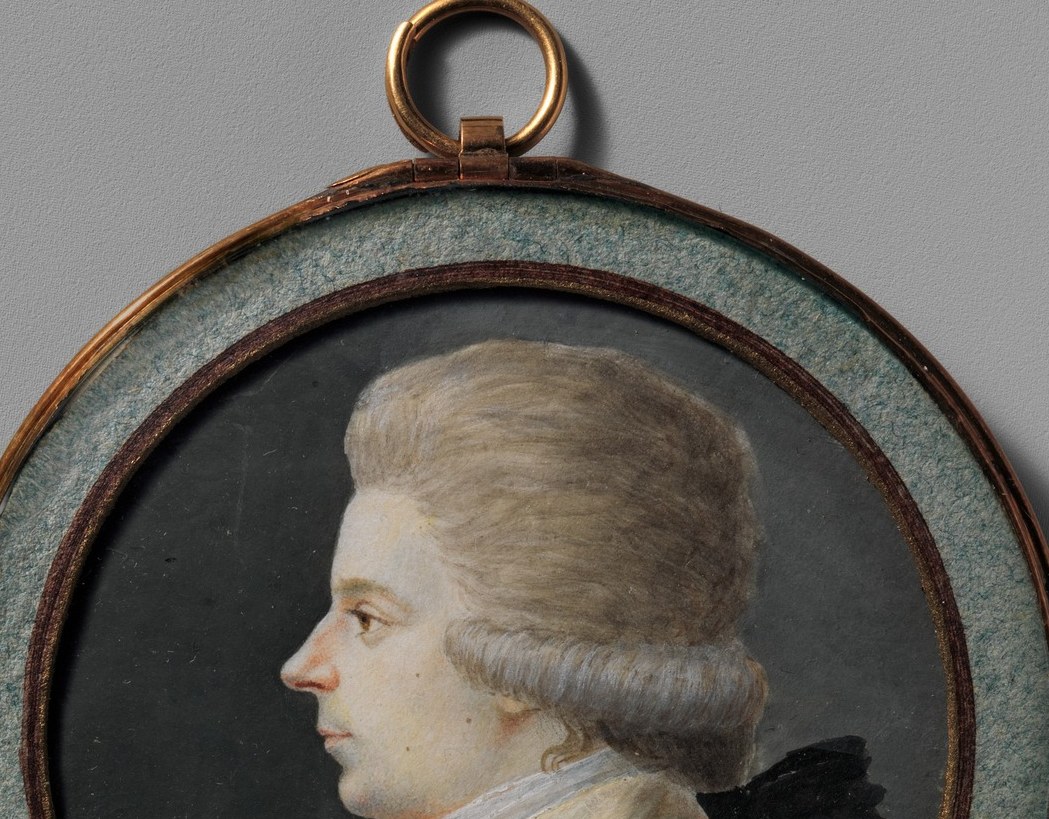
At first glance it reads as an ordinary profile miniature: powdered wig, formal cravat, a flash of red at the shoulder that places him in the 1780s or 1790s. But the perfect, unhesitating contour from the bridge of his nose to the tip of his chin is a tell. That outline was not drawn freehand by an artist's eye alone.
Quenedey was a restorer of pictures before he became a partner in one of the oddest ventures in art history. Gilles-Louis Chrétien had invented the physionotrace, a mechanical pantograph that traced a sitter's profile silhouette directly onto a copper plate while the artist looked on. For a few feverish years in revolutionary Paris, this was the fastest, cheapest, most accurate way to have your likeness made. Quenedey traced the line; then he painted the man inside it.
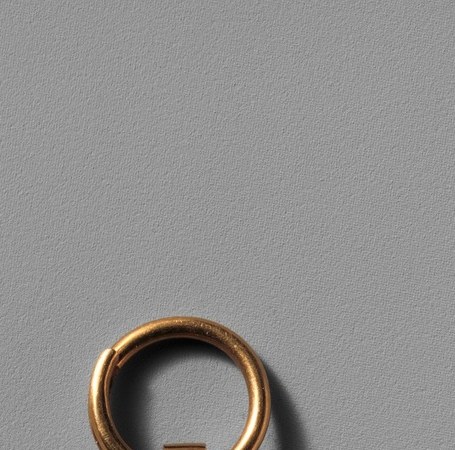
What survives is intimate in a way a larger oil portrait rarely is. The small gold suspension ring at the top tells us this was a locket, meant to hang from a ribbon or chain. Someone wore another person's profile against their own heartbeat. It is less a public declaration of status than a private act of keeping someone close.
Details

Transcript
1789. In Paris, a new machine begins tracing faces. It's called a physionotrace. A stylus follows a profile, engraving it onto copper. This man sat for that exact contraption. Look at the single visible eye. Even with a tracing machine, the painter had to give it life. The gold ring means this wasn't framed for a wall. It was a locket. Worn privately, against the skin.