The Start of the Race of the Riderless Horses by Horace Vernet
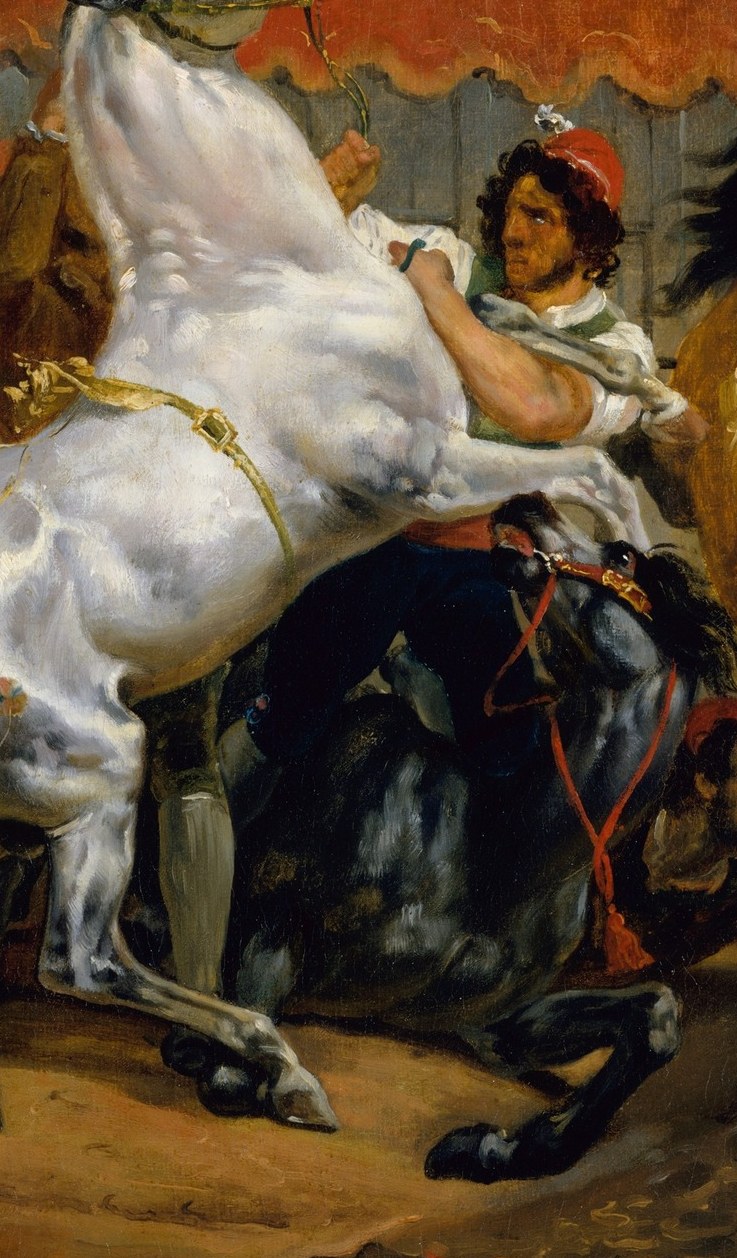
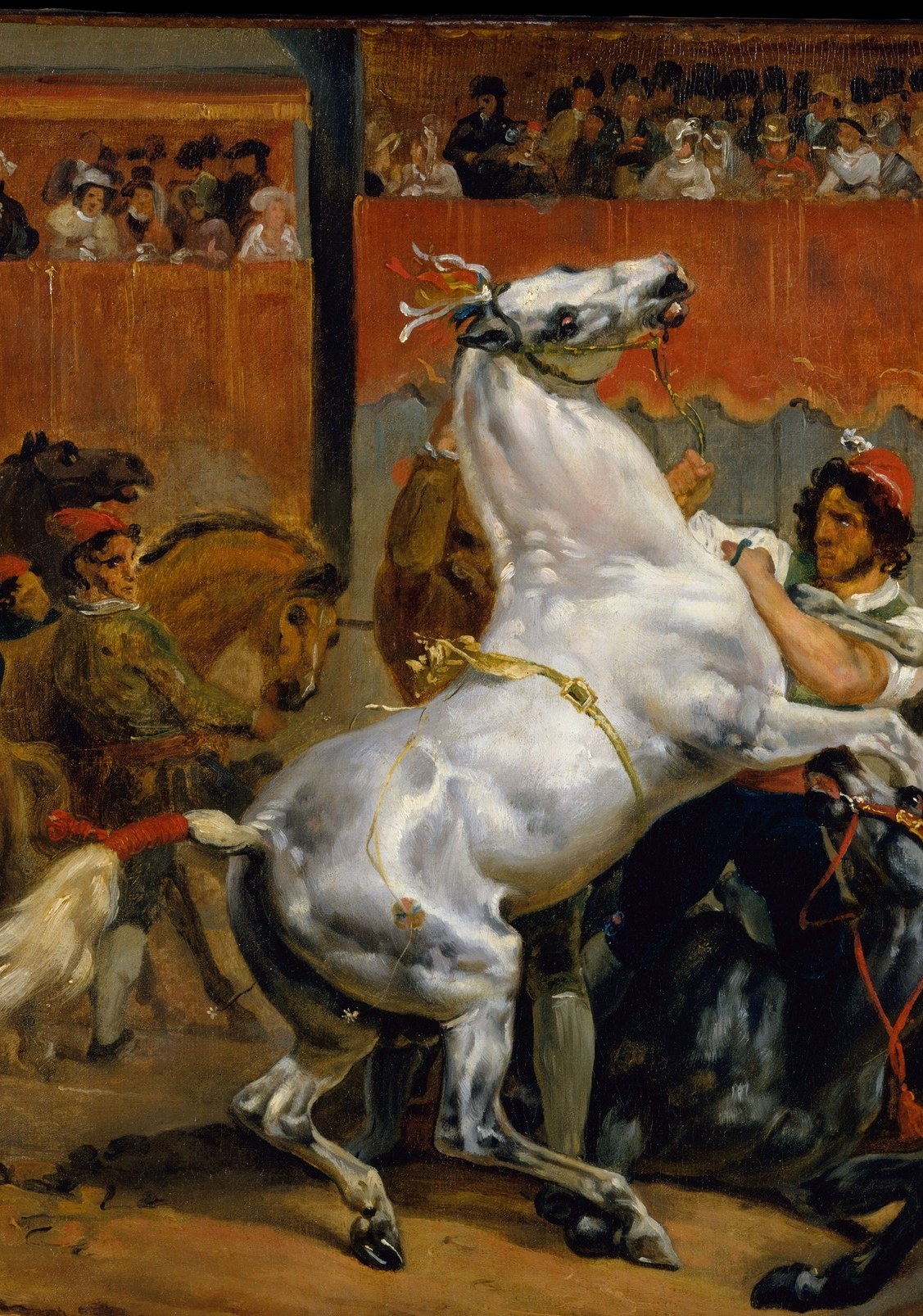
Horace Vernet's *The Start of the Race of the Riderless Horses* (1820) is not one painting but two. The first is the one that stops the scroll: a white horse exploding upward in a Roman arena, a groom thrown back at full extension, and dust so thick you can taste it. The second is the one most people scroll past, and it is the better painting.
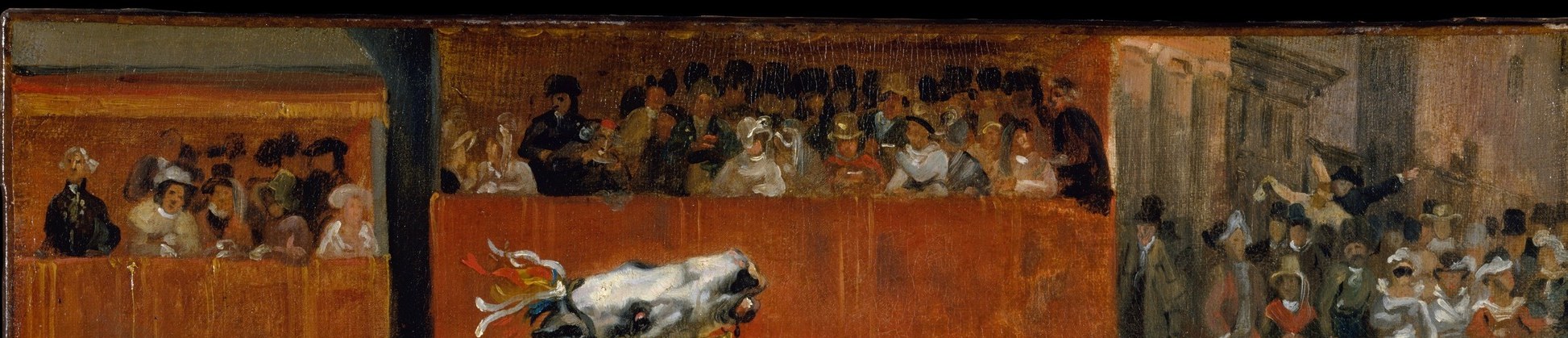
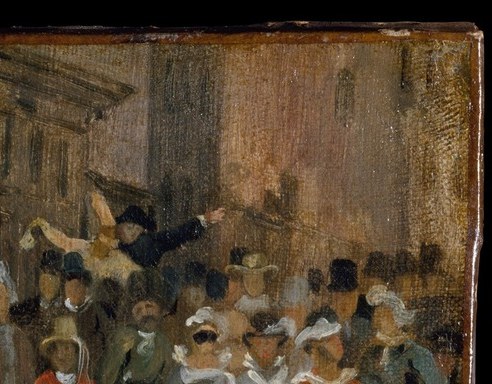
The painting documents a real Roman Carnival event called the Corsa dei Barberi, in which riderless Barbary horses were released to stampede through the streets and public arenas. Look into the upper stands, past the wooden barrier that separates the chaos from the crowd: hundreds of tiny Romans in Carnival dress, every face a distinct costume and posture. Vernet painted a complete social document of 1820 festivity and hid it above the action.
Vernet was a French battle painter by trade, but he traveled to Rome and became fascinated by Carnival. The Corsa was infamous for its violence, horses crashing into barriers and people, and Vernet chose the split second just before release, when human hands still hold the animal back. That point of contact, the groom's hands on the halter, is the true subject: civilization's tenuous grip on nature.
The painting lives at The Metropolitan Museum of Art. Next time you visit, stand back and let your eye climb, the stands are alive with stories the arena never tells.
Details

Transcript
At first you see the horse. Rearing, wild, impossible to hold. But Horace Vernet didn't just come to Rome for horses. He painted this in 1820, during Carnival. A city gone mad for a week. Now look into the stands. Past the barrier. Past the dust. Hundreds of Romans, every face a different costume, a different reaction. The Corsa dei Barberi was a real Carnival event, riderless horses stampeding through the streets. Vernet buried the anthropological record inside the action painting.