The prince, having deprived the snake of its natural food, a frog, feeds it with a piece of his own flesh, from a Tuti-nama (Tales of a Parrot): Eighteenth Night by http://www.wikidata.org/.well-known/genid/f9968fb320788f54d27d1beb48c65a95
This striking painting, "The prince, having deprived the snake of its natural food, a frog, feeds it with a piece of his own flesh," is an illustration from a Tuti-nama (Tales of a Parrot), dating to around 1560.
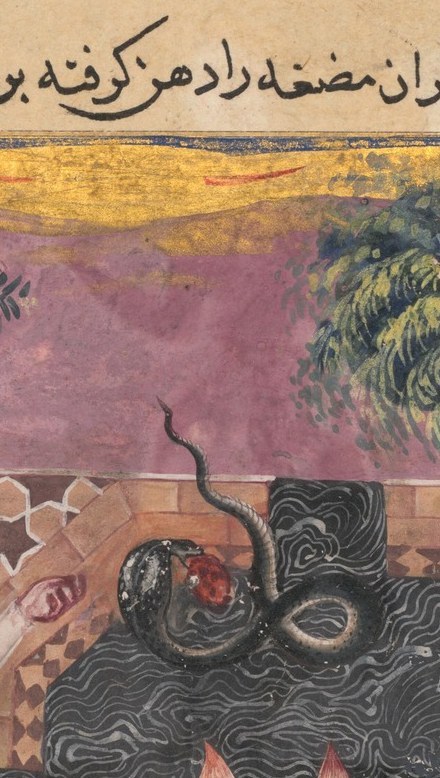
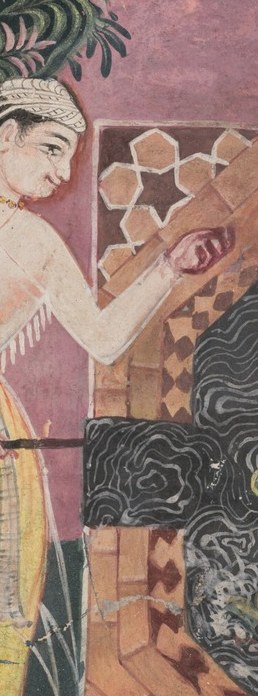
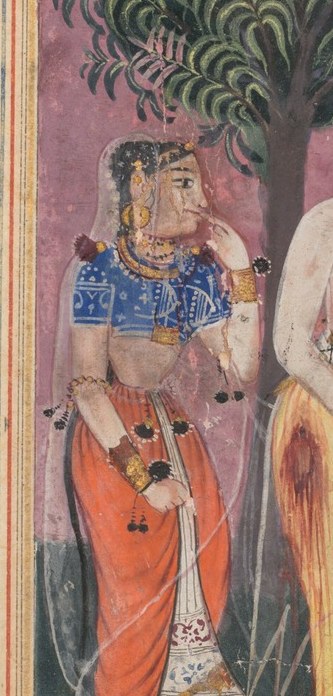
The artwork vividly depicts the prince's act of self-sacrifice, offering his own flesh to a cobra after inadvertently depriving it of its natural prey, a frog. Observe the intense detail in the snake's raised hood and scales, and the quiet vigilance of the woman observing the scene.
The Tuti-nama is a collection of 52 moralizing Persian fables. This particular tale, from the Eighteenth Night, emphasizes themes of responsibility and the consequences of one's actions, even unintentional ones. Such illuminated manuscripts were popular, serving as both literature and visual narratives.
What do you think this painting tells us about the nature of atonement?
Details
Transcript
From the 'Tales of a Parrot,' an ancient collection of fables. It tells the story of a prince who took a frog, meant to be this cobra's meal. Now, the prince atones for his action. He offers the snake a piece of his own flesh. A woman watches, witnessing this profound sacrifice. This tale teaches a harsh lesson about responsibility and consequence.