View of the Abbey of Egmond-Binnen by Claes Jacobsz van der Heck
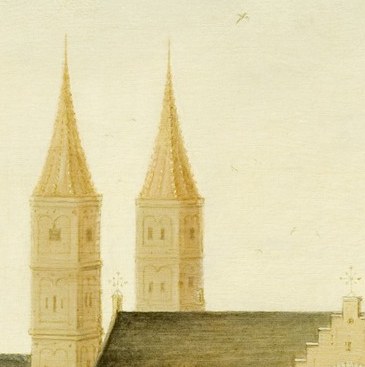
Claes Jacobsz van der Heck's *View of the Abbey of Egmond-Binnen*, painted in 1638, offers a tranquil glimpse of a site with a tumultuous history. Held in the Rijksmuseum, this oil on canvas captures the Benedictine complex in the Dutch Golden Age, a period of renewed interest in topographical representation.
Look closely at the abbey's roofline and surrounding structures; while appearing serene, the painter subtly acknowledges its past. The abbey, a significant religious center for centuries, suffered a complete sacking in 1573 during the Dutch Revolt, a period of intense religious and political conflict. It was rebuilt, but never fully regained its prior grandeur.
Van der Heck, born around 1575 in Alkmaar, spent his career documenting Dutch landscapes. This work exemplifies the 17th-century fascination with recording national landmarks, blending accuracy with atmospheric charm. It invites us to consider how history, even when not explicitly shown, can shape a landscape and its portrayal.
What stories do you think this landscape holds beyond what's visible?
Details

Transcript
This serene view shows Egmond Abbey, Holland, in 1638. The abbey was a powerful Benedictine center for centuries. Yet, the painter included subtle hints of its past destruction. In 1573, during the Dutch Revolt, the abbey was completely sacked. It was rebuilt, but its former glory never fully returned. This painting captures a moment of tranquil reflection, generations later.