Ranuccio Farnese by Titian
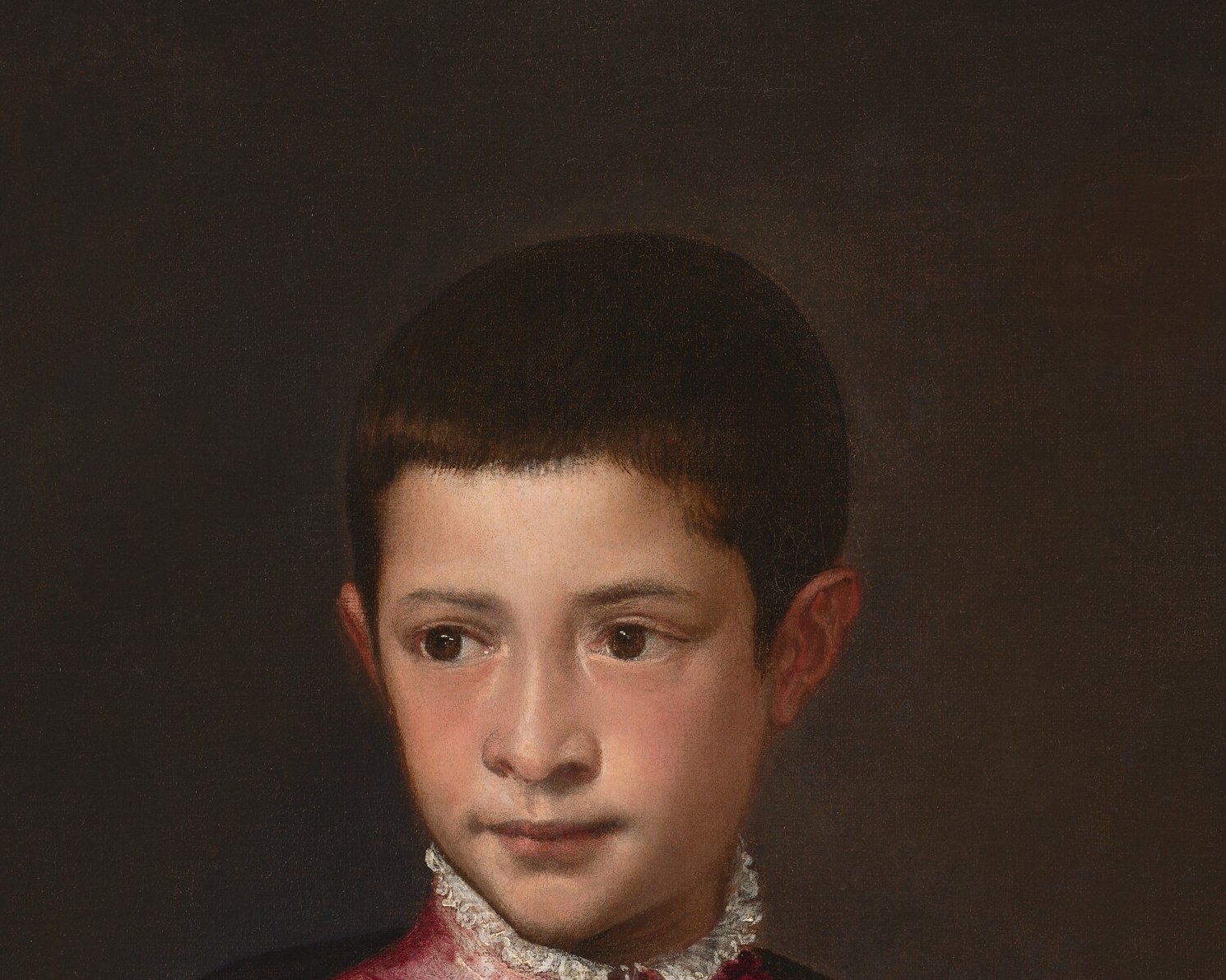
Titian's "Ranuccio Farnese" (1542) is a portrait of a twelve-year-old boy who already carried the weight of a dynasty. Painted for the powerful Farnese family, it hangs today in the National Gallery of Art in Washington, D.C. The boy in the painting would be made a cardinal at fifteen and later command the papal armies, but here, on this canvas, he is caught before any of that, a child wearing the formal gravity of an adult.
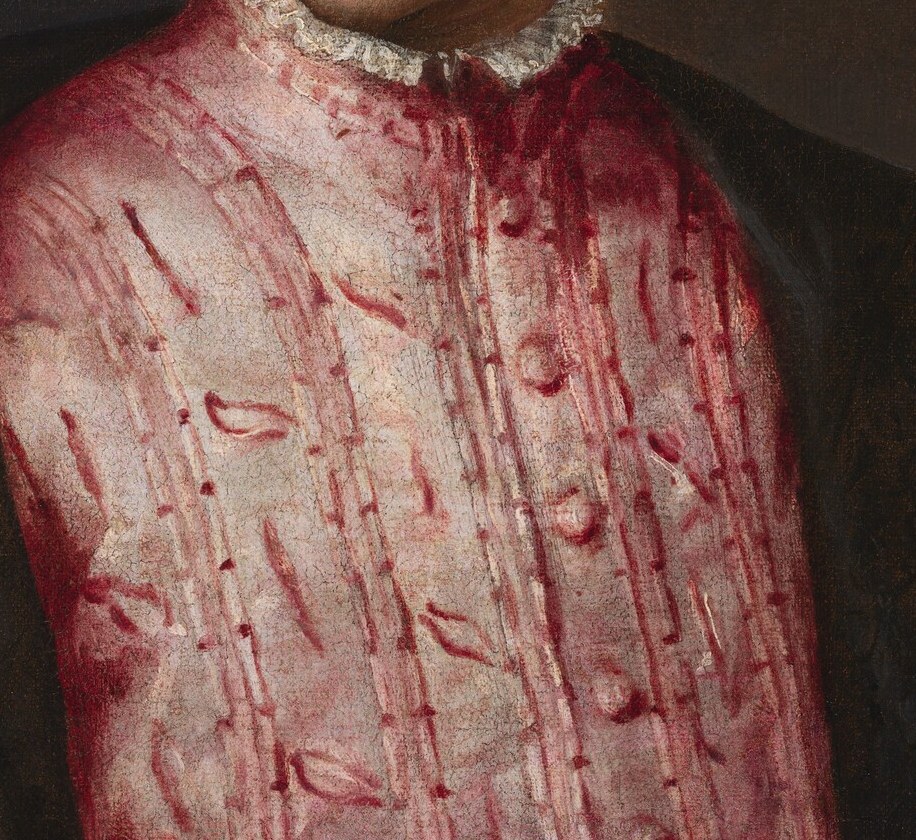
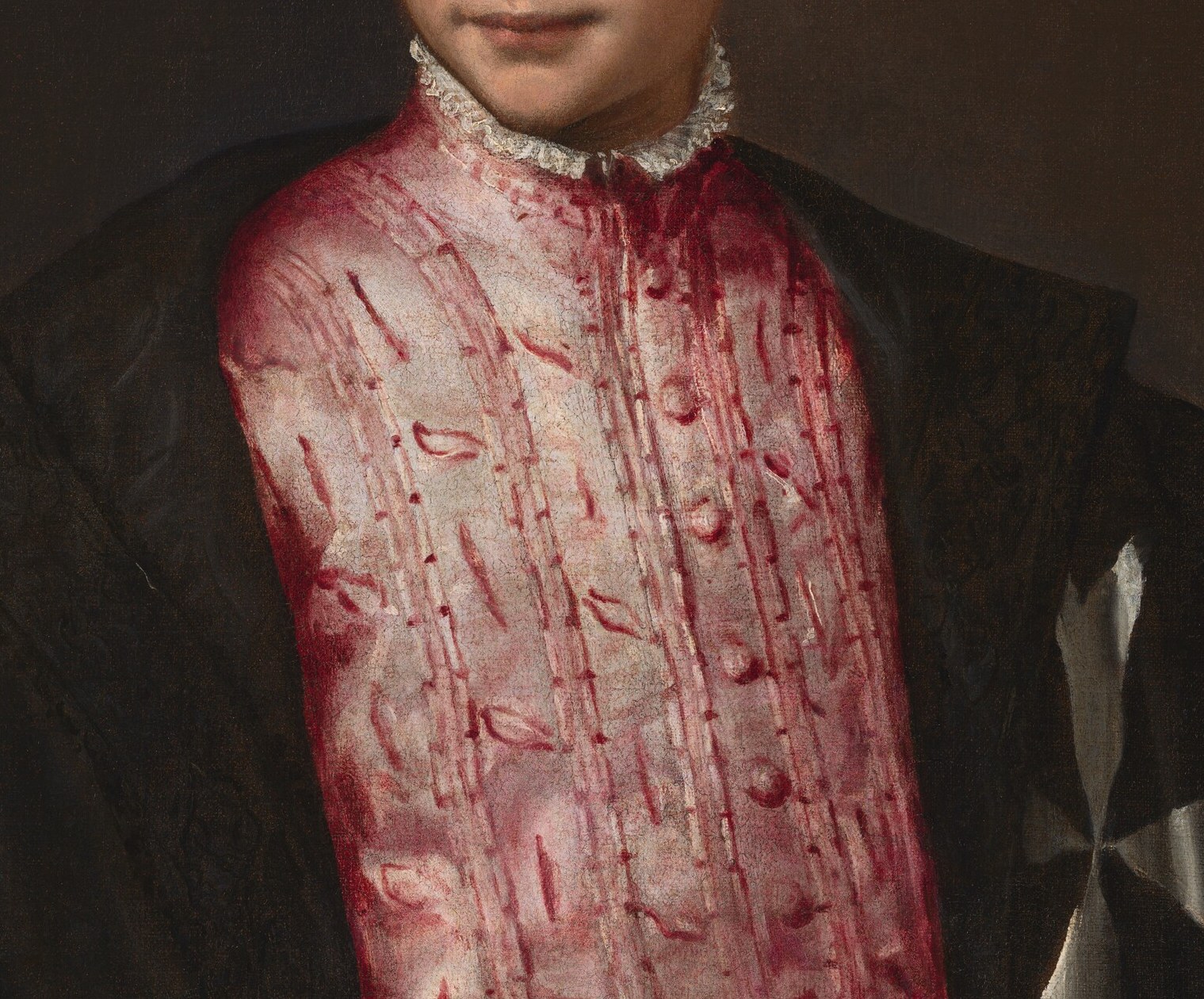
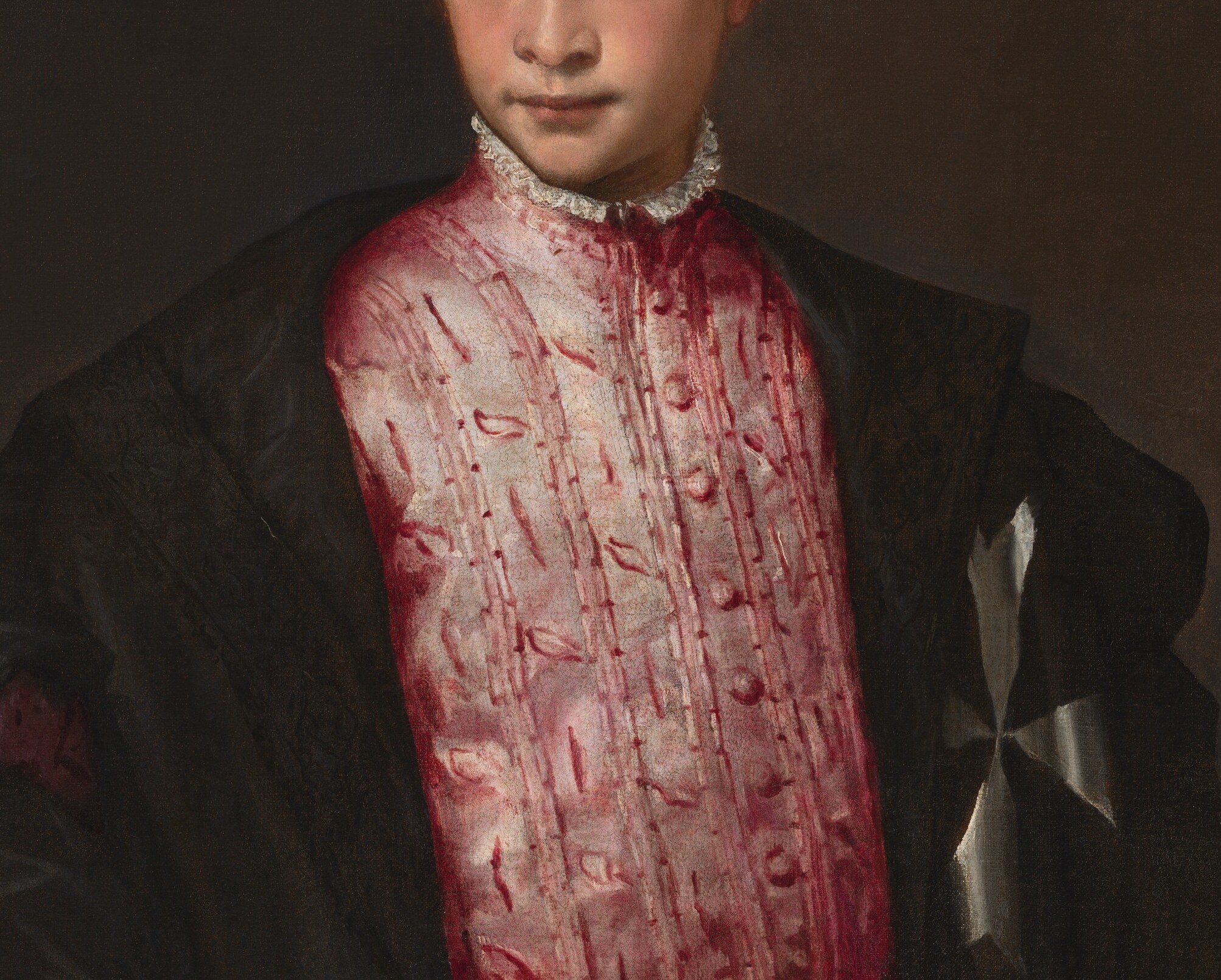
Look at the badge on his chest. It is likely the cross of the Order of Malta, a knighthood he received at age twelve. Status in the Renaissance was worn visibly, encoded in every textile and accessory. Titian makes you feel it. The pink doublet shimmers not because he copied silk thread by thread, but because he knew exactly which loose, confident marks would read as opulence from a distance. Zoom in and the gold embroidery dissolves into astonishingly economical flicks of paint.
Ranuccio Farnese was the grandson of Pope Paul III, one of the most consequential and controversial pontiffs of the century. The Farnese were ascending fast, and this commission marks the beginning of Titian's long relationship with the family. He would paint them again and again: Paul III himself, Ranuccio's older brother Alessandro in sumptuous cardinal's robes, and eventually the entire clan in a grand dynastic group portrait. This small, luminous picture of a boy was the door that opened all of that.
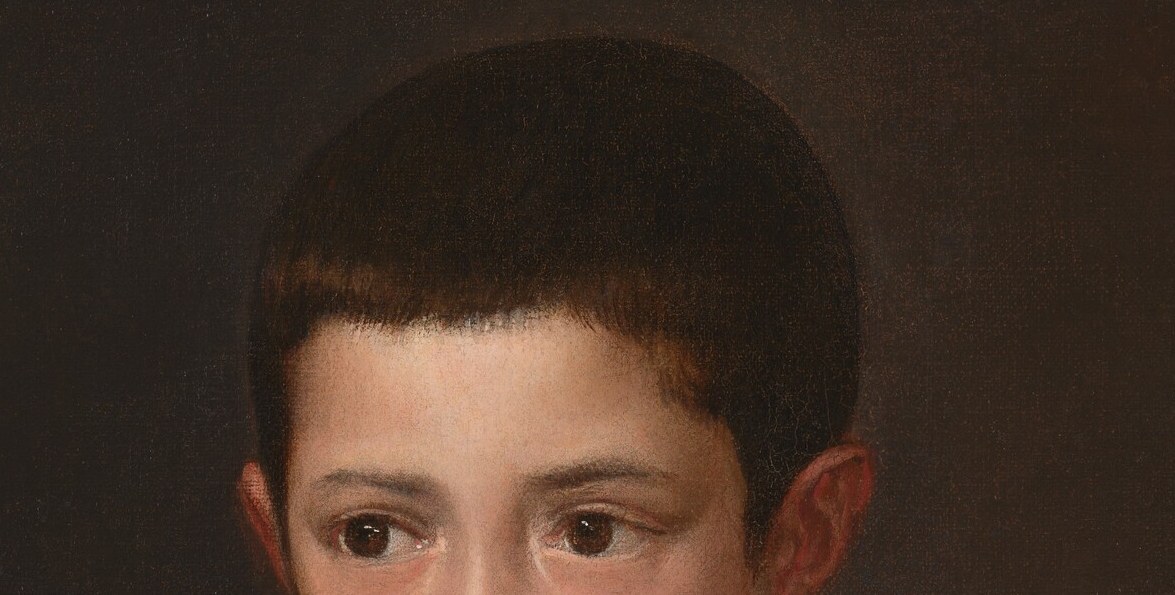
The eyes catch you. Titian gave the child a direct, almost unsettling gaze. He is not looking past you but at you, through five centuries. You are looking at a twelve-year-old who knows exactly what is expected of him. And still, somehow, the face betrays nothing that is coming.
Details
Transcript
In 1542, Titian was summoned by the most powerful family in Italy. He painted their twelve-year-old son. Look at his eyes. This child is already a Knight of Malta. The badge on his chest encodes his rank and his family's reach. Titian used loose, confident brushwork to suggest gold thread. Ranuccio would become a cardinal at fifteen and command papal armies. Nothing in his composed face has happened yet.