Children Playing on the Beach by Cassatt, Mary
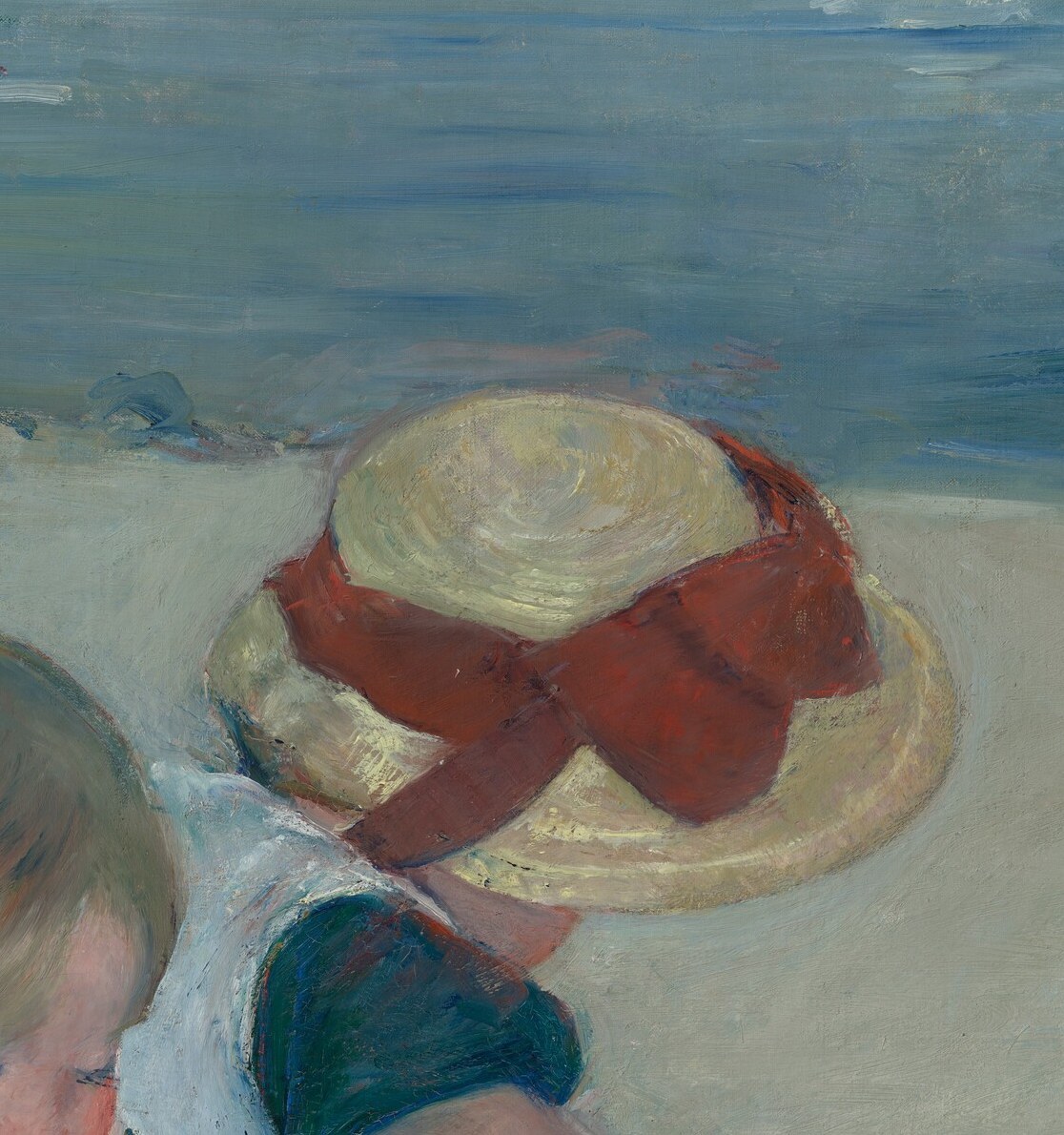
Mary Cassatt painted Children Playing on the Beach in 1884, and it unsettled viewers. Not for its subject. For what she left out. The older child's face is nearly obliterated by the brim of a straw hat, a choice that critics at the time read as unfinished or evasive. Cassatt, one of the few women exhibiting with the French Impressionists, was painting a real psychological state: absorption so complete it becomes private, even as we watch.
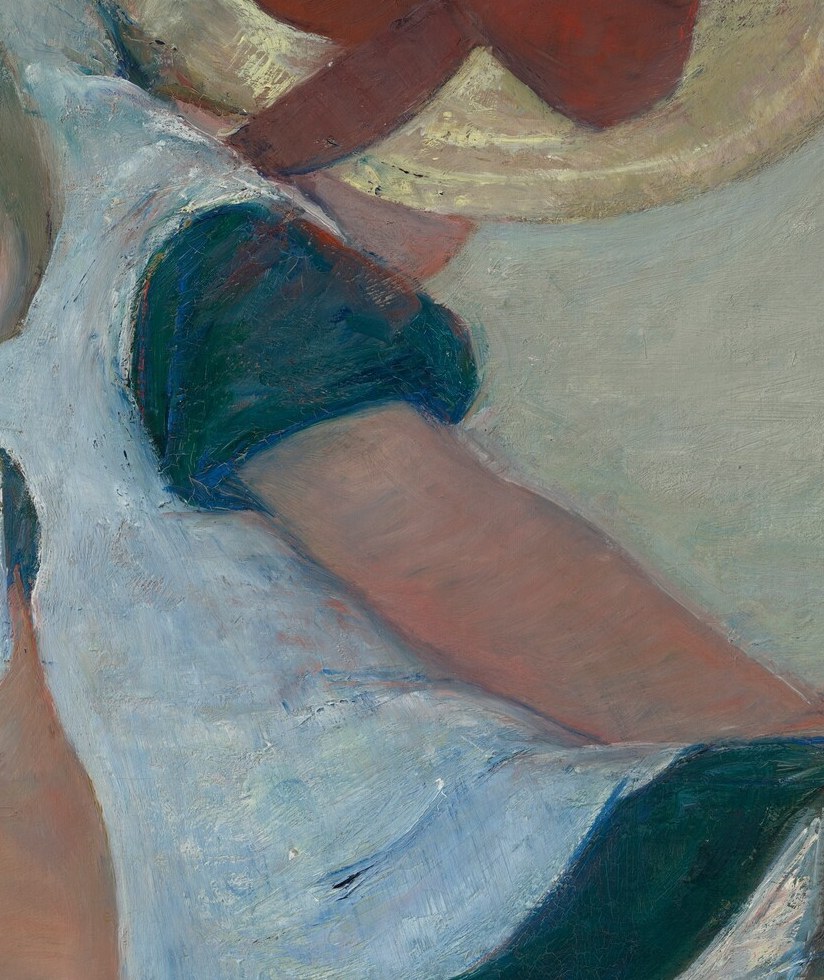
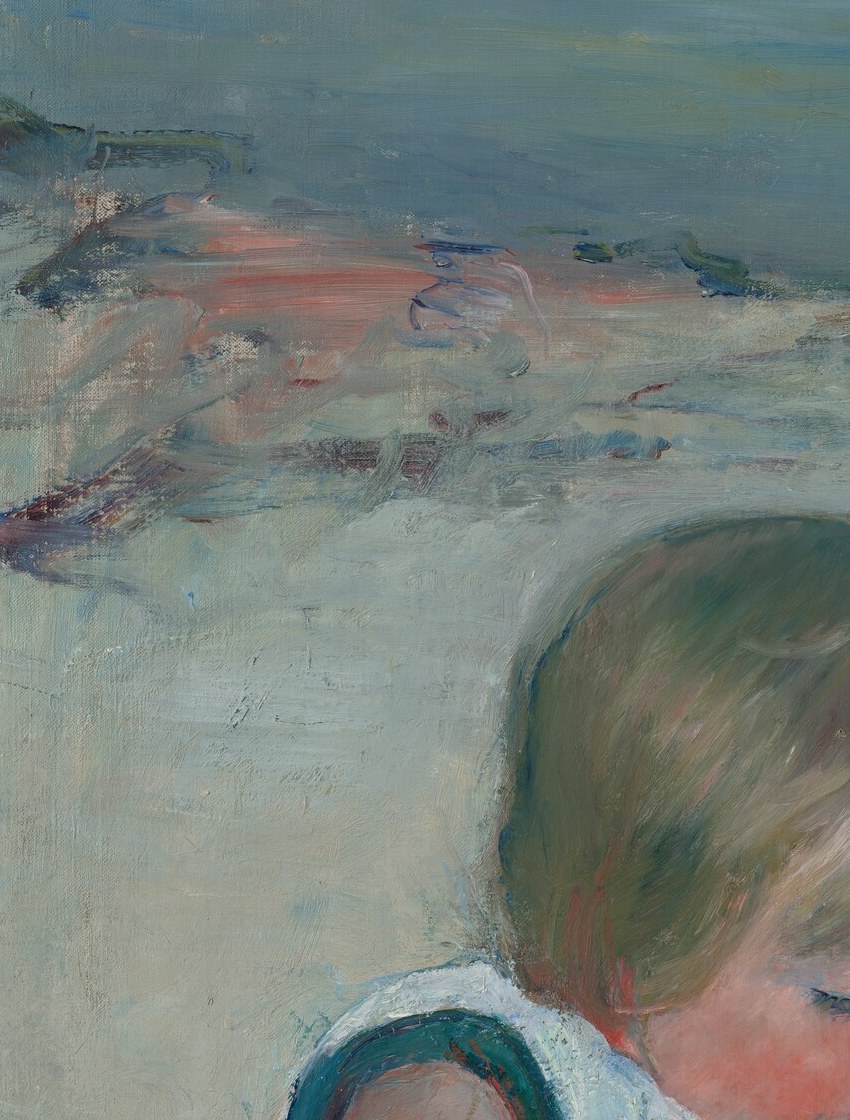
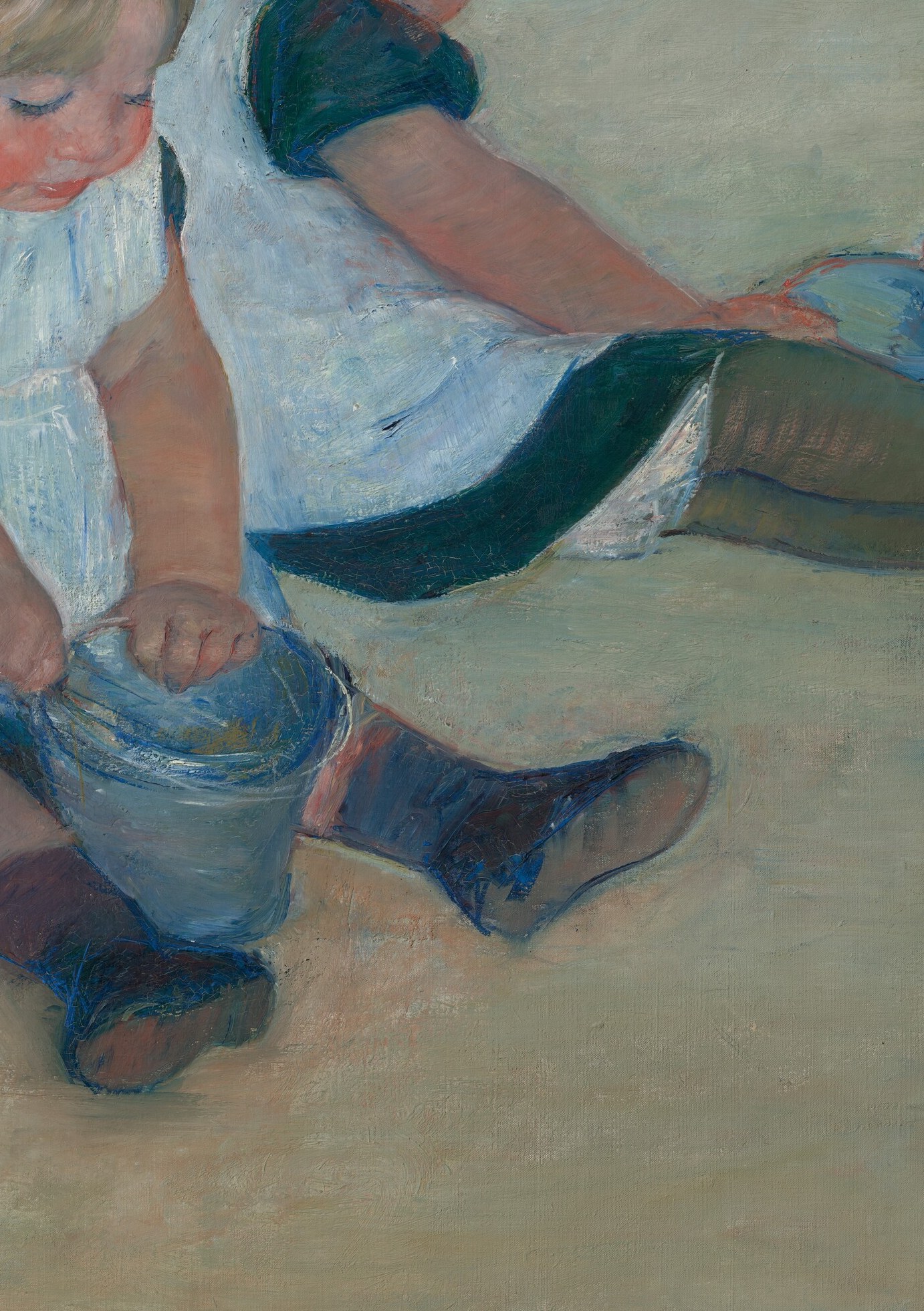
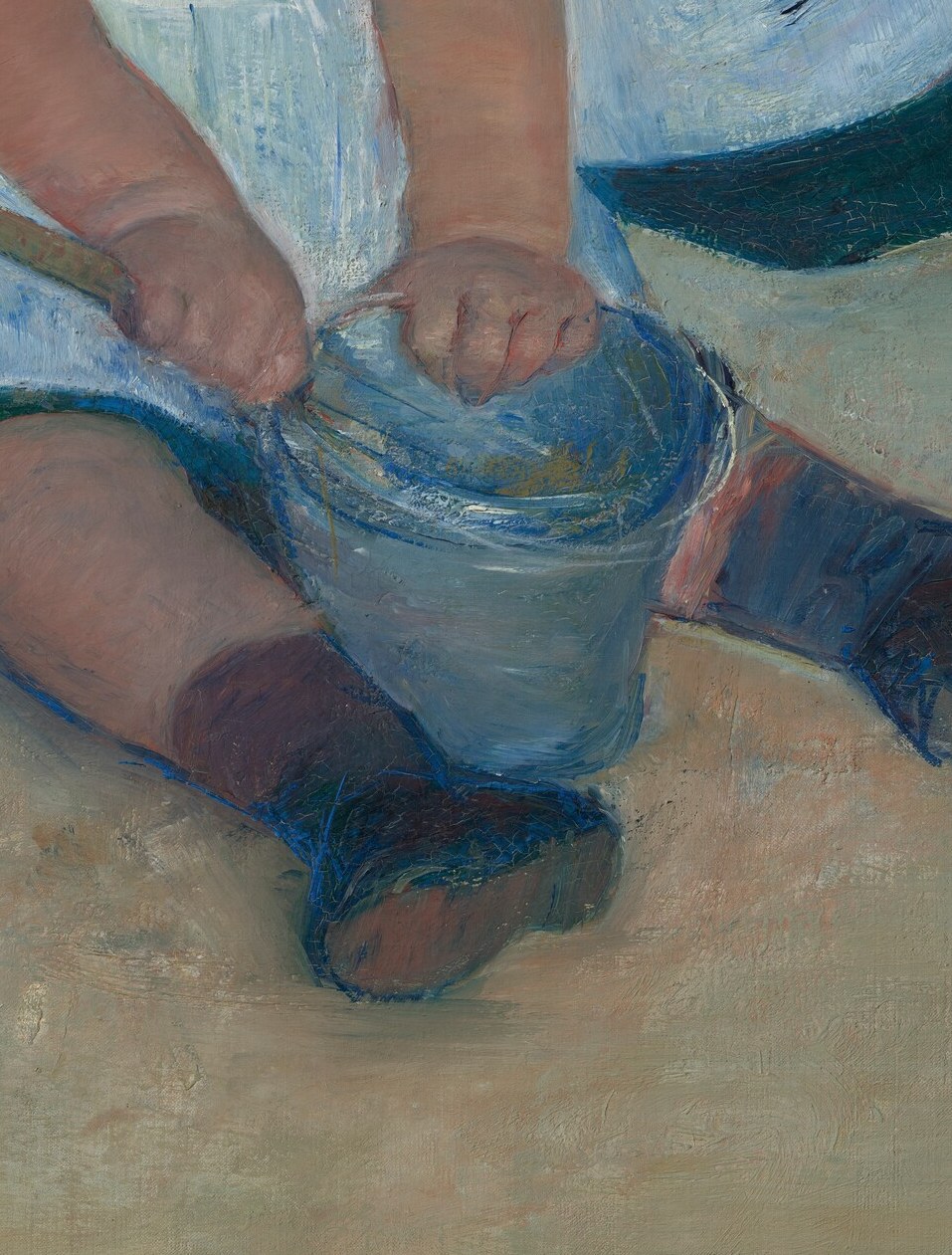
Look at where the face should be. The hat brim cuts across it, leaving only a partial profile. The oversized red bow is the single loud note in the composition, a visual decoy for the mystery above it. Now look at the toddler: face fully visible, gaze trained on a wooden spade and a blue tin pail. Two children share one bucket, one task, no eye contact with us.
By 1884 Cassatt had been in France for years, exhibiting with Degas and the Impressionists. She had turned increasingly toward the interior lives of women and children. This work refuses the sentiment expected of its subject. The children wear white dresses, but sand marks the hems. They are not idealized cherubs; they are working at play, and one of them has been allowed to disappear into it.
That hiding and that absorption are what makes the painting still feel modern. It is a beach scene with no greeting for the viewer, no posed sweetness. Just sun, salt, sand, and a child we cannot fully see, because she is not looking at us.
Details
Transcript
Two children play on a beach. You have seen this a thousand times. But when Mary Cassatt showed this in 1884, people were unsettled. The older child's face is nearly erased by the hat. Critics called it unfinished. A face denied to the viewer. Cassatt ignored them. The hidden face was the point. These children are not performing. They are absorbed. Sand clings to their pinafores. The hat is all red bow, no face. Cassatt painted a private world adults are not invited into.