Landscape by Jean Pillement
Jean Pillement's 'Landscape' from 1815 is a masterclass in atmospheric depth on a modest canvas. While Pillement was famous across Europe for popularizing chinoiserie through his engravings, this intimate oil painting shows a quieter, more restrained side of the artist.
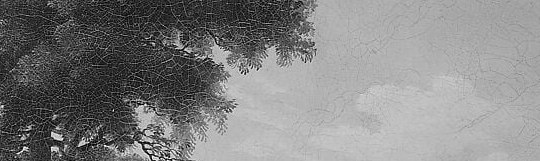
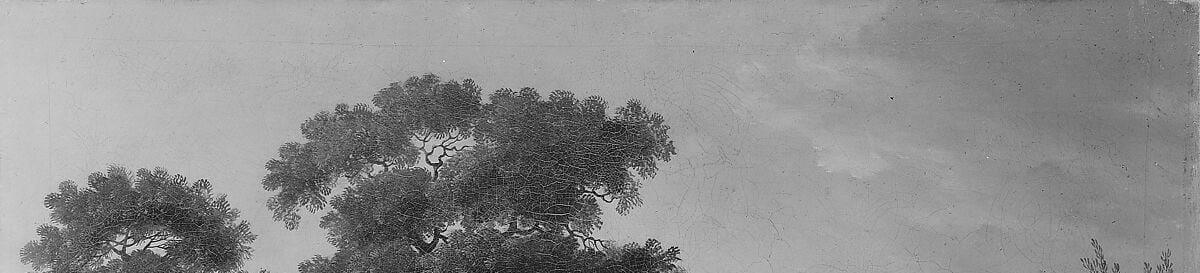
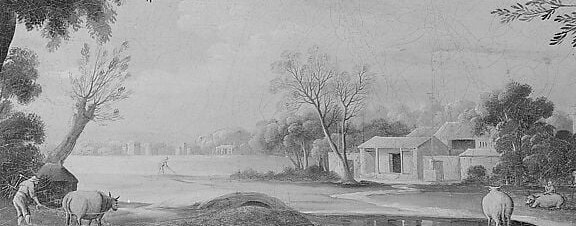
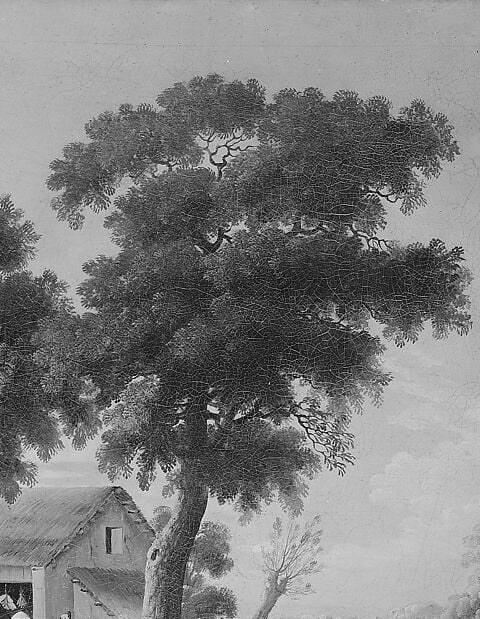
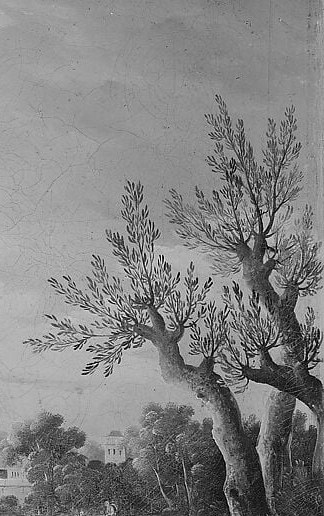
Look at the band where the trees meet the sky. Pillement bled a pale, diffuse light directly into that narrow horizon. That thin strip of glow does all the heavy lifting, it tricks your eye into reading a mile of air between the foreground and the distant house on the right. Then watch how the same light spills onto the river surface. The reflection isn't a mirror; it's a tonal match to the sky that unifies the whole lower half.
This effect is called aerial perspective, lowering contrast and bleeding light as things get farther away. Pillement knew viewers expected dramatic colour to signal depth, so he reversed the logic and used near-monochrome haze instead. It's a small painting that breathes far beyond its frame.
What's the quietest trick a landscape painter ever pulled on you?
Details
Transcript
A small house by a river. Jean Pillement painted this in 1815. But the real subject is what’s behind it. He bled pale light into the horizon band. That glow pushes the land back a mile. Then he mirrored the sky on the water. Two strokes of tone, and the air opens up.