Camille Monet (1847–1879) in the Garden at Argenteuil by Claude Monet
This is a garden in Argenteuil, a suburb northwest of Paris, in 1876. Claude Monet had moved his young family here the year before. The painting hangs now in the Metropolitan Museum of Art.
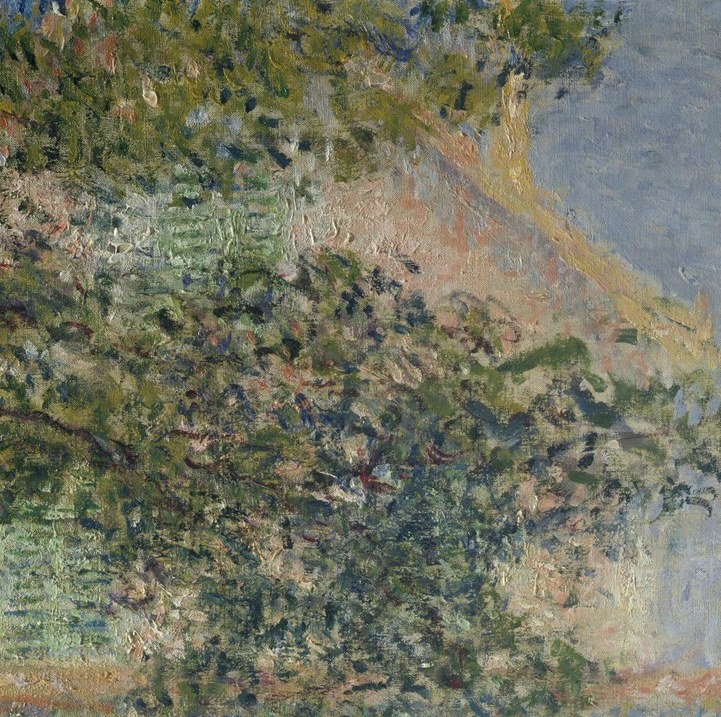
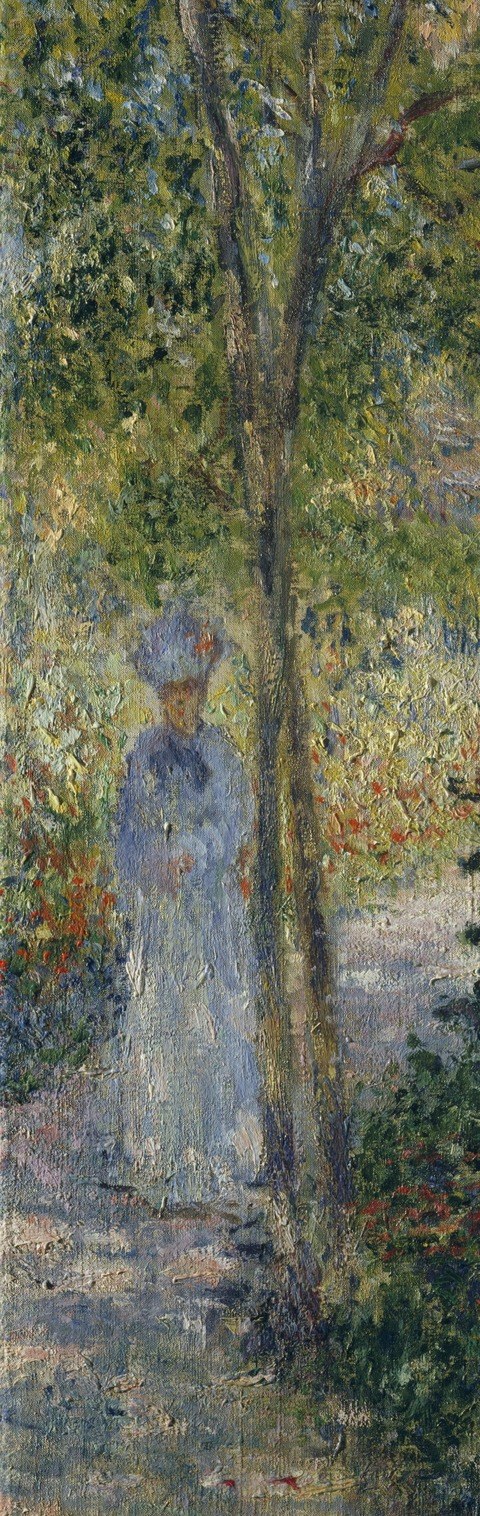
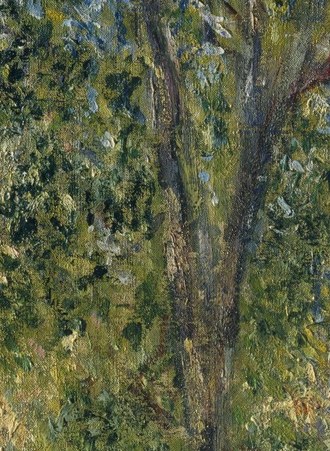
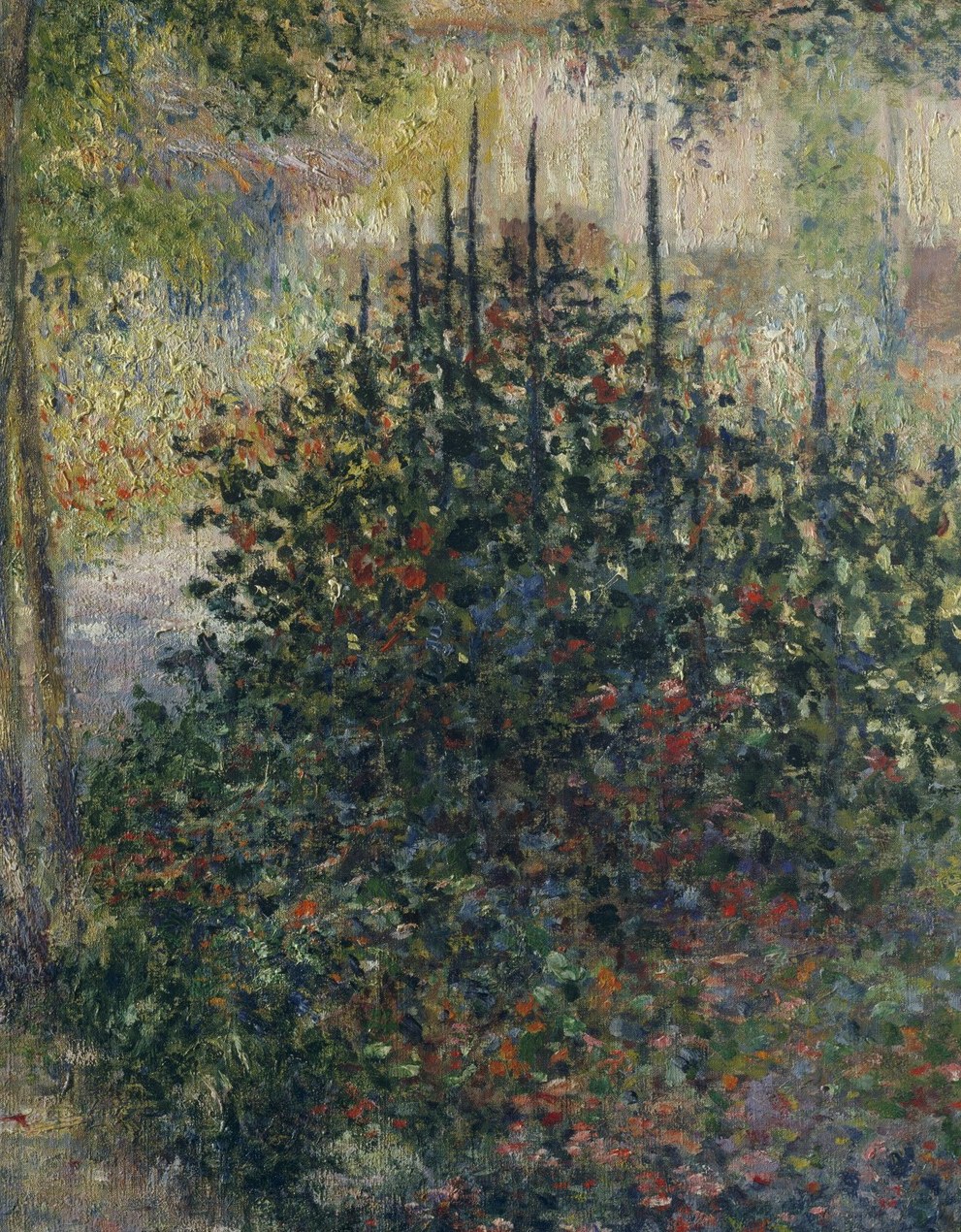
Look at the woman in the dark dress, standing beside the tree. That is Camille Doncieux, Monet's first wife, the mother of his two sons, and his most patient model. Monet renders her face as little more than a few pale strokes, half-consumed by the dappled foliage around her. The garden is rendered with thick, visible brushwork and shimmering broken color. Camille is rendered as a shadow.
Three years after this afternoon, Camille would be dead. She had been ill for a long time, probably with pelvic cancer, or the complications of tuberculosis, and the family's finances were desperate. Monet painted her on her deathbed in 1879, and later said he caught himself studying the colors of her skin as they changed, horrified at his own painter's instinct. This earlier painting, made when she was still alive, already seems to know something. She is there, and she is not there.
Monet lived another fifty years. He became the patriarch of Impressionism, the titan of Giverny. But in 1876 he was a nearly broke thirty-six-year-old in a rented house, painting his wife into a garden that would outlast her.
Details

Transcript
It looks like a quiet afternoon in a suburban garden. The house, the shrubs, the dappled path, Argenteuil, 1876. Monet had just started renting this house. He was thirty-six. Now look at the woman standing beside the tree. This is Camille, his wife. But her face is almost erased by light. Three years after this was painted, Camille died at thirty-two. The garden is fully alive. The woman in it is already disappearing.