Swans in Central Park by George Bellows (American, 1882–1925)
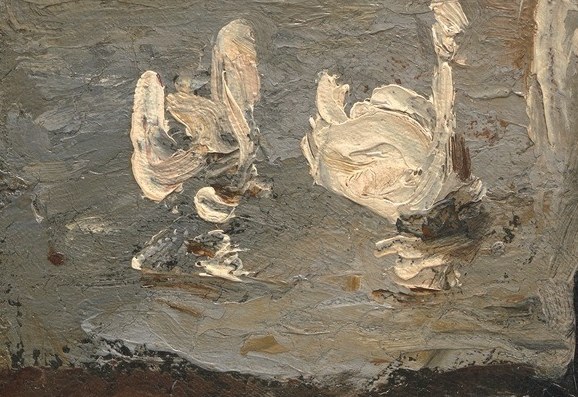
George Bellows's *Swans in Central Park* (1906), housed at The Metropolitan Museum of Art, appears to be a serene depiction of urban leisure. Yet, a closer examination reveals a subtle disquiet. The painting captures a moment in New York City's iconic green space, a common theme for the artist known for his realist portrayals of city life.
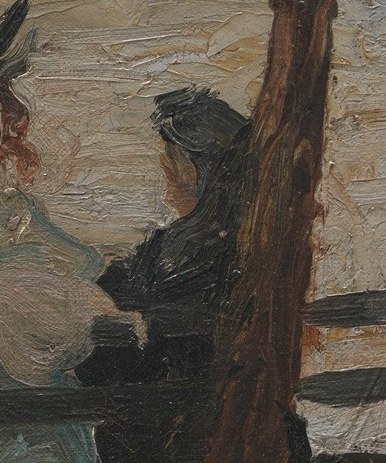
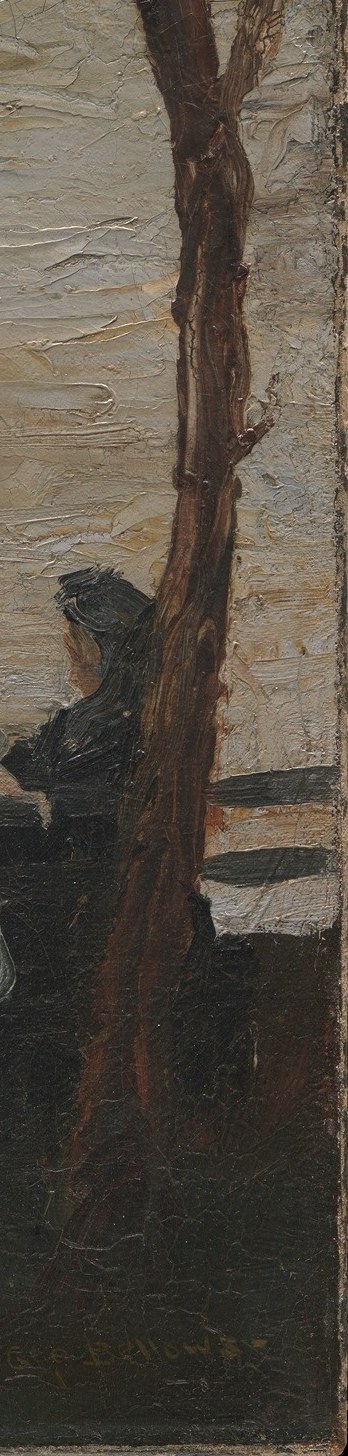
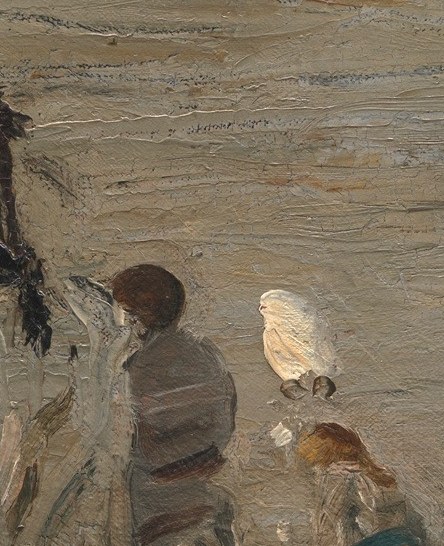
Focus on the right side of the canvas. While women in fashionable hats and a child observe the elegant swans on the water, a solitary figure in dark clothing lurks in the shadows. This silhouette is an enigmatic presence, a departure from the otherwise bright and public scene.
Bellows, celebrated as a leading American artist of his generation, often depicted the vitality of urban dwellers. However, the intent behind this lone, shadowed figure remains unstated, adding a layer of mystery to this otherwise everyday park scene.
What is this figure’s role in Bellows’s painted world?
Details
Transcript
This painting shows a common city scene. Women wear elaborate hats, suggesting leisure. But look closely at the right edge. A dark figure stands alone, watching. His presence is not explained by Bellows. He is the only figure in shadow. George Bellows painted him in 1906.