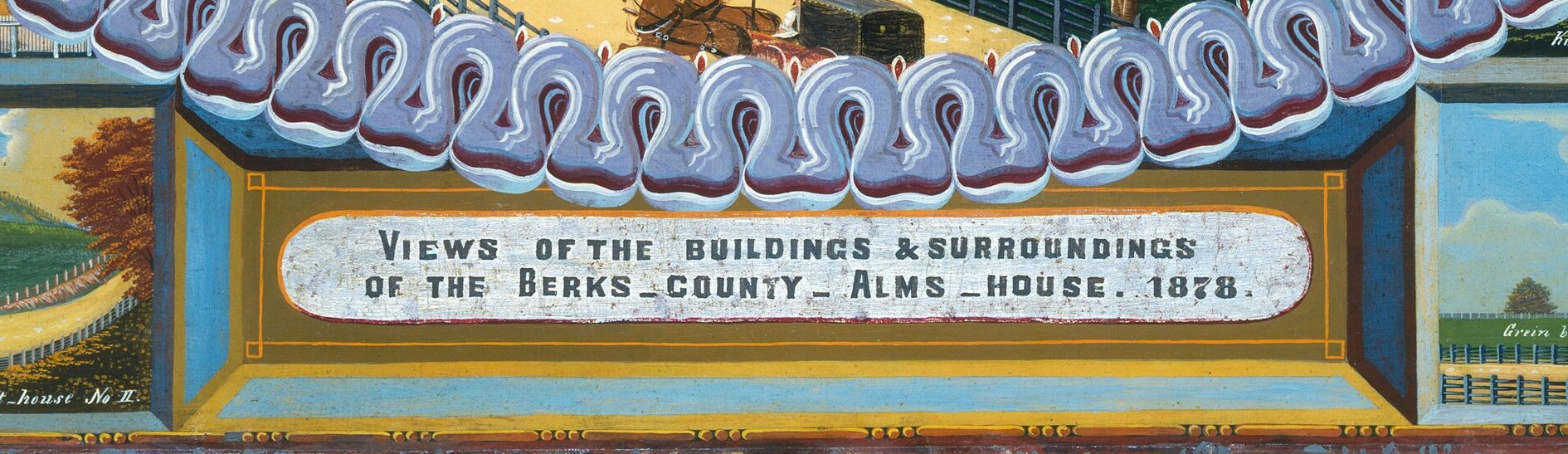
Berks County Almshouse, 1878 by Hofmann, Charles C.
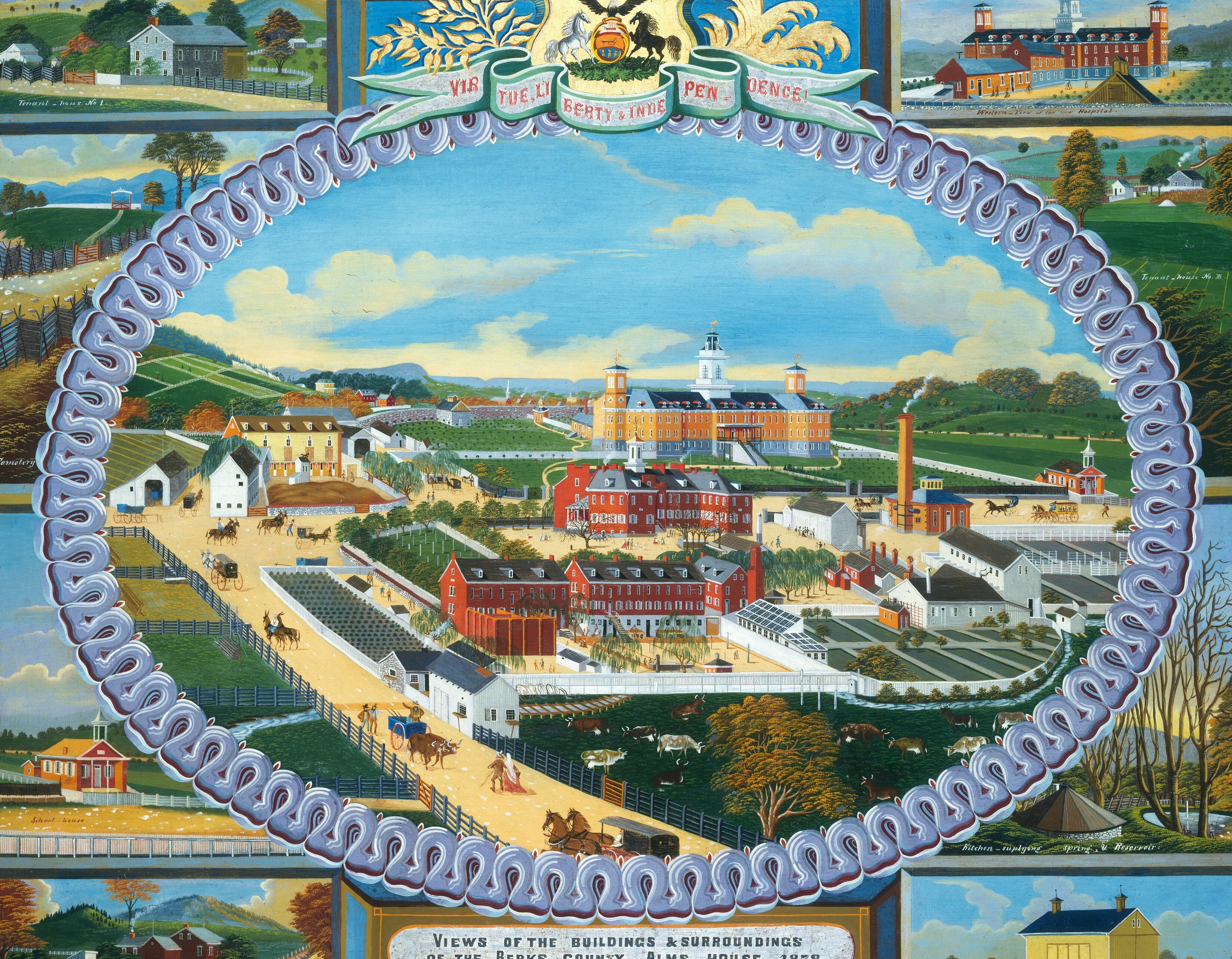
In 1878, Charles C. Hofmann, a German-born itinerant painter, completed this meticulous panorama: the Berks County Almshouse, painted in oil on a sheet of zinc. The almshouse was Pennsylvania's solution for housing the poor, the elderly, orphans, and people with mental illnesses. Hofmann's painting, now held by the National Gallery of Art, is not simply a landscape; it is a civic document, a visual argument for how the state should manage those who had nowhere else to go.
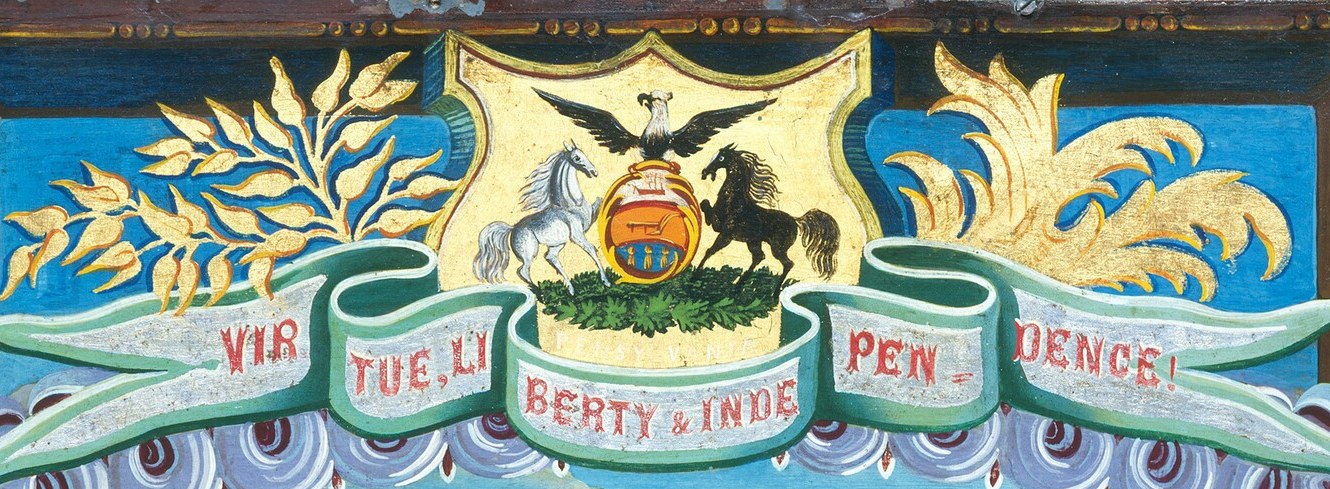
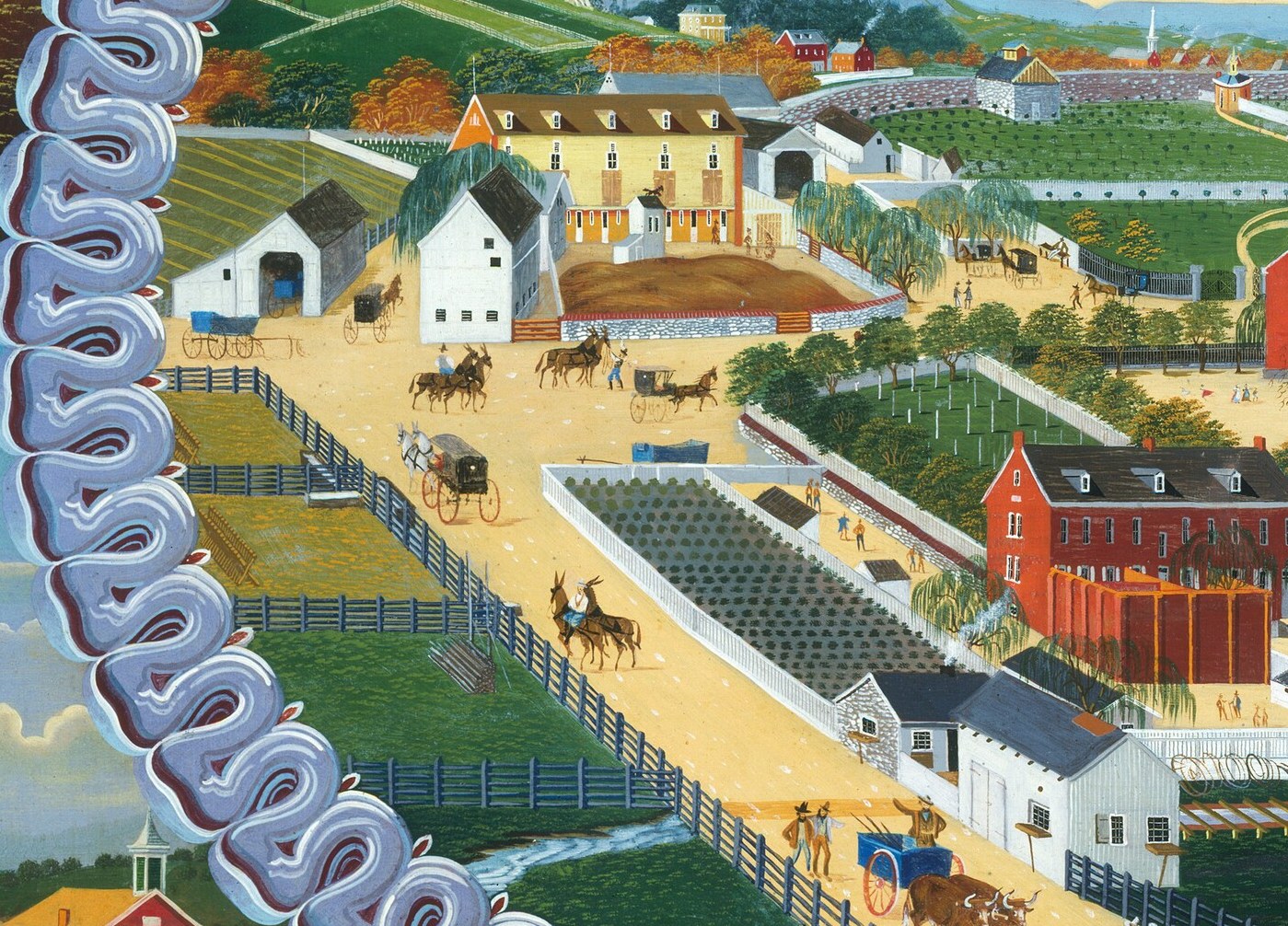
Look closely at the coded structure. The Pennsylvania state coat of arms sits at the top, marking this as a government institution, not a private charity. A braided rope oval frames the main view, cordoning off the orderly world of the almshouse from the loose vignettes of the surrounding countryside. Inside the oval, kitchen gardens are laid out in perfect, productive grids. Behind the residents' wing, a tall industrial smokestack rises, a sign that able-bodied inmates were expected to work in the institution's workshop.
Hofmann painted several almshouses in eastern Pennsylvania, often on durable materials like zinc for the county commissioners who paid him. These paintings hung in official buildings as a record of what the state had built. The fact that he included the smokestack, the rigid crop lines, and even outhouses in the margin strips tells us this was meant to be read as an administrative inventory as much as a work of art.
What appears at first glance to be a charming folk-art scene is actually a carefully controlled message about civic identity and the moral order of poverty. The artist is telling us: the poor here are not idle; the land here is not wasted; the government here is watching.
Details
Transcript
A view of the Berks County Almshouse, 1878. It begins with the state seal. This is not a charity, it is a branch of the government. The braided rope binds the view. Everything inside it is subject to civic discipline. Crops in rigid grids. No ornament. Only productive land. The smokestack proves they ran a factory here. Poverty relief in 1878 required industrial labor from the poor themselves.