Napoleon I decorated a soldier of the Russian army in Tilsitt with the cross of the Legion of Honor by Jean-Baptiste Debret
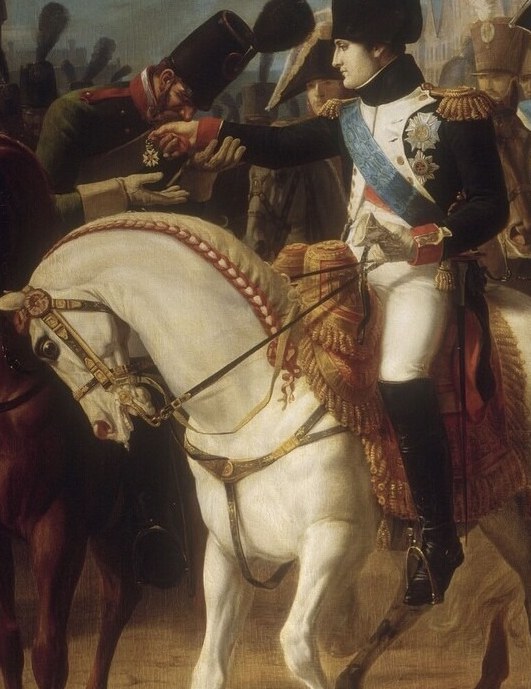
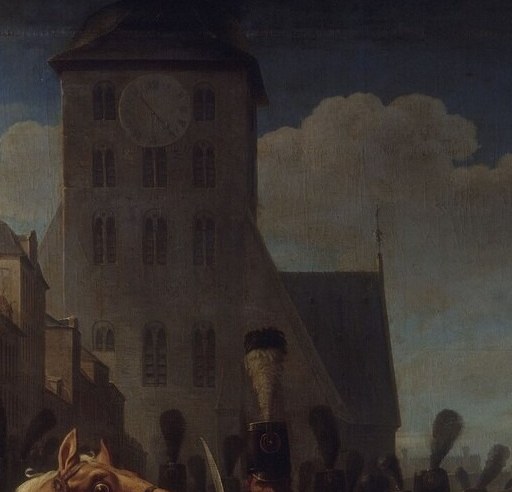
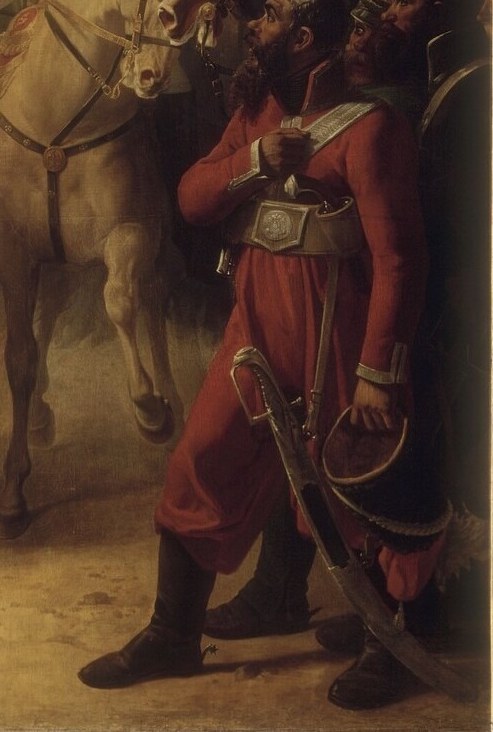
Jean-Baptiste Debret's 1808 painting, *Napoleon I decorated a soldier of the Russian army in Tilsitt with the cross of the Legion of Honor*, captures a fleeting moment of diplomatic alliance between France and Russia, now held at the Palace of Versailles.
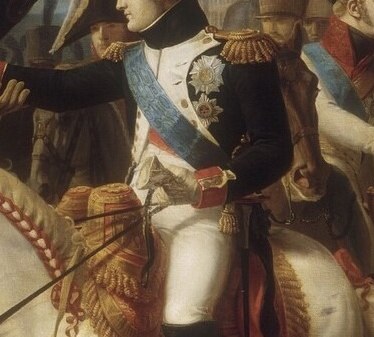
In this scene, Napoleon Bonaparte is seen awarding the Legion of Honor to Russian officer Aleksey Lazarev, with Tsar Alexander I looking on. The small, gleaming cross signifies the highest civilian award instituted by Napoleon, a powerful symbol of recognition and political patronage.
Created shortly after the Treaties of Tilsit in 1807, the painting was intended to commemorate the brief period when France and Russia cooperated against Britain. This temporary alliance, however, would soon unravel, making this depiction a poignant historical record of a hope that would not last.
The artwork reminds us how quickly political landscapes can shift, and how art preserves the aspirations of an era.
Details
Transcript
This painting records a moment of fragile peace, 1807. Napoleon, the French emperor, presents a medal to a Russian officer. The Legion of Honor was Napoleon's highest civilian award. Tsar Alexander I of Russia observes, a witness to the alliance. This brief cooperation between France and Russia would soon dissolve. But for a moment, this painting celebrated a hope for lasting peace.