Adoration of the Shepherds by Rembrandt
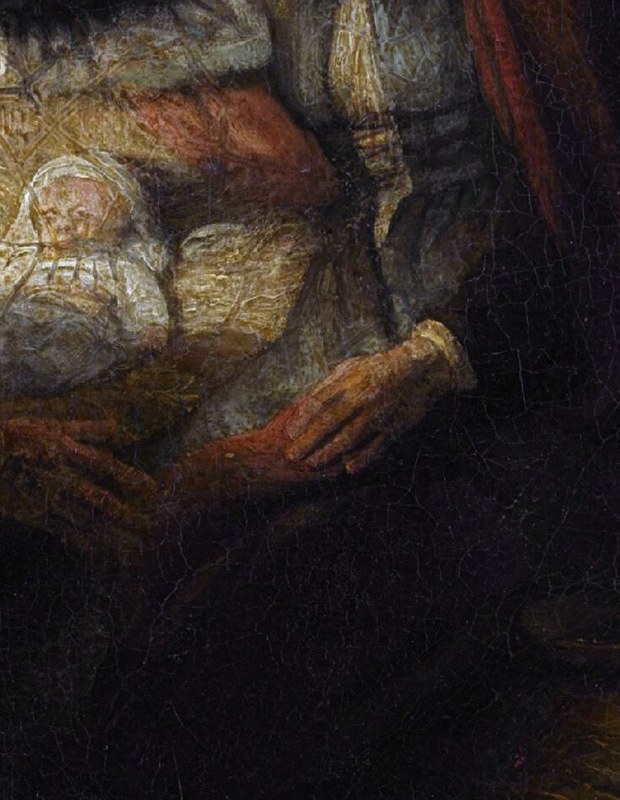
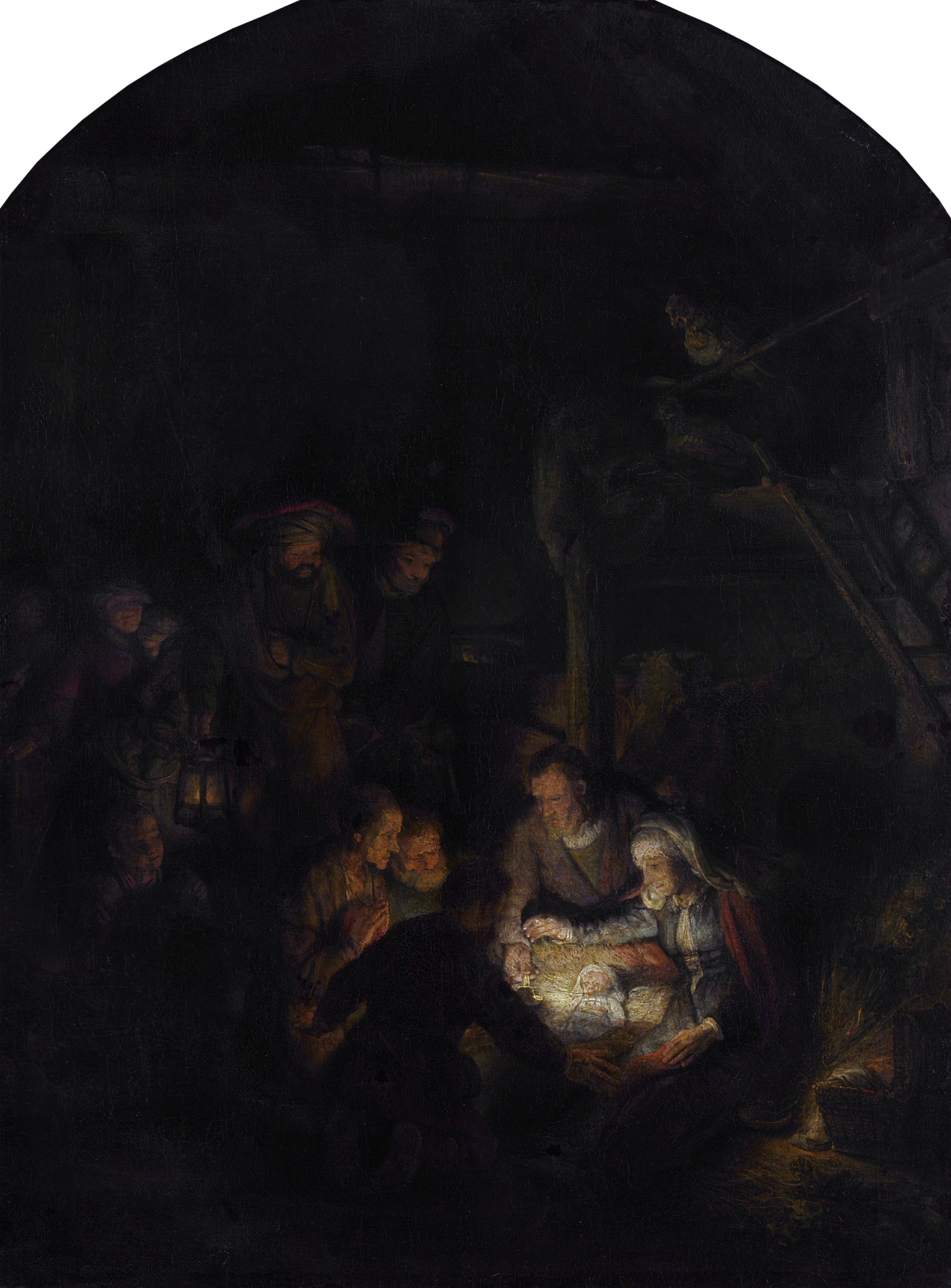
Adoration of the Shepherds by Rembrandt, painted in 1646, hangs in the Alte Pinakothek in Munich. Made when the artist was deep in debt and carrying years of personal loss, it hides a figure in the darkness that most viewers scroll straight past.
The infant Jesus glows as the central light in a scene otherwise swallowed by deep browns and blacks. Shepherds gather around: one kneels, one holds a candle the child outshines, and one in a red hat looks less awed than the rest. But look into the upper right shadows. A dark figure stands watching, unnamed, belonging to no Gospel account of the nativity.
Rembrandt painted this during the hardest years of his life. His wife Saskia had died in 1642, three children did not survive infancy, and his finances were collapsing. Yet his religious works from this period are his most intimate, trading grand spectacle for quiet, human-scale encounters with the divine.
He never explained who the shadowed watcher is. The figure has simply stood there since 1646, a question hiding in plain sight.
Details
Transcript
1646. This painter was deep in debt and alone. So he painted a newborn who becomes the only light. A shepherd brings a candle. He does not need it. This man does not kneel. He squints. Now find the figure hidden in the dark above them. No Bible verse mentions him. He was placed here in 1646.