The Lamentation by Ludovico Mazzolino
View the artwork: The Lamentation →
This is Ludovico Mazzolino's "The Lamentation," painted around 1514. It now hangs in the Galleria Borghese in Rome.
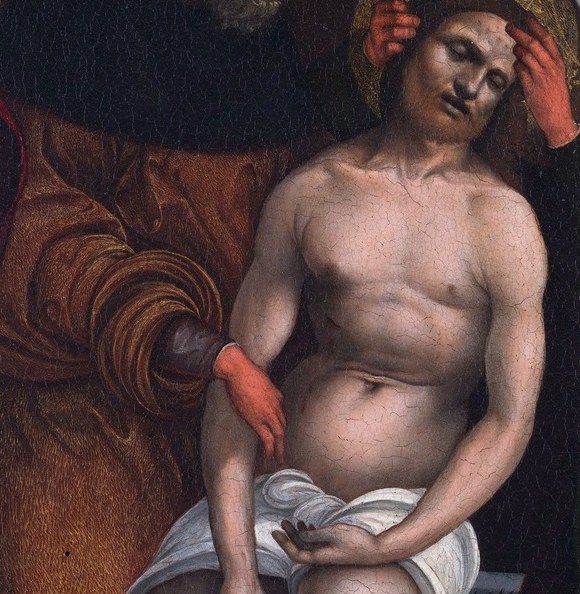
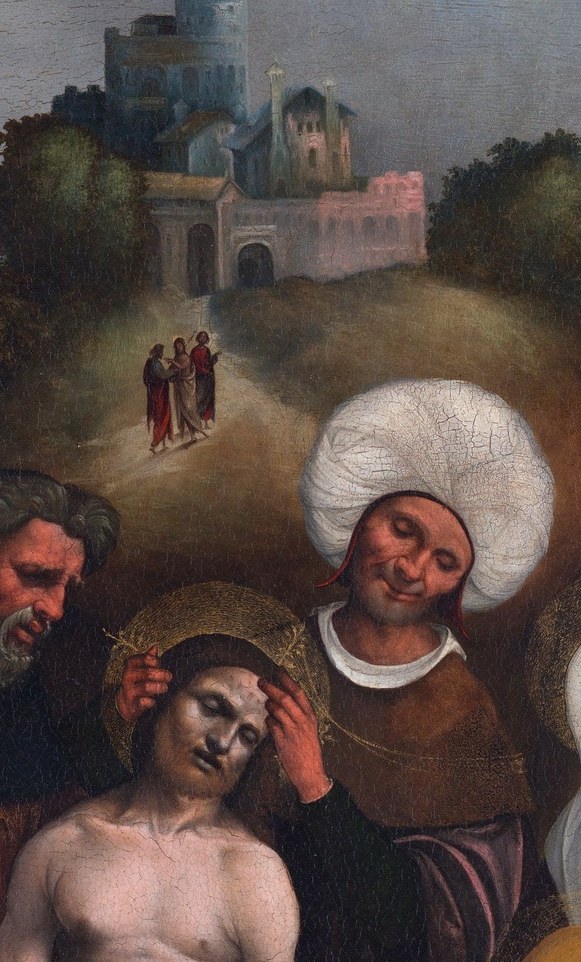
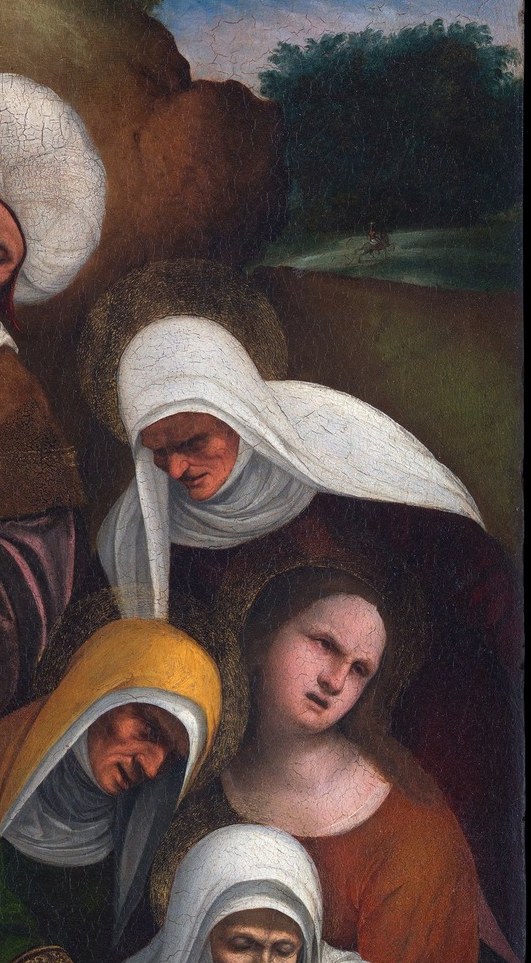
The painting places a universal religious moment inside a specific, lived world. The town in the distance is not a generic backdrop; Mazzolino worked in Ferrara, and the architecture grounds the scene in a real, dateable place. The grief in the foreground is immediate and individual, not merely ceremonial.
Mazzolino, also called Il Ferrarese, was active in Ferrara and Bologna in the early 1500s. His work is known for crowded compositions of intense religious feeling, but what sets this painting apart is its civic awareness. The blue-green townscape with its identifiable church spire does not simply fill space. It asserts that history's pivotal moments happen with a local audience watching, while everyday life continues just beyond the frame.
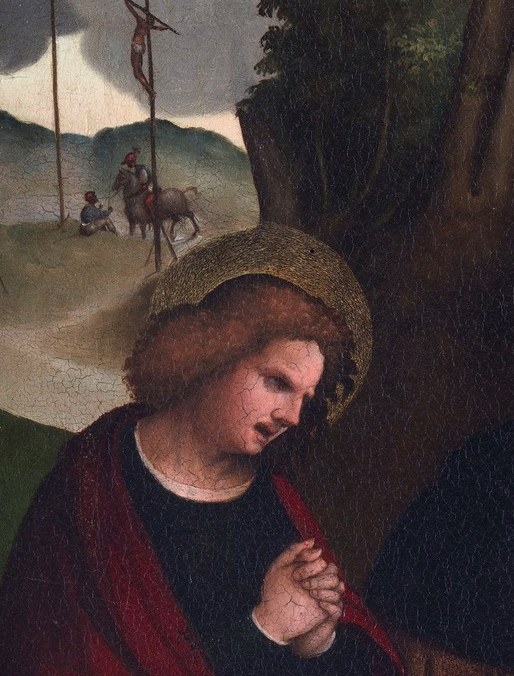
The painting belongs to a long tradition of Lamentation scenes, but it feels uniquely like a witness statement. You are not asked to feel a generic sadness. You are shown specific faces, a specific town, and the strange way time flattens when a world-changing event occurs in your own neighborhood.
#arthistory #renaissance #mazzolino
Details

Transcript
They have gathered around a body. Ferrara, around 1514. Outside the city walls. The church tower in the distance belongs to the real town. Mazzolino painted vivid, individual grief. This man's face is not a symbol. It is a portrait of loss. But look past them, to the horizon. The Crucifixion is still visible on the hill. Time collapses: the town watches the moment and its aftermath at once.