Artwork
The Lamentation
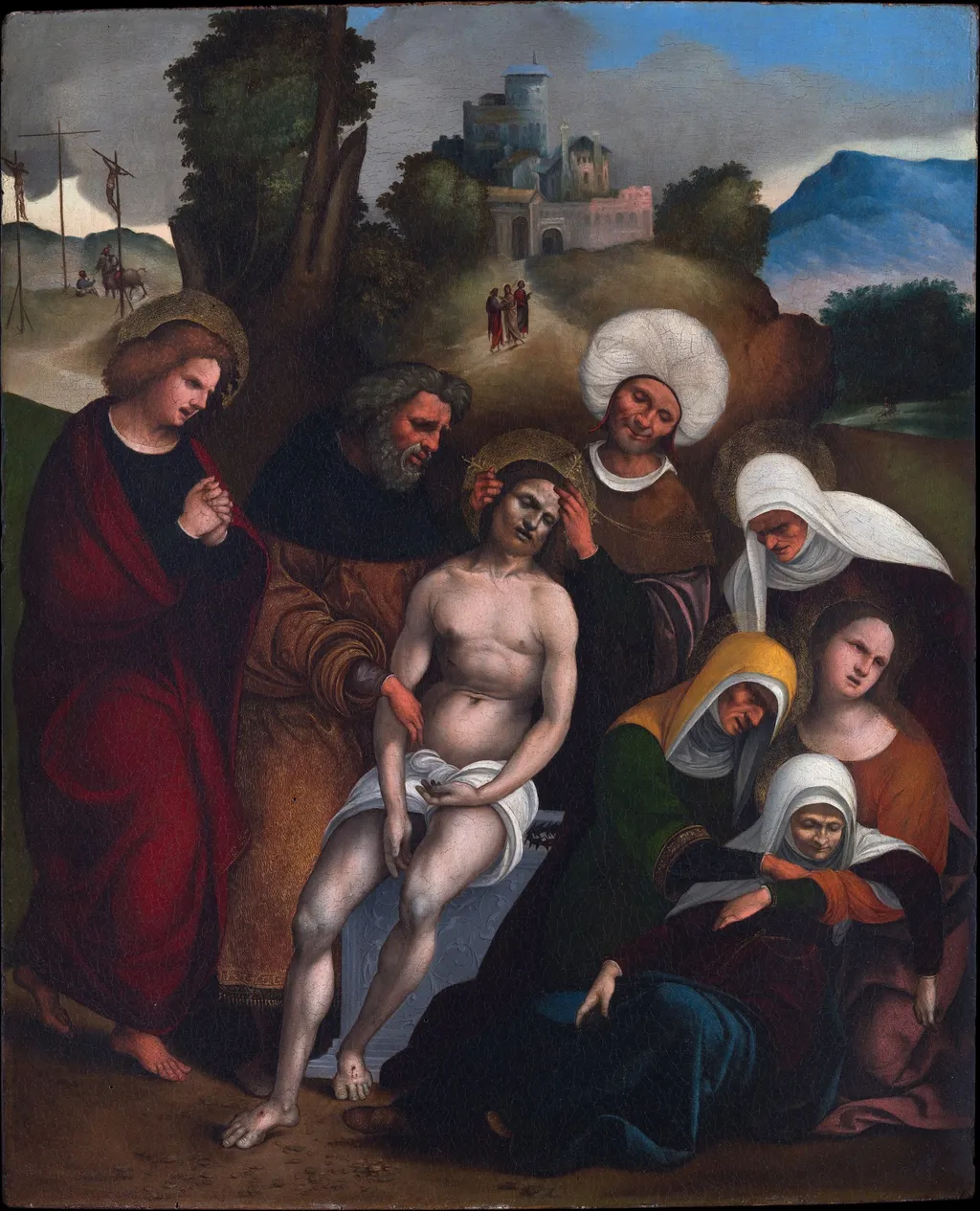
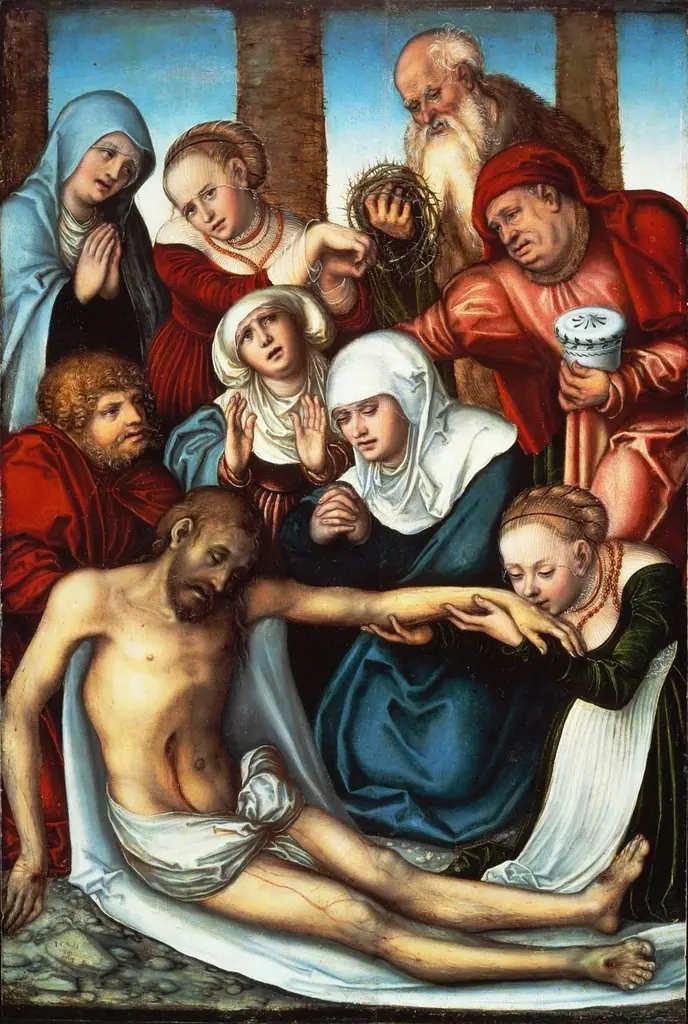
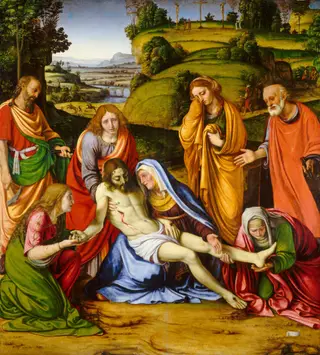
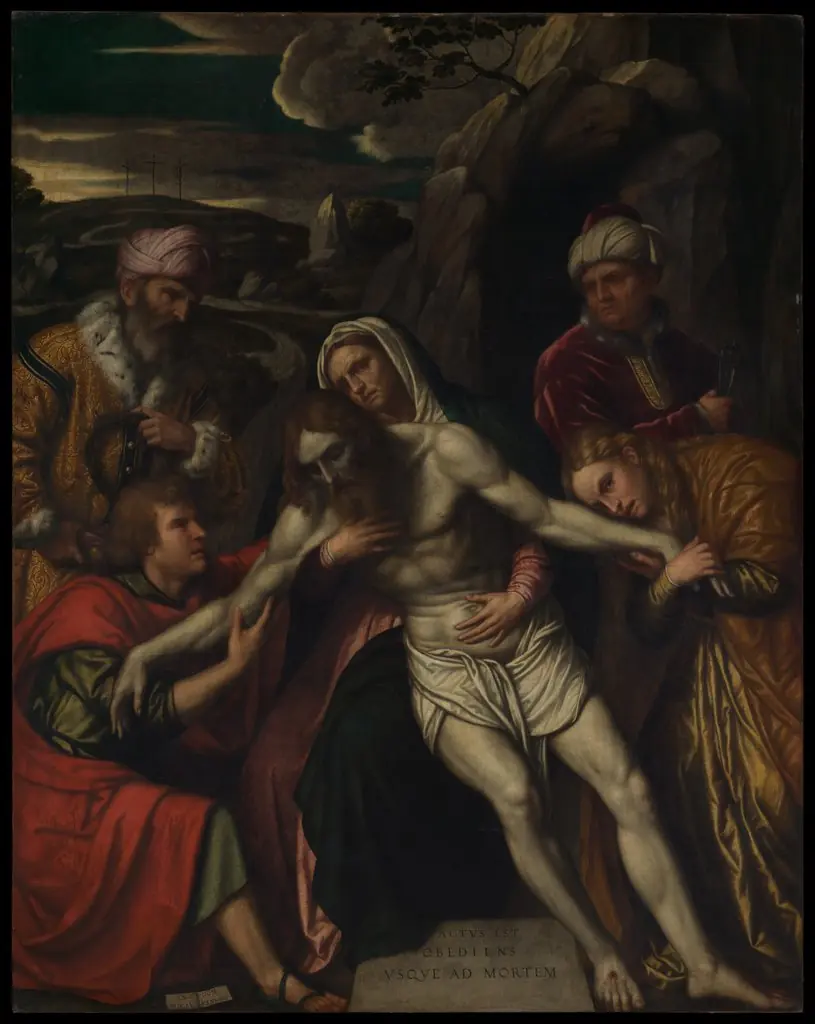
The Lamentation is an oil painting by the Mannerist artist Ludovico Mazzolino. It dates from 1514 and is held in the collection of the Metropolitan Museum of Art.
About this work
Subject & Meaning
This traditional iconography presents the Virgin cradling Christ’s body while John and others express grief, emphasizing the human sorrow of the Passion.
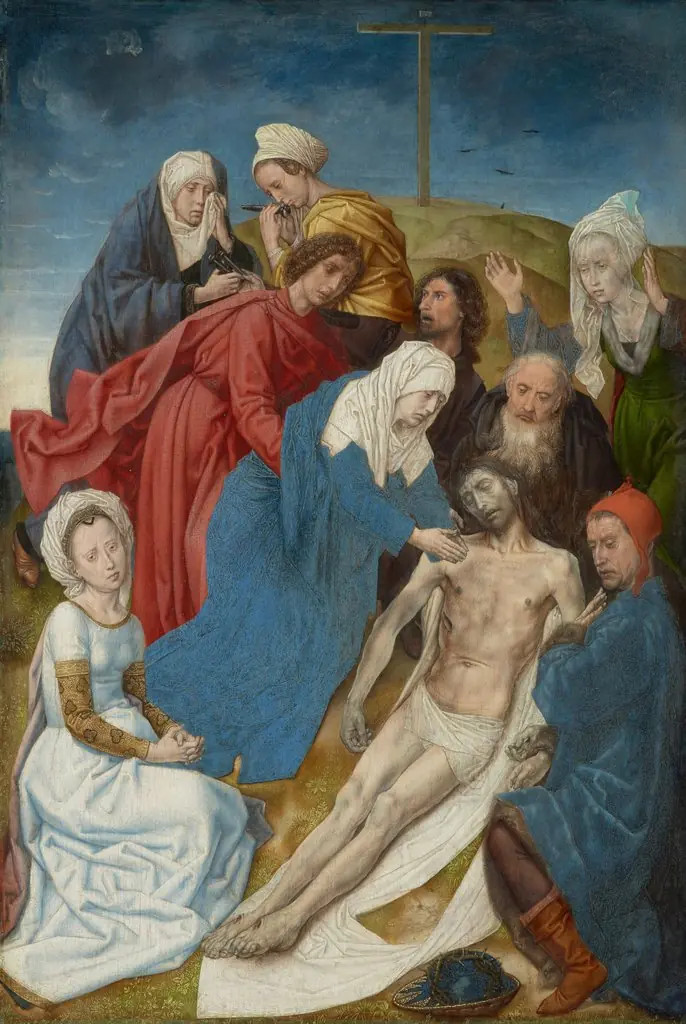
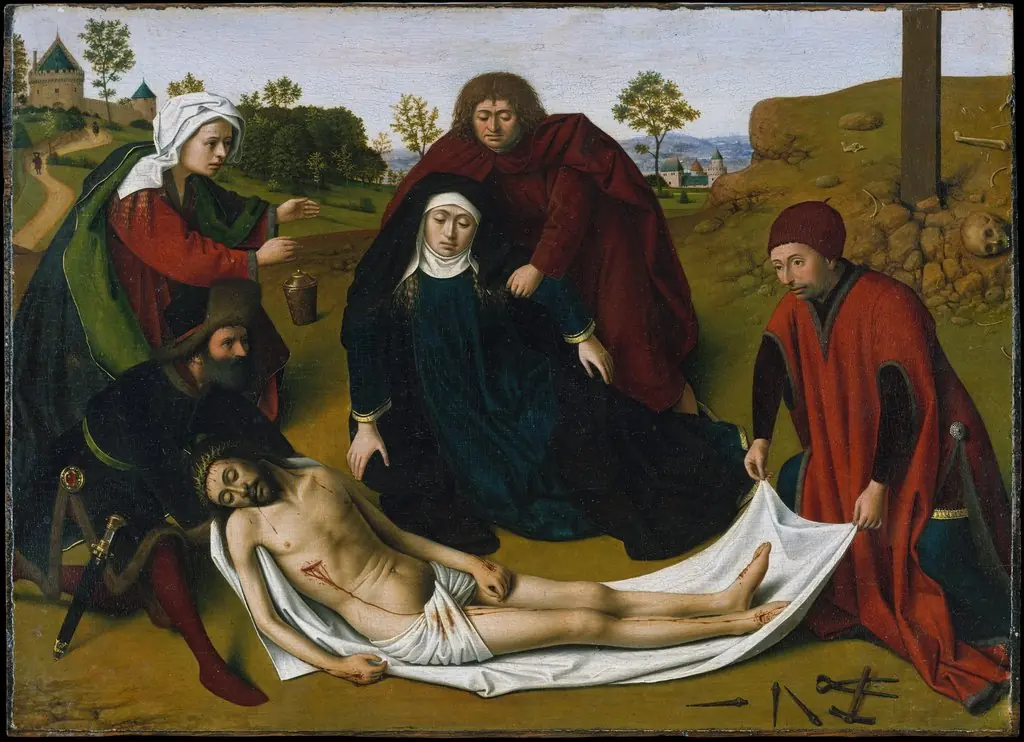
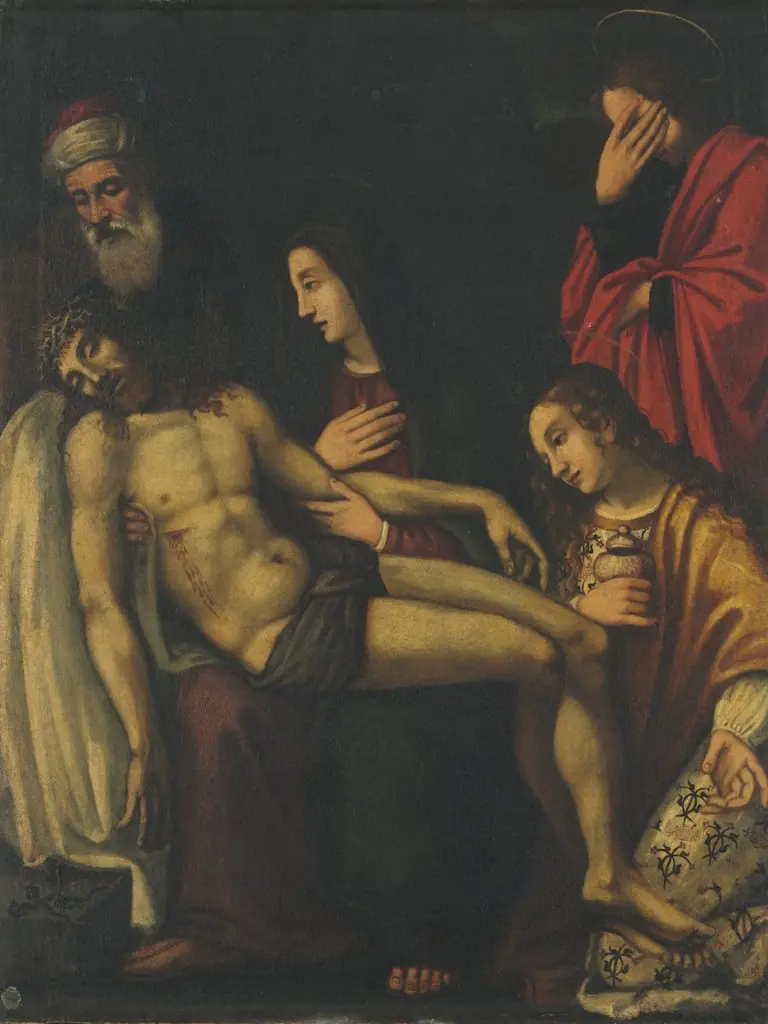
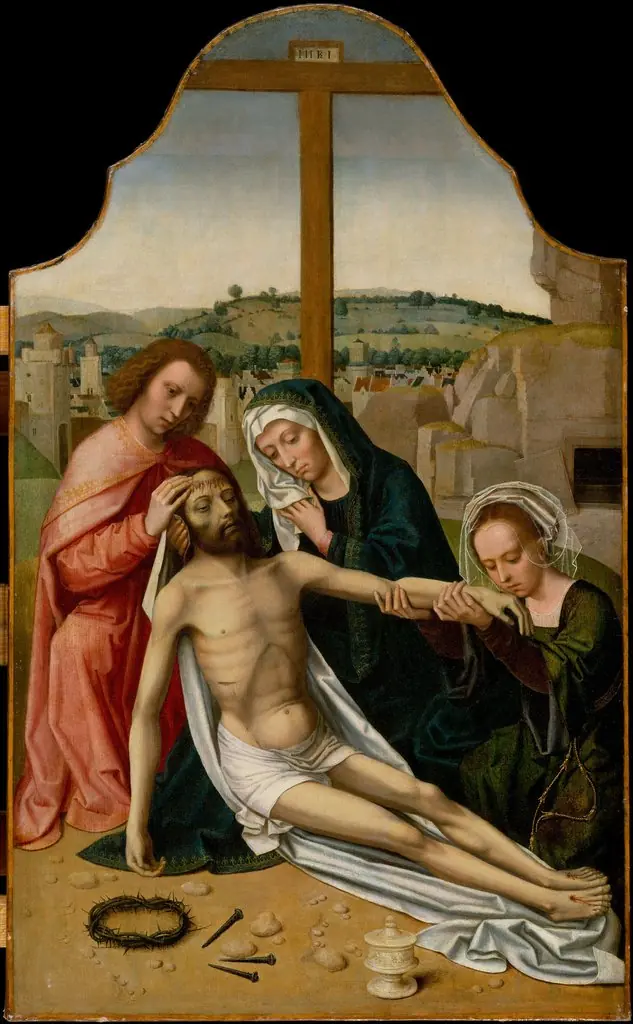
The painting depicts the Lamentation of Christ, showing the dead Jesus surrounded by mourners identified in the sources as the Virgin Mary, Saint John the Evangelist, and additional male and female figures. This traditional iconography presents the Virgin cradling Christ’s body while John and others express grief, emphasizing the human sorrow of the Passion. The scene symbolizes mourning and redemption, inviting contemplation of Christ’s sacrifice and the hope of resurrection inherent in the Christian narrative of the Lamentation.
Technique & Style
The work titled The Lamentation, painted by Ludovico Mazzolino in 1514, is executed in oil on a wooden panel. Its support is a panel measuring approximately 55.9 cm in height by 45.7 cm in width, typical of early‑16th‑century Italian religious paintings. The composition centers on the mournful figures of Christ, the Virgin Mary, John the Evangelist, and other lamenting characters, arranged to emphasize the narrative of the Lamentation of Christ.
Stylistically, the piece employs the oil medium to achieve fine detail and subtle tonal modulation, characteristic of the period’s religious art. The painting’s formal qualities reflect a balanced arrangement of figures within a shallow spatial setting, drawing attention to the emotional gravity of the scene.
History & Provenance
Created in 1514, The Lamentation is an oil-on-panel painting by the Italian artist Ludovico Mazzolino. The work depicts the Lamentation of Christ, featuring the Virgin Mary, John the Evangelist, and other mourners gathered around the body of Jesus. While the specific details of its original commission or early ownership records are not detailed in the provided sources, the work's creation date is firmly established as 1514.
The painting measures 55.9 cm in height and 45.7 cm in width. It is currently held in the collection of the Metropolitan Museum of Art in New York, where it is classified as a religious artwork. The piece remains a significant example of Mazzolino's religious output from the early sixteenth century.
Overview
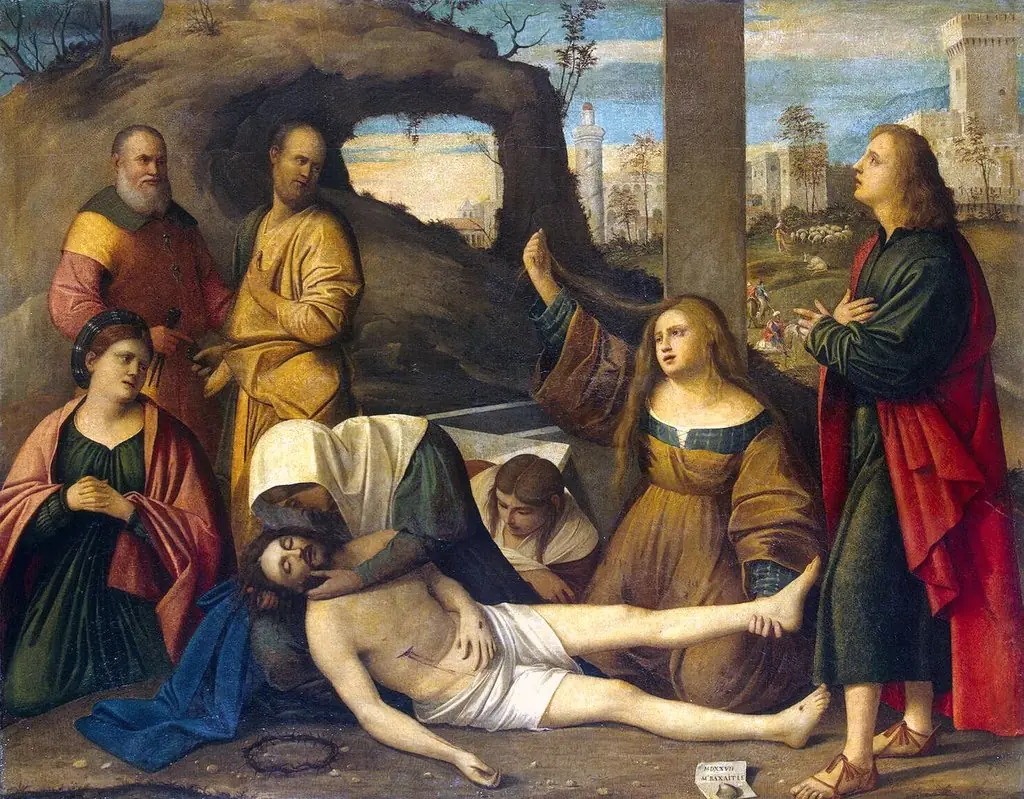
Painted in 1514, Ludovico Mazzolino's The Lamentation depicts the mourning of Christ's body immediately following the Crucifixion. The composition centers on the lifeless, naked figure of Jesus, who wears a crown of thorns and is supported by standing figures, likely Joseph of Arimathea and Nicodemus, while Mary and other followers grieve around him. Mazzolino renders the scene with the intricate detail and vibrant, jewel-like coloration characteristic of the Ferrarese school, contrasting the emotional intensity of the foreground group with a meticulously painted background.
Behind the mourners, a detailed hillside town featuring a church and castle rises under a pale sky, with a solitary tree and a distant crucified figure visible on the horizon. This work exemplifies Mazzolino's mature style, blending religious narrative with a landscape that functions as a complex, almost theatrical setting. Created during the artist's active period in Ferrara, the painting demonstrates his ability to synthesize the influence of Dosso Dossi and earlier Ferrarese traditions into a distinct, intimate devotional image that prioritizes narrative clarity and decorative richness.
Own this work as a print
Artist & collection
Artist
Ludovico Mazzolino (1480 – c. 1528) - also known as Mazzolini da Ferrara, Lodovico Ferraresa, and Il Ferrarese - was an Italian Renaissance painter active in Ferrara and Bologna.