Springtime by Pierre Auguste Cot
View the artwork: Springtime →
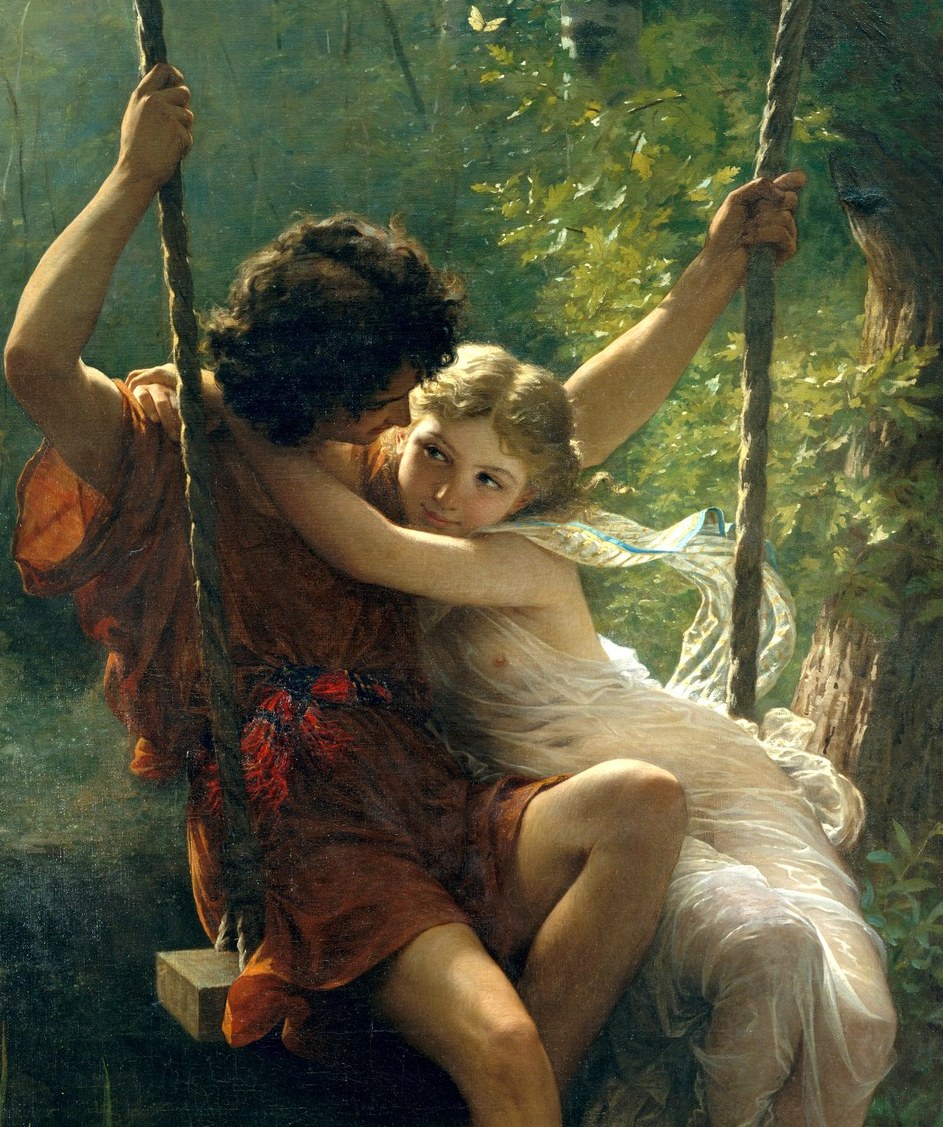
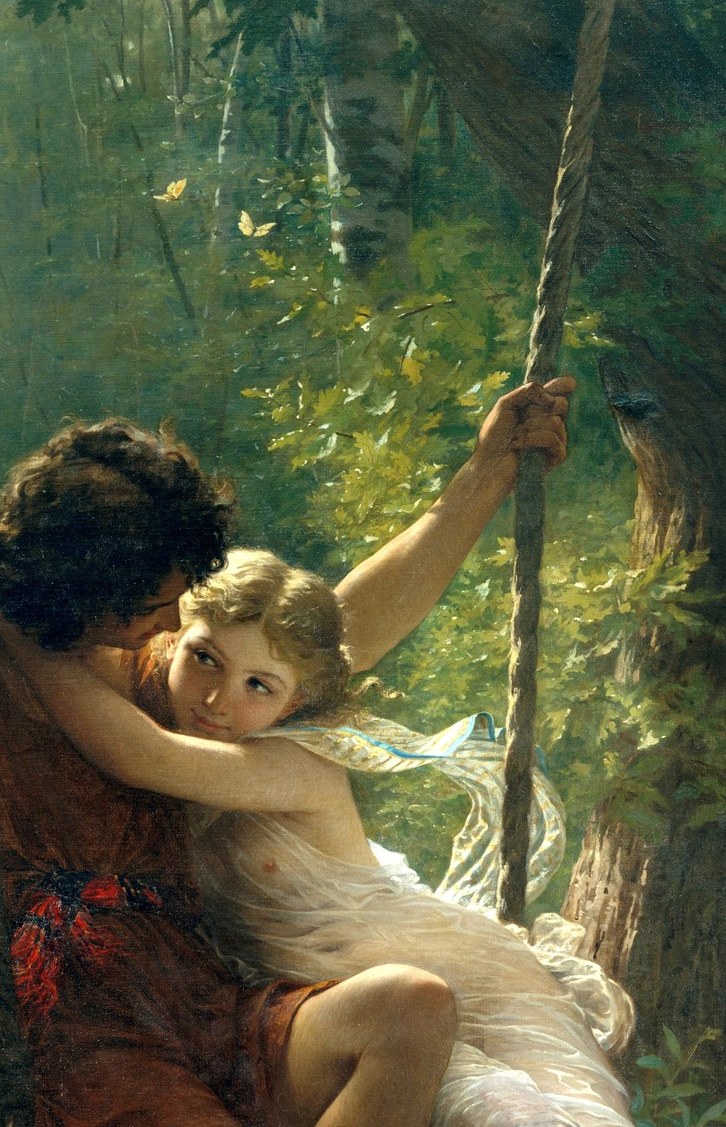
Pierre Auguste Cot's *Springtime*, painted in 1873 and now held at the Metropolitan Museum of Art, is one of the most commercially reproduced paintings of the 19th century. But a persistent rumor shadowed its Salon triumph: that the entwined models were the artist's own cousin and her brother-in-law, two people whose families recognized them instantly on the Salon walls and were horrified.
The painting itself leaves little to ambiguity. The young woman's face tilts toward her companion with flushed, unguarded delight, her pale dress billowing beneath the swing as her feet dangle free. The young man, dressed in a warm red-brown tunic, presses close enough that their faces nearly touch. Cot frames the pair inside two slender ropes and a dark canopy of foliage, isolating them in a private world of dappled spring light.
Cot trained under Cabanel and Bouguereau, and his portraits of the Parisian elite made him wealthy. But *Springtime* and his later *The Storm* secured his fame, not through aristocratic commissions, but through allegorical scenes that felt disarmingly real. The rumor of the models' identities persisted for decades, though it has never been definitively proven. What is certain is that Cot stopped painting genre scenes after 1880 and retreated into portraiture, his reputation intact but his most famous image carrying a whisper of something forbidden.
#arthistory #19thcenturyart #pierreaugustecot
Details



Transcript
Paris, 1873. A painting appeared at the Salon. It became a sensation overnight. But two families saw this and stopped speaking. She was his cousin. He was her brother-in-law. Cot painted them tangled together like lovers. The scandal was in the closeness.