Artwork
Springtime
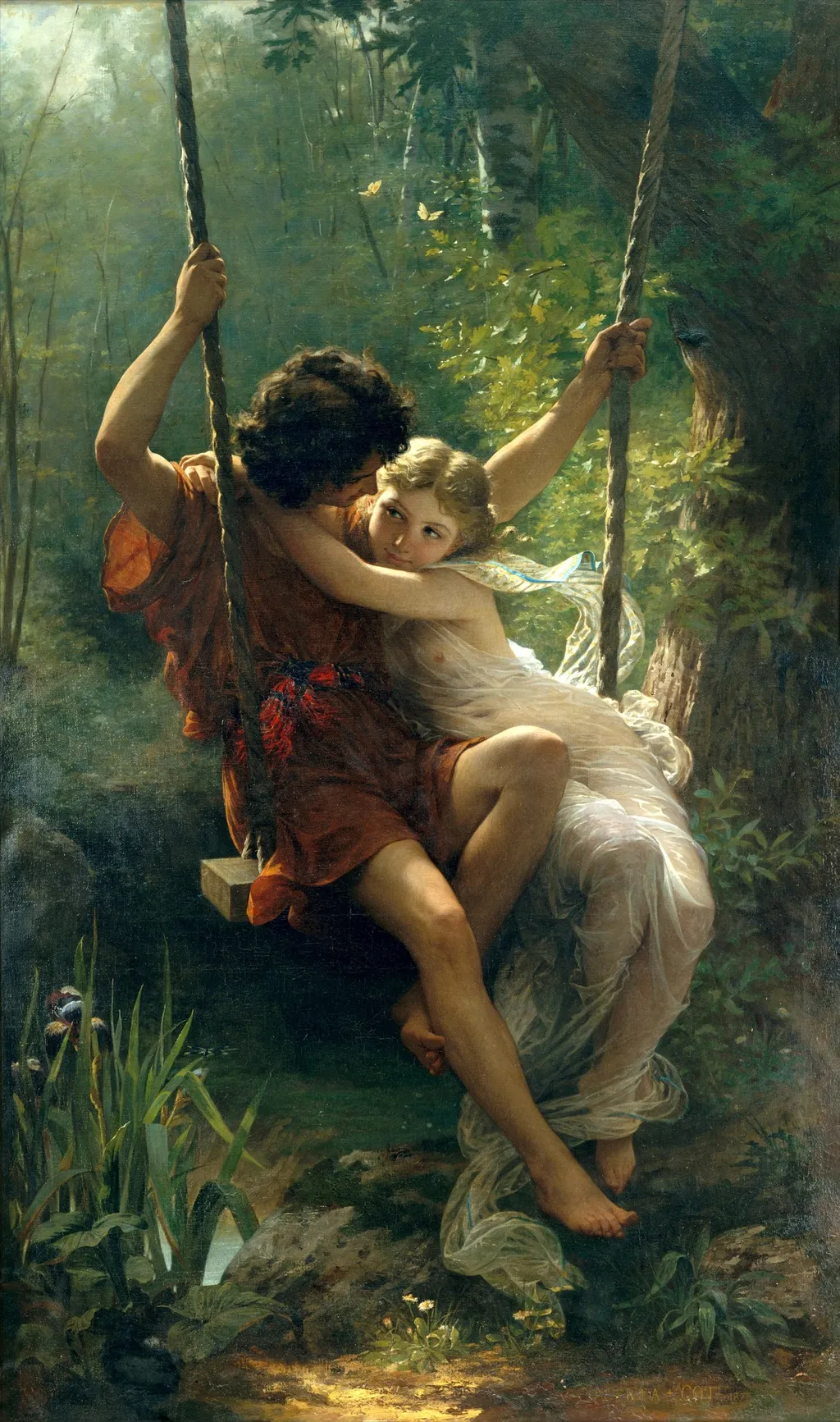
Springtime is an oil painting by the Academic Art artist Pierre Auguste Cot. It dates from 1873 and is held in the collection of the Metropolitan Museum of Art.
About this work
Springtime, painted by Pierre Auguste Cot in 1873, shows two figures in a quiet, romantic moment in a natural setting. Cot worked in France in a soft, dreamy style, and this oil is among his best-known pieces, long held at The Metropolitan Museum of Art.
Subject & Meaning
The flora and insects are read as symbols of spring, reinforcing the season’s association with renewal and youthful love (4).
The painting shows a young man and woman in classical attire seated on a swing suspended from an oak tree within a lush, enchanted forest filled with birches, irises, daisies and butterflies (2,3,4). The flora and insects are read as symbols of spring, reinforcing the season’s association with renewal and youthful love (4). Bathed in soft light that falls especially on the woman’s translucent drapery, the couple’s embrace and exchanged glances convey the intoxication of first love, described as “ivres du premier amour” (3,4).
While the pose recalls the Rococo swing motif of Fragonard’s Hasards heureux de l’escarpolette, Cot’s version emphasizes innocence and purity rather than overt eroticism, presenting an idealized vision of springtime affection (4).
Technique & Style
Springtime is an oil painting executed on canvas by Pierre Auguste Cot in 1873, adhering to the academic art movement. The work measures 213.4 cm in height and 127 cm in width. Cot employs a meticulous technique to render a young couple in classical garb seated on a swing within a lush forest setting.
The artist demonstrates sophisticated handling of drapery, particularly in the transparent, white fabric worn by the female figure, which appears to ripple in a gentle breeze created by the swing's motion. Formal qualities emphasize the luminosity and delicacy of the girl's skin against the surrounding flora of birches, irises, and daisies. The composition utilizes light to highlight the figures' youth and purity while capturing the dynamic posture of the embrace, with the man gripping the ropes and the woman leaning back against him. This visual approach reflects influences from Rococo predecessors like Fragonard while maintaining a distinct academic finish.
History & Provenance
Springtime was painted by Pierre Auguste Cot in 1873 and first shown at the Salon of that year‑4). The artist sold the work directly to John Wolfe, a principal patron, in 1873. After remaining in the Wolfe collection, the painting entered the possession of Steven and Alexandra Cohen, who donated it to the Metropolitan Museum of Art in 2012, where it has been housed since. This sequence establishes the work’s dating, creation, and provenance from Cot’s studio to its current institutional home.
Springtime (Le Printemps) is held in the collection of the Metropolitan Museum of Art in New York. The museum acquired the work in 2012 through a donation from Steven and Alexandra Cohen. Prior to this acquisition, the painting was purchased directly from the artist in 1873 by John Wolfe.
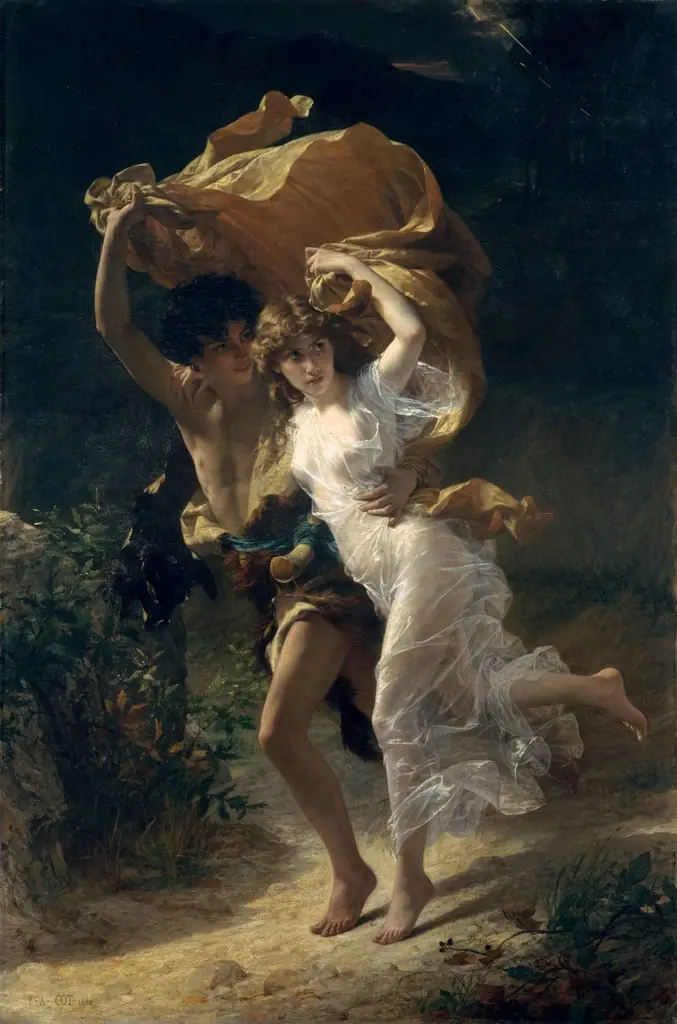
The work's exhibition history began at the Paris Salon of 1873, where it was first displayed to significant public acclaim. It remains part of the Metropolitan Museum's permanent holdings, often noted alongside Cot's later work, The Storm (L'Orage), which also resides in the same collection.
Legacy
Springtime quickly became Pierre-Auguste Cot's most celebrated canvas; after its successful debut at the 1873 Salon it was widely reproduced in engravings, ceramics and other media, cementing his reputation in the academic tradition. The painting entered the Metropolitan Museum of Art in 2012 through a bequest, ensuring continued public access and scholarly attention. Critics have linked its lyrical scene to 18th‑century French literature such as Paul and Virginie, and its composition inspired later works like Cot's L'Orage, illustrating its lasting impact on 19th‑century visual culture.
Overview
Pierre Auguste Cot's Springtime (Le Printemps), an oil on canvas from 1873, depicts a tender moment between two figures in a natural setting. This painting is recognized as one of the French artist's most celebrated works and has been part of The Metropolitan Museum of Art's collection in New York for over a century, where it continues to engage viewers.
Context
Created in France during the late 19th century, Springtime reflects the prevailing artistic tastes for sentimental and idealized narratives. This period saw a widespread appreciation for scenes that emphasized emotional depth, often rendered with a soft palette and a focus on natural beauty. Cot's work resonated with audiences who sought art that evoked romance and a sense of idyllic charm.

Own this work as a print
Artist & collection
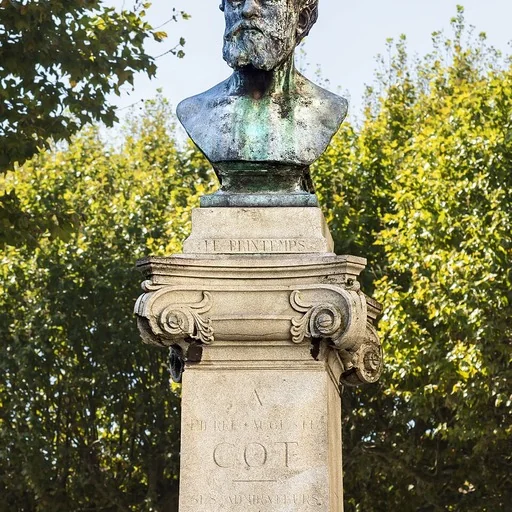
Artist
Pierre Auguste Cot was born on February 17, 1837, in Bédarieux, a small town in the Hérault region of southern France.