Saint Ambrose by Francisco Goya
Francisco Goya's "Saint Ambrose," painted in 1798, depicts the revered religious figure as both a scholar and a bishop. Currently housed at The Cleveland Museum of Art, this work showcases Goya's skill in conveying meaning through symbolic elements.
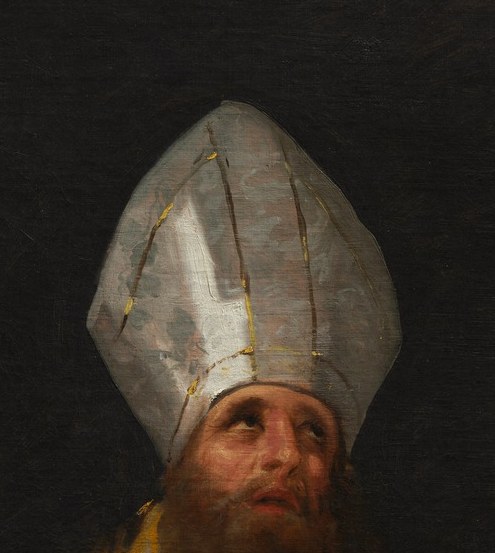
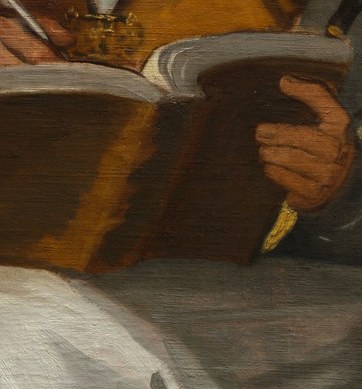
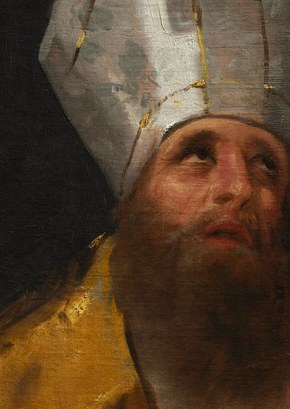
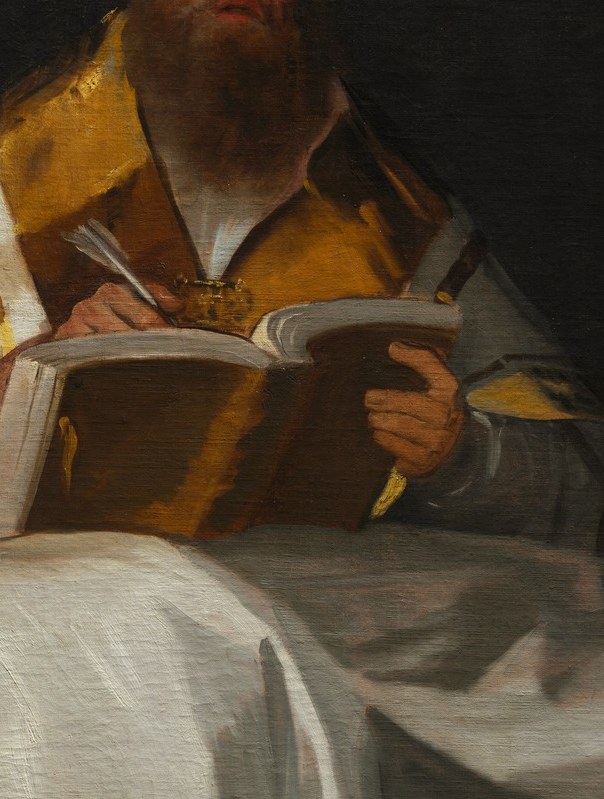
Observe Saint Ambrose's mitre, the distinctive hat of a bishop, which immediately communicates his high ecclesiastical standing. His quill pen, poised over an open book, highlights his identity as a prolific writer and theologian. The book itself reinforces his scholarly pursuits and his role as a teacher within the church.
Goya, a leading Spanish artist of his time, created this oil painting during a period when he produced numerous religious works, bridging the traditions of the Old Masters with emerging modern art. The stark contrast between the illuminated figure and the dark background is characteristic of the Spanish Baroque's tenebrist style, drawing attention to Saint Ambrose's contemplative expression.
This painting invites us to appreciate how Goya used visual cues to define the multifaceted identity of a significant historical figure. What other details do you notice?
Details
Transcript
This Spanish painting shows a revered figure, Saint Ambrose. His mitre, the bishop's hat, signals his high ecclesiastical rank. With his quill pen poised, he is a scholar and writer. The open book confirms his role as a theologian and teacher. Francisco Goya painted this work in 1798. He captures the Saint's contemplative spiritual focus.