Still Life with Fruit by Coenraet Roepel
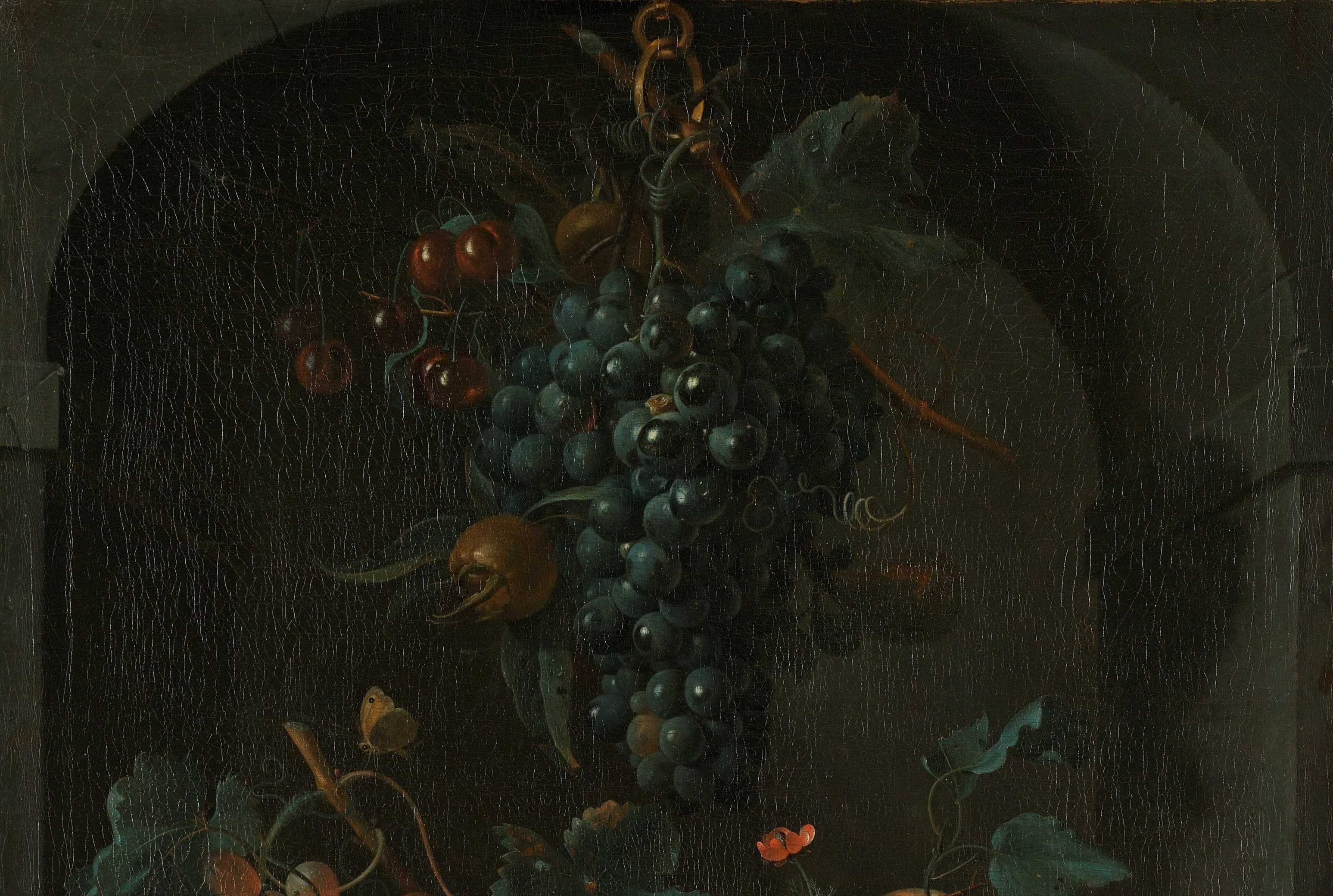
Coenraet Roepel’s “Still Life with Fruit,” painted in 1721, is a classic example of the Dutch tradition of illusionistic still life painting. Now held at the Rijksmuseum, this work demonstrates Roepel's meticulous attention to texture and light.
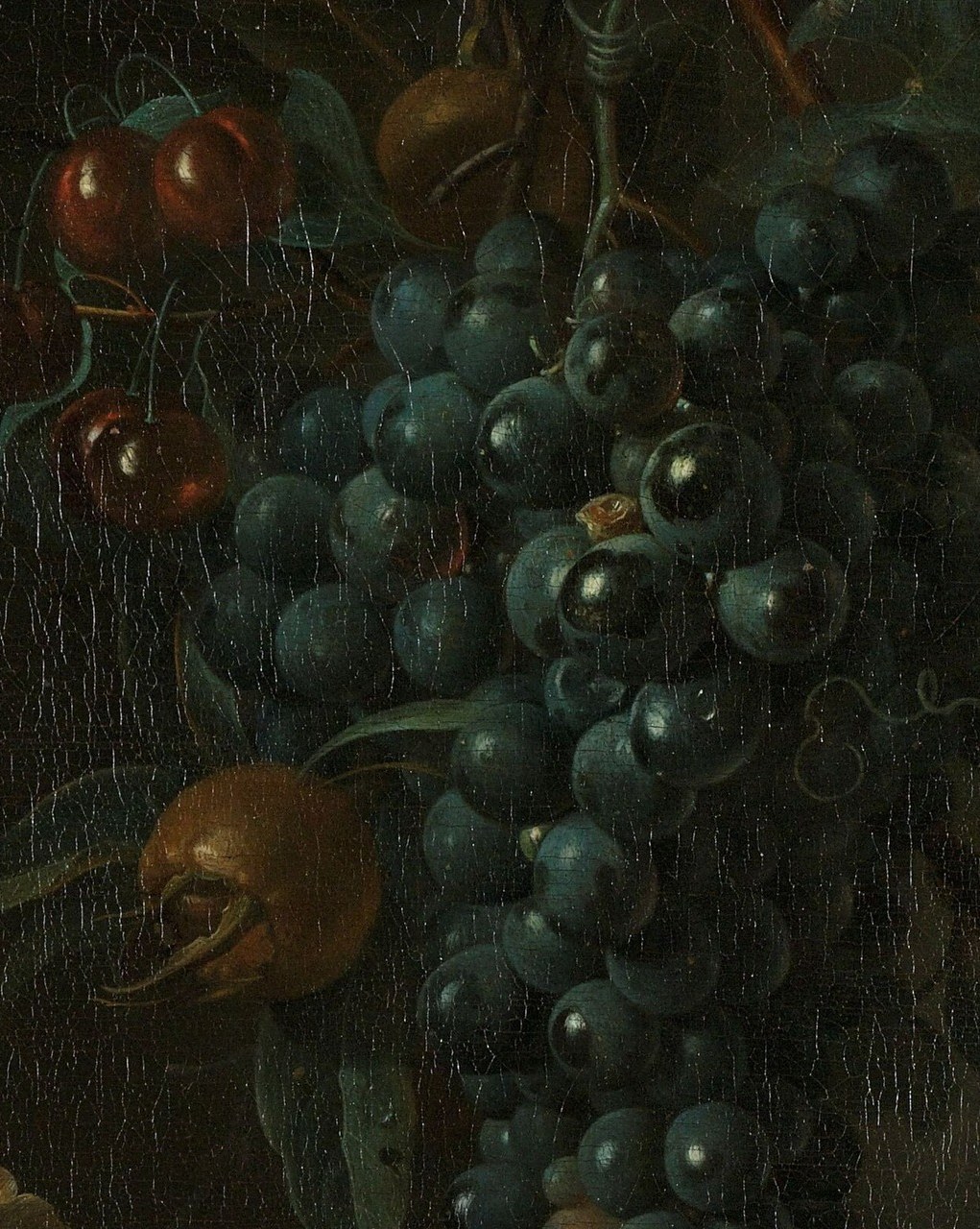
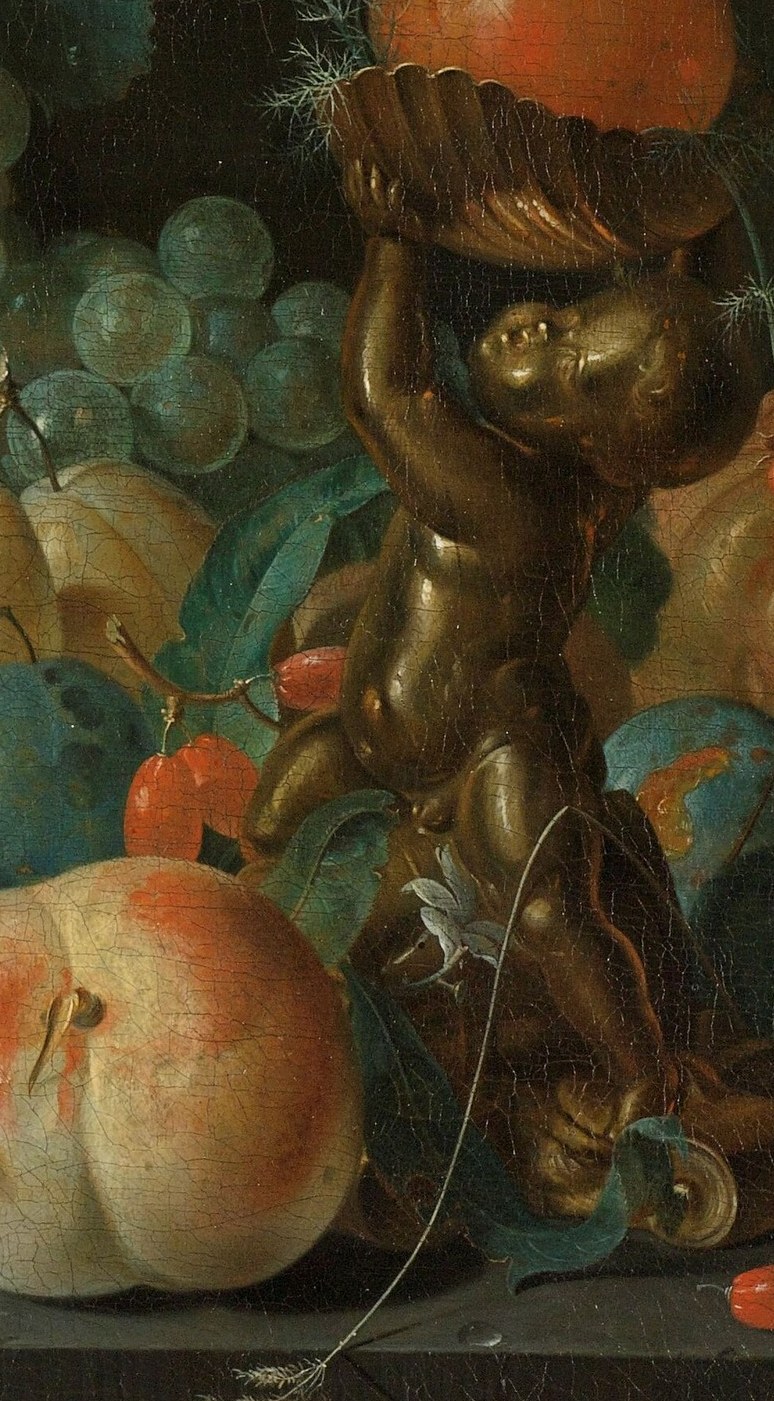
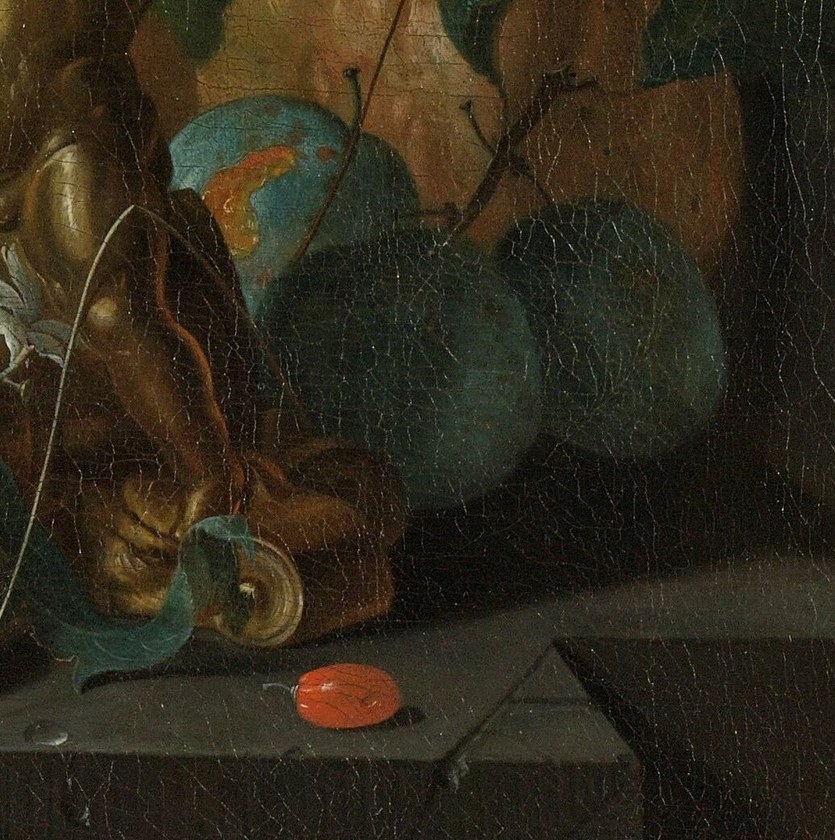
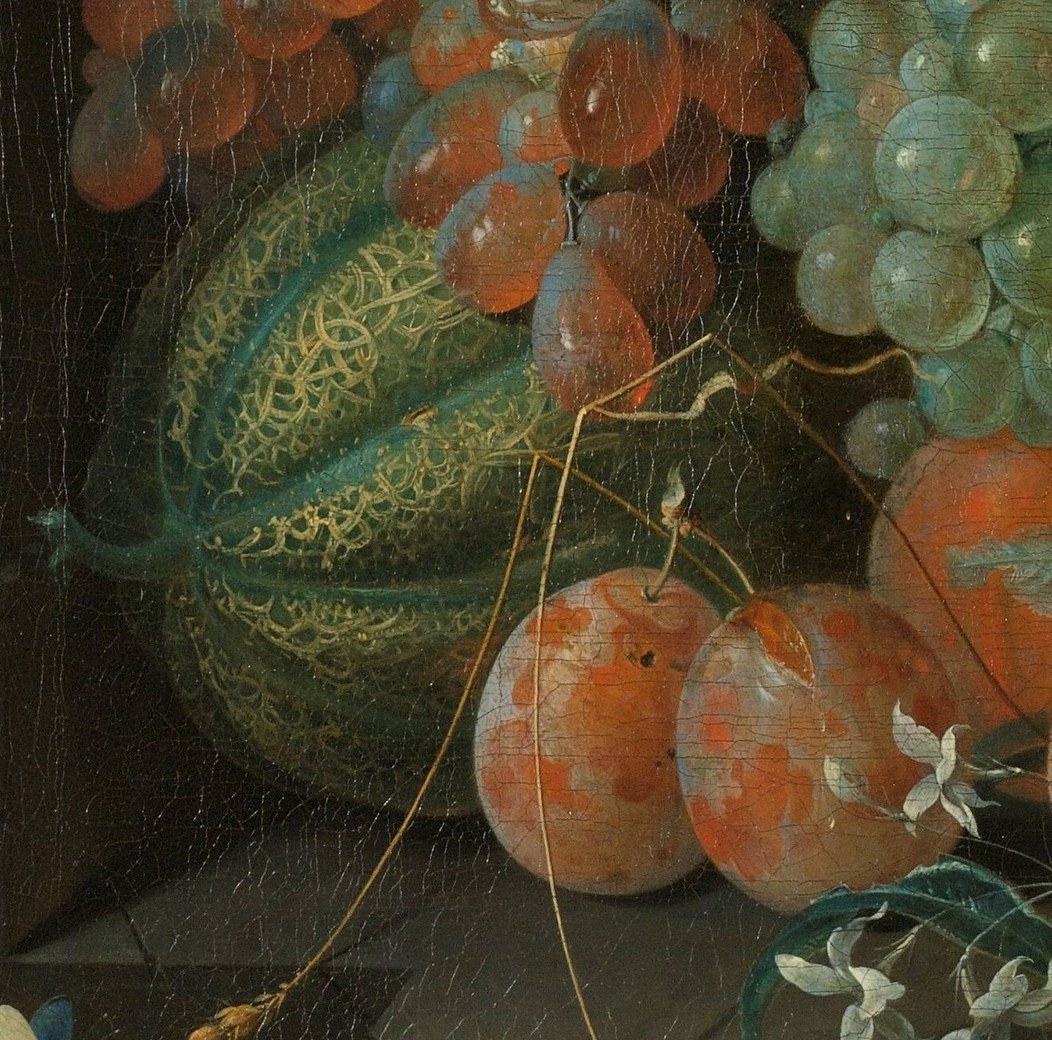
Notice the vibrant assortment of fruits, including translucent grapes and fuzzy peaches, arranged around a cherubic figure. The artist's skill in rendering these organic forms against a dark niche creates a dramatic sense of depth and realism, making each element appear remarkably lifelike.
Roepel, born in The Hague, was known for his specialized still lifes of fruits and flowers. In the early 18th century, such paintings were highly sought after, valued for their technical virtuosity and symbolic resonance of abundance and prosperity. These works often commanded significant prices in their day.
What details do you find most striking in this portrayal of nature's bounty?
Details
Transcript
In 1721, this still life was painted by Coenraet Roepel. Look at these grapes, rendered with remarkable detail. The artist specialized in fruit and flower still lifes. His work was highly valued, even in his own time. Such a painting could sell for a considerable sum. The market for these intricate works was thriving.