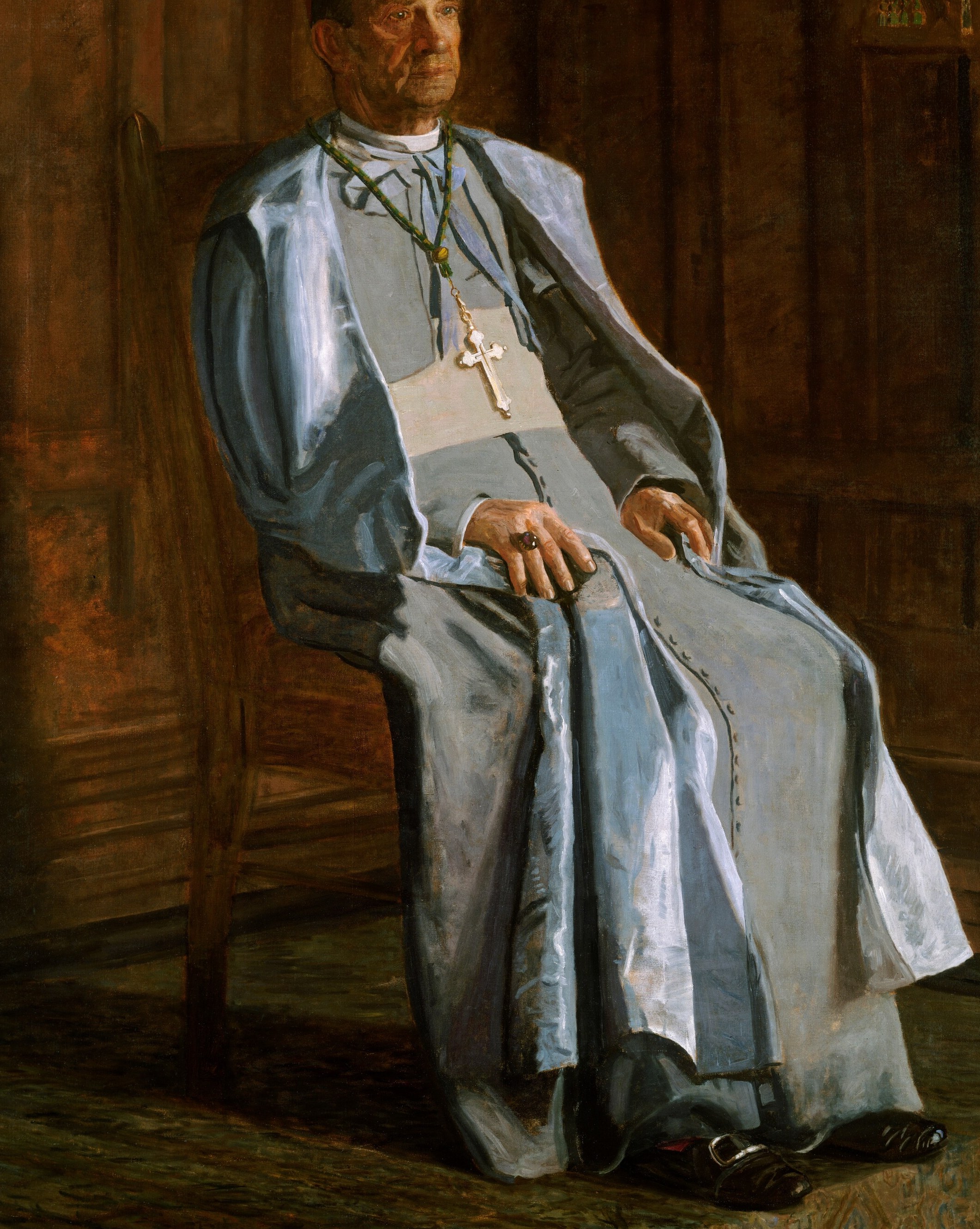
Archbishop Diomede Falconio by Eakins, Thomas
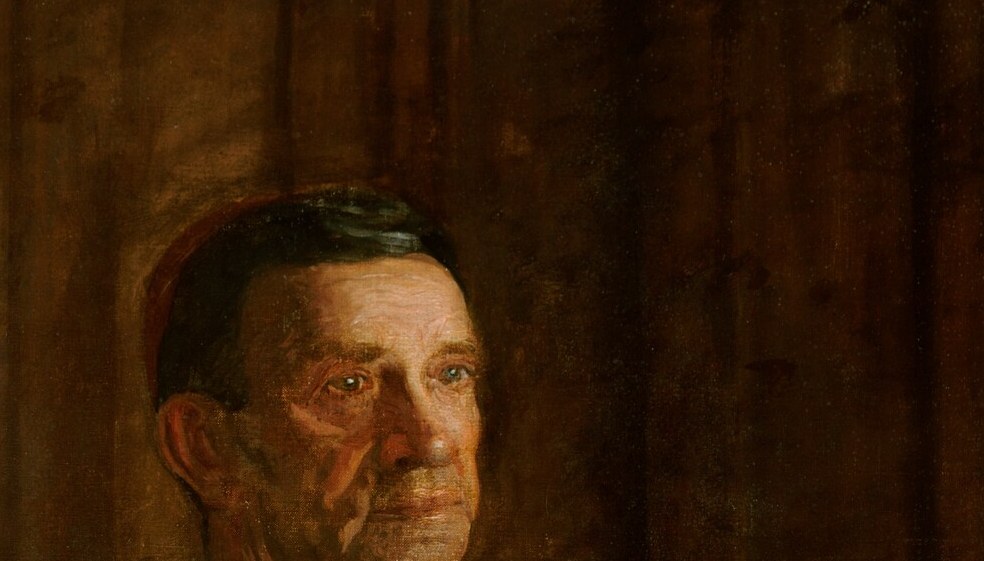
Thomas Eakins's 1905 portrait, "Archbishop Diomede Falconio," at the [Museum Name, if known], showcases the artist's masterful handling of light and texture, especially on the Archbishop's silk vestments. Eakins was renowned for his meticulous observation and his ability to render complex surfaces with incredible realism.
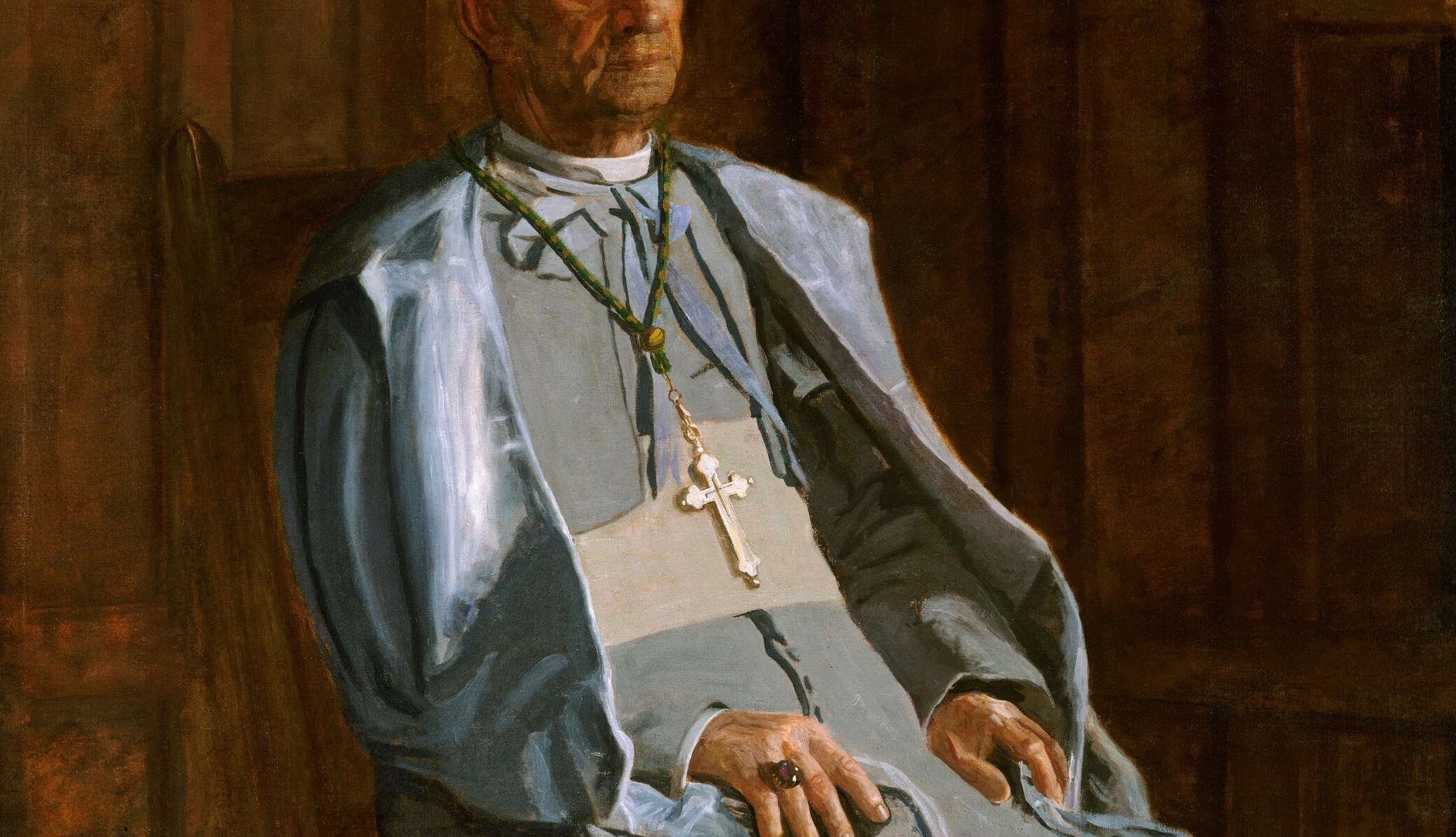
Observe the cool, luminous quality of the silk mozzetta and other garments. Eakins achieved this effect not by simply painting white, but by building up layers of paint, often from a dark background, to create the illusion of light reflecting and permeating the fabric. This technique gives the silk an almost internal glow, making it one of the painting's most striking features.
Eakins's dedication to naturalism and his refusal to idealize his subjects set him apart from many of his contemporaries. His method, while celebrated by some, also led to controversy, as he prioritized truthful representation over flattery. This portrait is a testament to his unflinching commitment to realism and his profound understanding of how light interacts with form.
What other details in this portrait capture your attention?
Details
Transcript
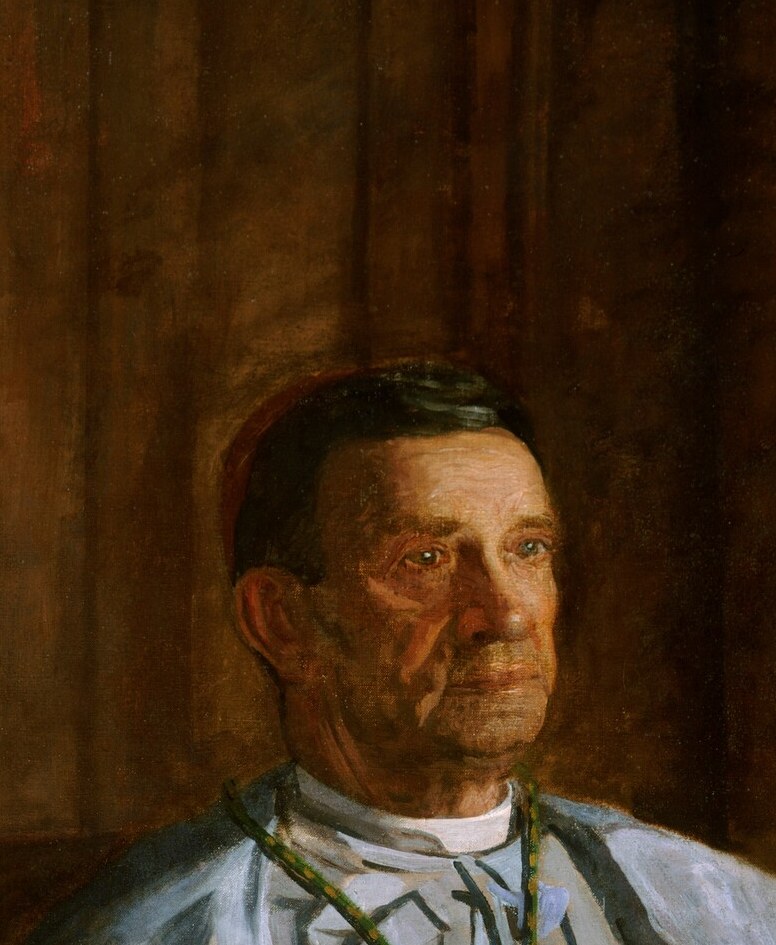
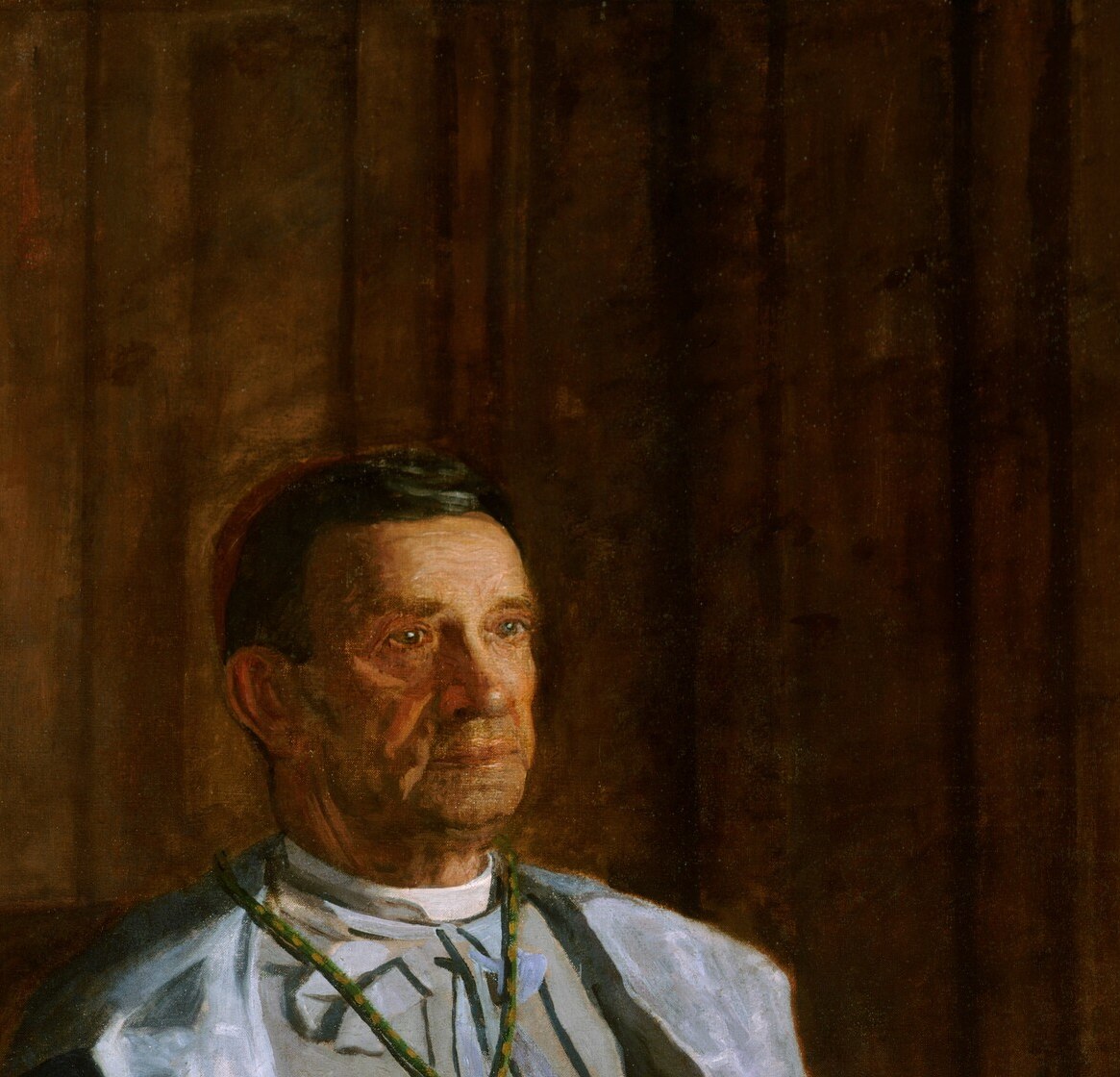
Look how this painter made white silk glow from within. He was obsessed with light, especially on complex surfaces. See the strong light from the upper left, sculpting his face. Now look at the delicate play of cool light on his mozzetta cape. This luminosity is built layer by layer, from a dark ground. It's a painting trick that made other artists jealous.