Caesar Giving Cleopatra the Throne of Egypt by Pietro da Cortona
Pietro da Cortona's "Caesar Giving Cleopatra the Throne of Egypt," painted around 1637, captures a dramatic moment of political alliance and personal power. This oil on canvas, housed at the Musée des Beaux-Arts de Lyon, was part of a lavish commission for Louis Phélypeaux's new Parisian residence.
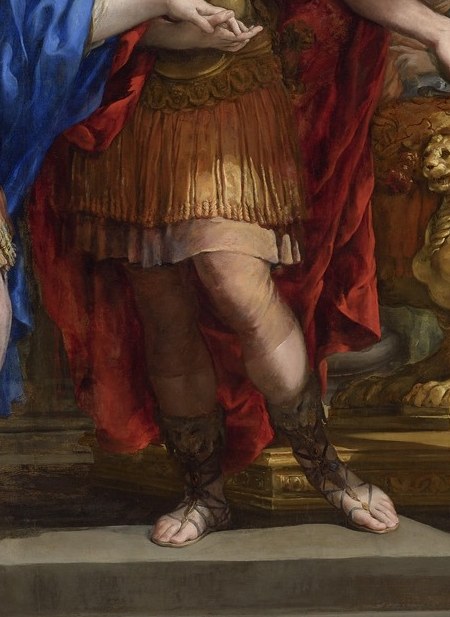
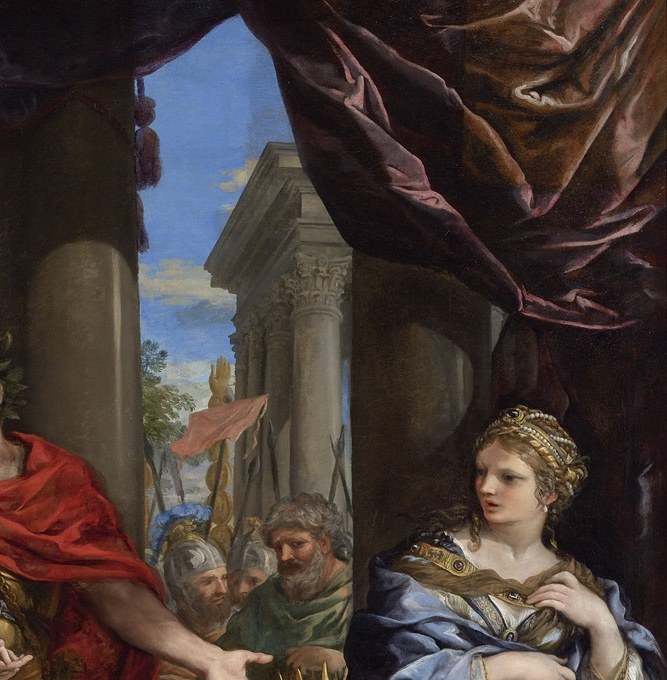
Observe the subtle expressions: Caesar's downcast gaze contrasts with Cleopatra's serene acceptance as she receives her throne. Her flowing blue robe and his ornate armor underscore their regal status, while the extended hand signifies the transfer of authority.
The artwork was one of nine pieces Phélypeaux requested, all to match the style and dimensions of Guido Reni's "The Abduction of Helen." Cortona, a leading Baroque painter and architect, created three works for this ambitious project, showcasing his mastery of grand historical narratives. What emotions do you sense in their interaction?
Details
Transcript
This painting tells a story of power, strategy, and seduction. It shows Julius Caesar returning the throne to Cleopatra. But look closely at his face, he seems reluctant. His armor shows his strength, but his gaze is downcast. She extends her hand, accepting the power he grants. This Baroque artwork was commissioned for a Parisian hôtel in 1637. It was part of a grand scheme, designed to impress.