Market day in a Flemish town by Sebastiaen Vrancx
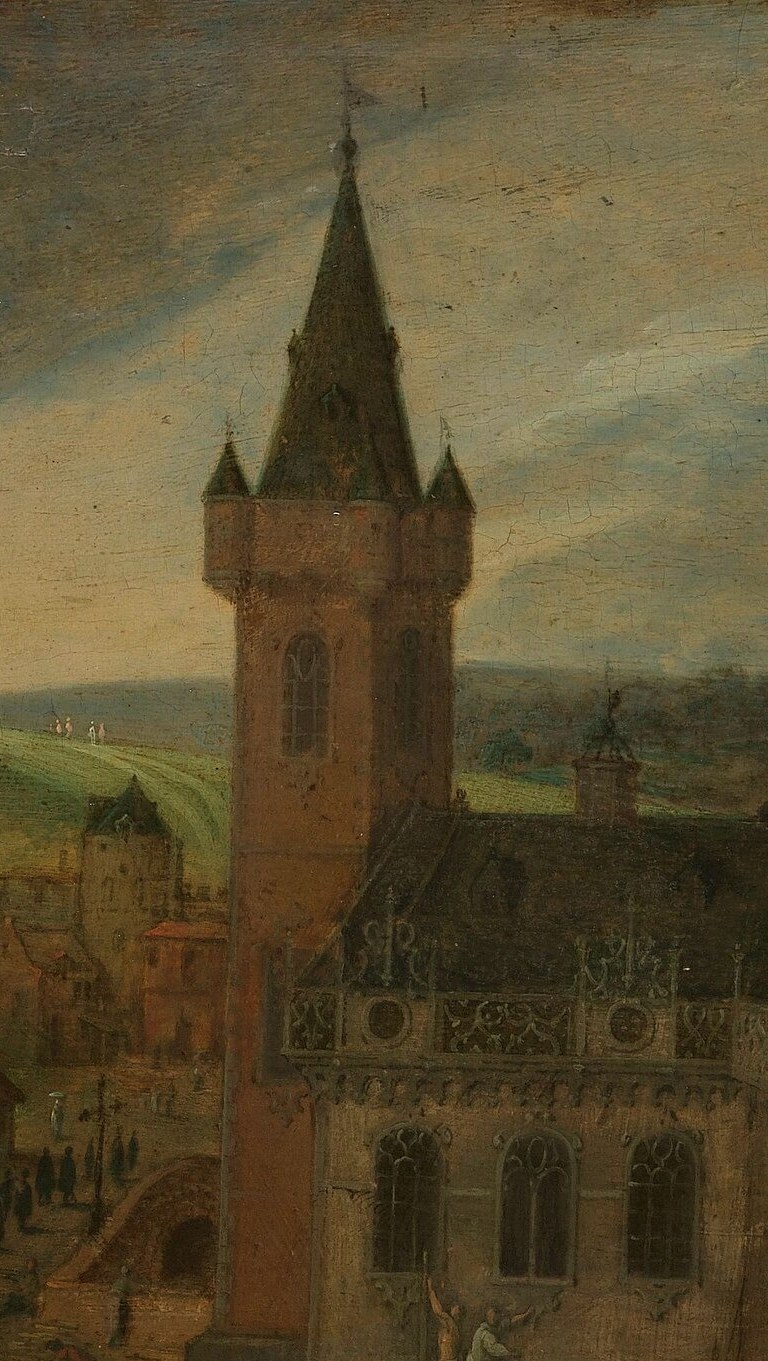
This is Sebastiaen Vrancx's 'Market day in a Flemish town,' painted in 1623 and held at the Rijksmuseum. It looks like a cheerful record of civic life, but Vrancx has folded a severe moral argument into the crowd.
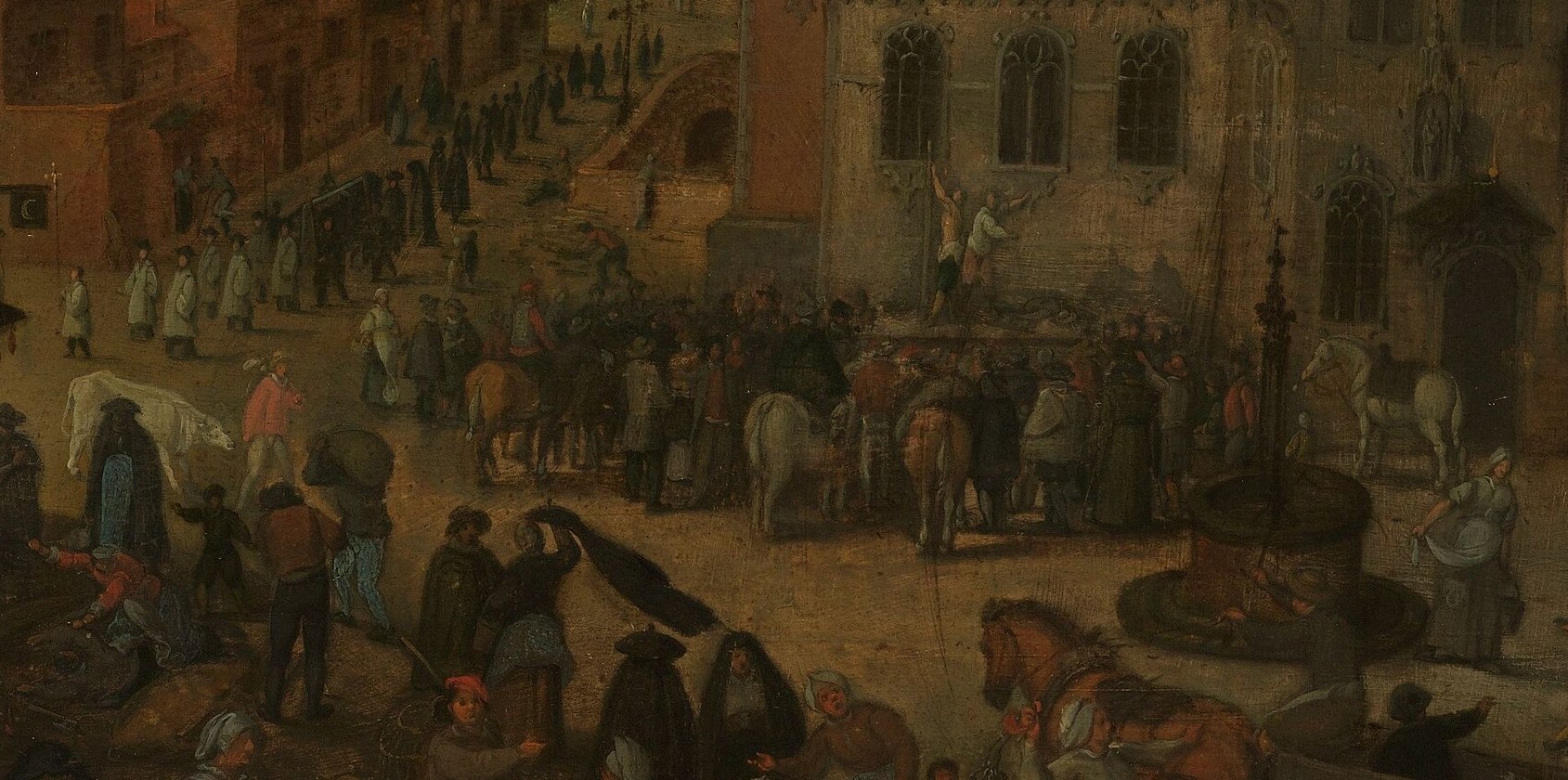
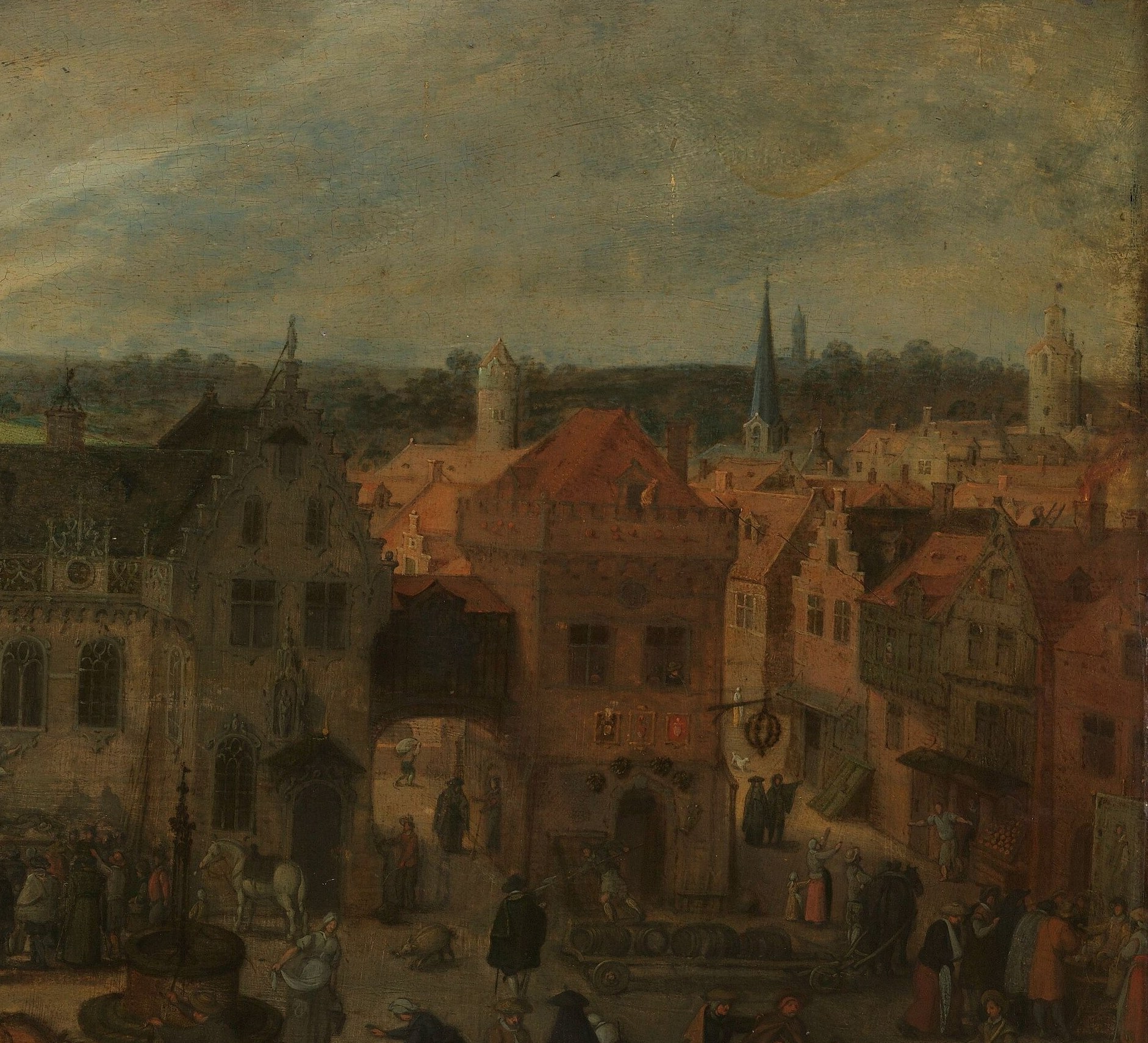
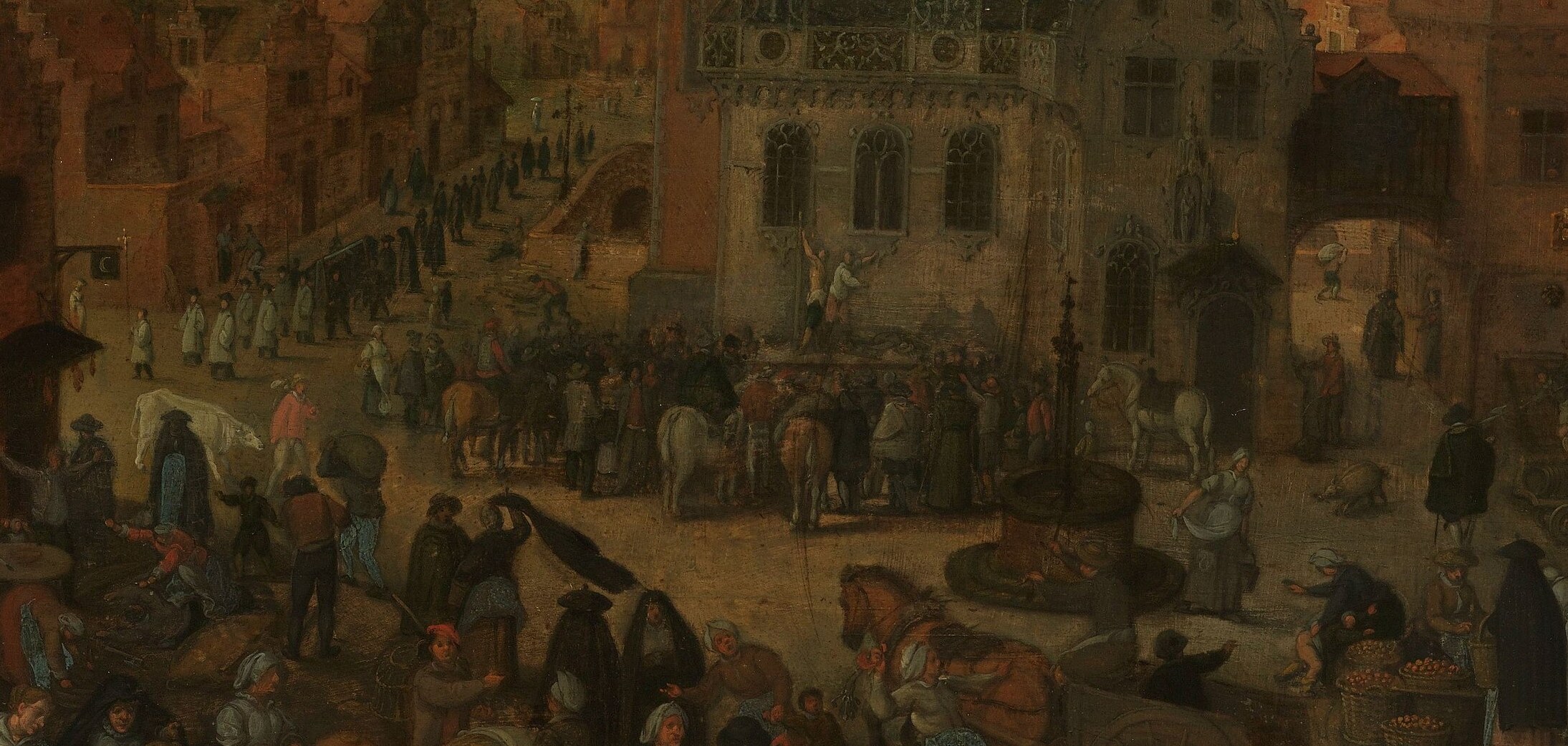
Find the dark column of cloaked figures in the middle ground. That is a funeral procession, moving straight through the busiest commercial square in the city. The town hall on the right oversees both the buying and the burying. Vrancx drops a vanitas lesson into genre painting: the market pretends death is not watching, and the painting quietly corrects the pretense.
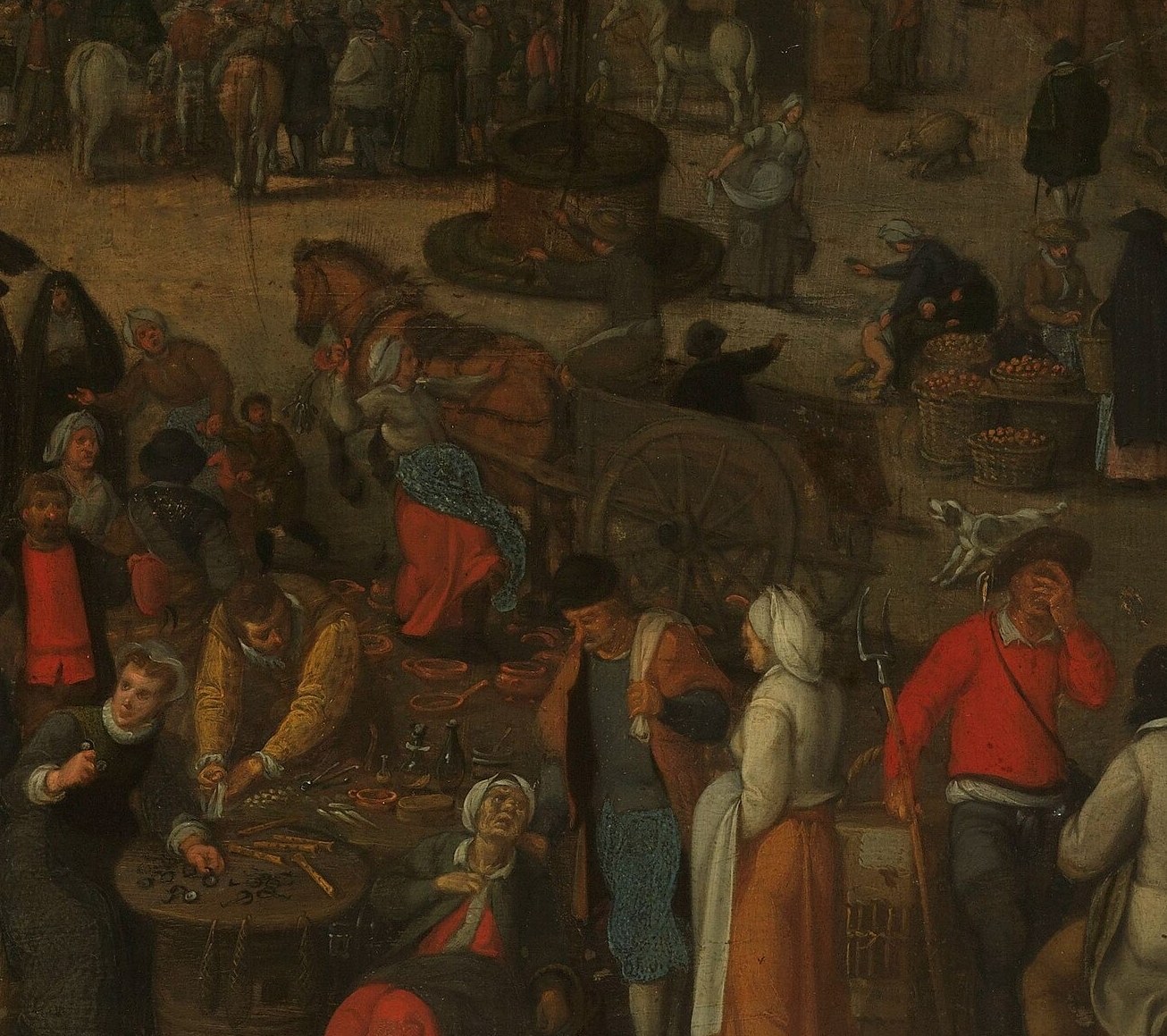
Vrancx pioneered battle painting in the Netherlands, but here his crowd-management skill serves a quieter tension. He designed prints, wrote comedies, commanded the Antwerp civic guard, and regularly painted staffage into other artists' landscapes. This picture shows why he was in demand: the square is dense with people and every face reads as a distinct social type, from the traders near the archway to the women in pale dresses near the procession.
A market day captures everything we want to believe about prosperity and order. Then a funeral column cuts straight across the frame, and the painting asks whether prosperity buys a single extra second. How long did it take you to notice the funeral?
Details
Transcript
A market day, 1623. Everyone is buying and selling. But look at what cuts straight through the center. A funeral. Dark cloaks threading through the colorful trade. The town hall looms over it all, silent and official. These pale dresses might be mourners. Or they might be wives buying goods. Vrancx is coding a vanitas: the busy square pretends death is out of frame. But death is not out of frame. It is right here, on a market day.