A River Landscape by Théodore Rousseau
Théodore Rousseau painted *A River Landscape* in 1849, and the real story here isn't just the meadow or the still water. It's the thirteen years the Paris Salon spent refusing to show his work. Rousseau became known as 'le grand refusé', the great refused one, and he couldn't sell a painting at official rates for over a decade.
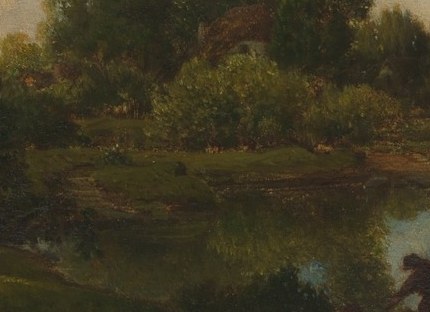
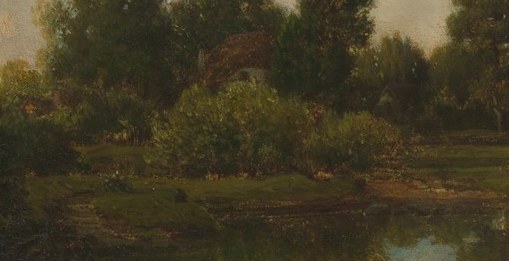
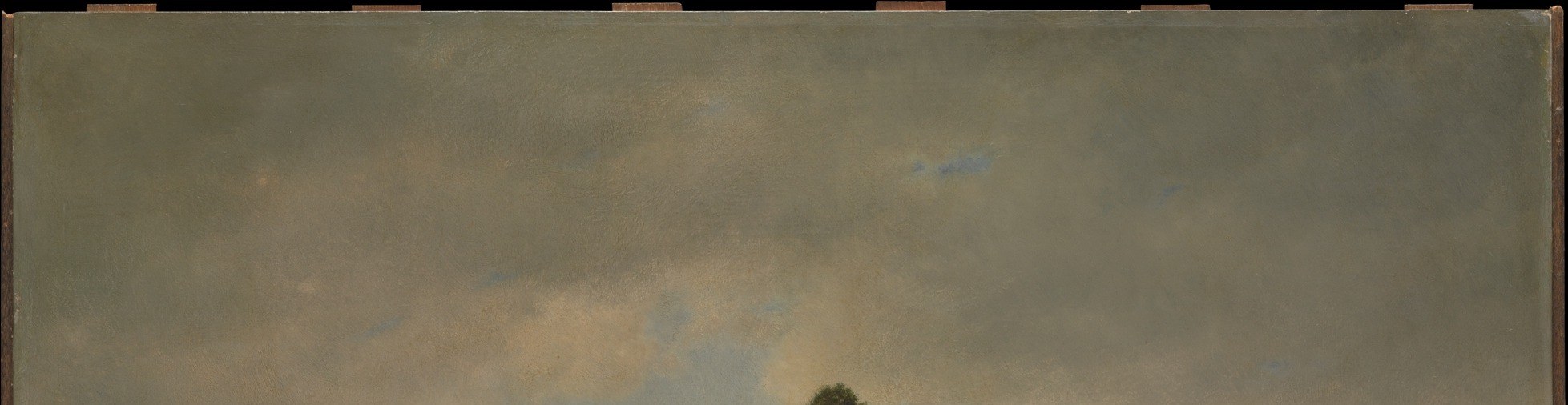
Look at what the Salon wouldn't hang: a flat river winding through open meadow, a single tall tree holding the center, and one small figure in a flat-bottomed boat. No narrative, no classical ruin, no drama. Just the diffuse grey-white light that was the real weather of the Barbizon. Rousseau built the whole composition around that overcast sky and the quiet interruption of a pale reflection on the water beside the boat.
Then in 1852, the dealer Paul Durand-Ruel bought Rousseau's entire studio. He understood that what the Salon called unfinished was actually a direct, observational way of seeing the French countryside. The bet changed everything: Durand-Ruel would go on to back the Impressionists, and Rousseau finally had a market. He never paid the Salon's price again.
The painting is at the Metropolitan Museum of Art. It's a quiet picture. But it's also a record of the exact moment landscape painting stopped asking permission from institutions.
Details


Transcript
Théodore Rousseau painted this in 1849. For thirteen years, the Paris Salon had rejected him. So critics called him 'le grand refusé', the great refused one. Now look at the lone figure in the boat. Rousseau didn't need cathedrals or myths. Just this. In 1852, a dealer named Durand-Ruel bought everything Rousseau had. The bet paid off. Rousseau never paid a Salon price again.