Two Women Chatting by the Sea, St. Thomas by Pissarro, Camille
View the artwork: Two Women Chatting by the Sea, St. Thomas →
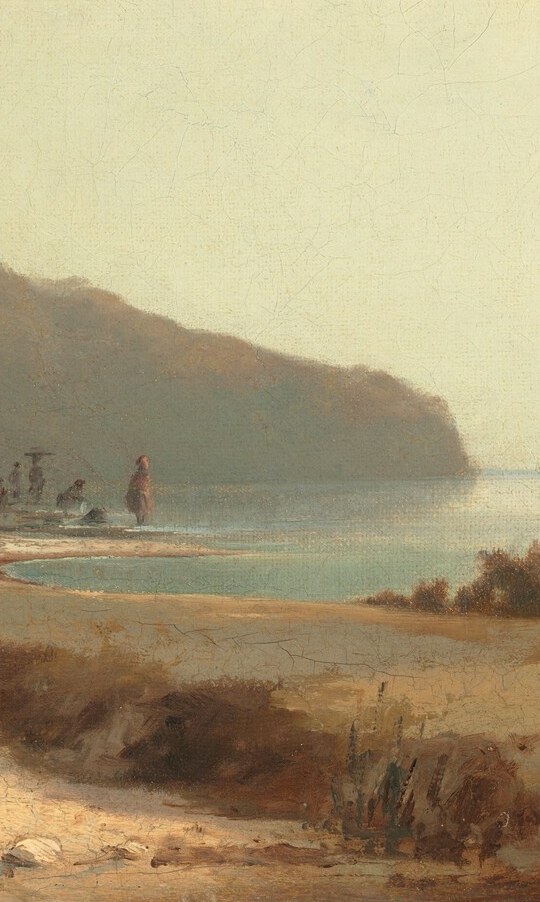
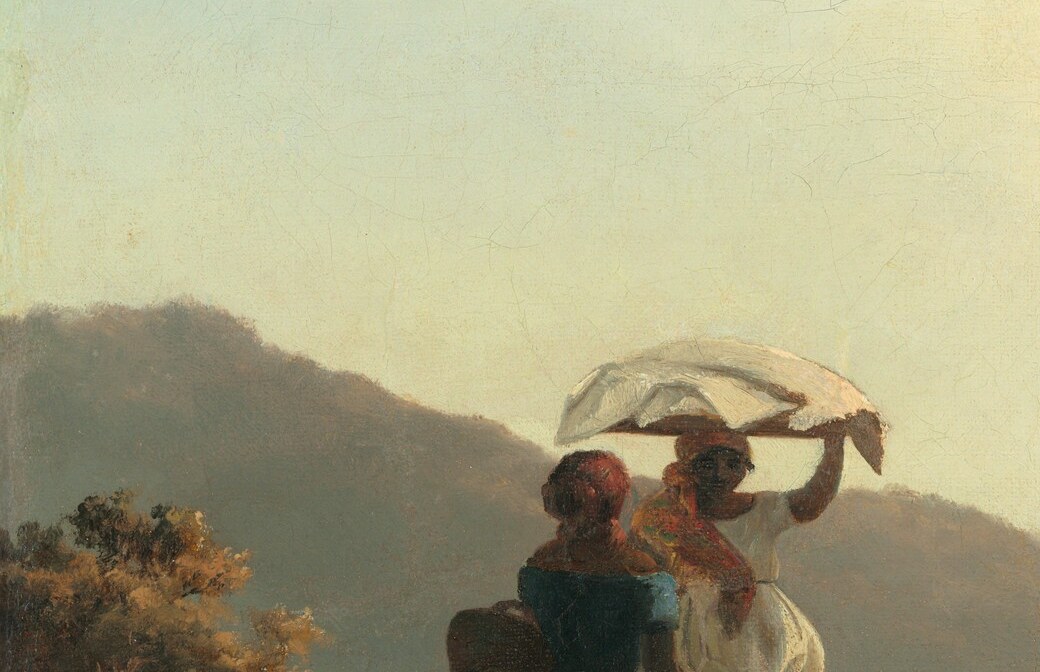
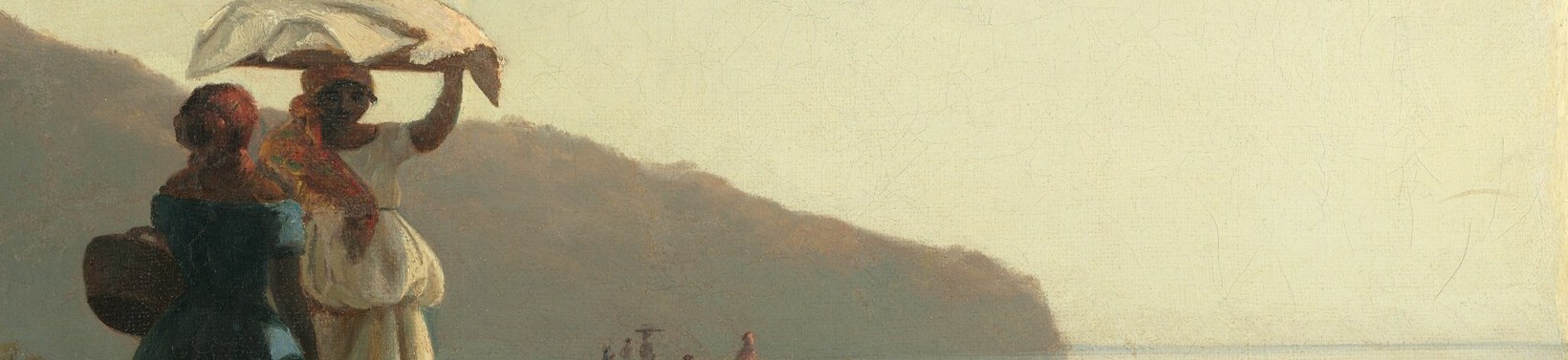
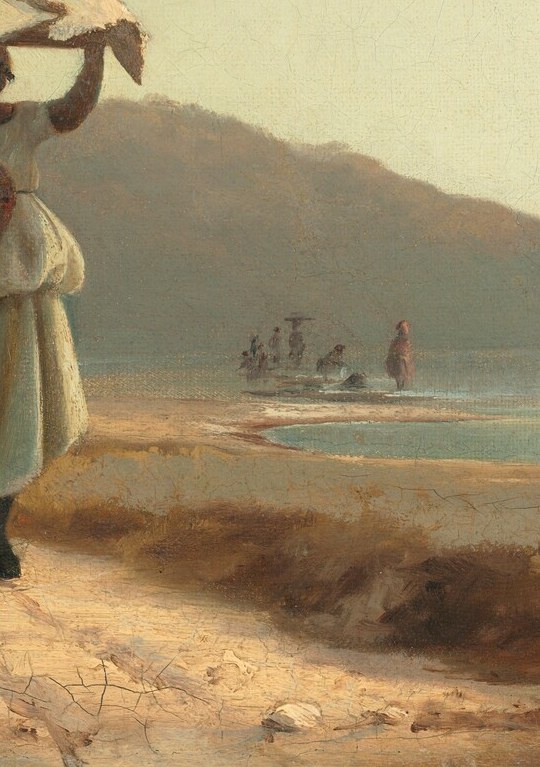
Camille Pissarro's "Two Women Chatting by the Sea, St. Thomas" (1856) is an oil on canvas painted from memory, a goodbye to the Caribbean island where he was born and a hello to the Paris art world he was determined to enter. It lives now at the National Gallery of Art in Washington, D.C.
Look at the lower left: the signature reads "C. Pizarro." That is not a mistake. It is the Spanish spelling from his birth certificate, a clue that this early work predates the name he would make famous as the gentle patriarch of Impressionism. The two women, likely washerwomen who served island households, pause mid-conversation on a dirt path. The woman in white carries a large flat basket on her head that casts shade over both figures; her companion in blue holds an empty woven basket, suggesting a trip to or from the market.
The painting is tiny, just 27.7 by 41 centimeters, but its ambition is enormous. Pissarro painted it in Paris only months after leaving St. Thomas for good, reconstructing the midday heat and pale horizon from sketches and memory. The purple-green headland sloping to the sea shows the influence of the Barbizon School, whose painters championed working outdoors. That luminous haze where sea meets sky is his earliest attempt at open-air atmosphere, years before Impressionism had a name.
Its journey is a quiet market story. The painting belonged to Danish collector Gunnar A. Sadolin by 1939, sold at Sotheby's London in 1965, passed through the hands of dealers P. & D. Colnaghi, and was eventually acquired by Paul Mellon. Mellon donated it to the National Gallery in 1985, where two Caribbean women chatting on a path became part of a national collection. What early work by a famous artist would you want to own?
#arthistory #pissarro #impressionism
Details

Transcript
It cost Paul Mellon a quiet fortune to sit with them. The painter was 26, freshly arrived in Paris. He signed it with his real birth name: Pizarro. A Jewish Creole merchant's son, painting the women who washed his family's linens. She holds a woven basket from the market. Dealers Colnaghi sold this at Sotheby's London in 1965. The load on her head shades them both from the Caribbean sun. Mellon gave it to the American people in 1985.