Saint Philip Neri (1515–1595) by Carlo Dolci
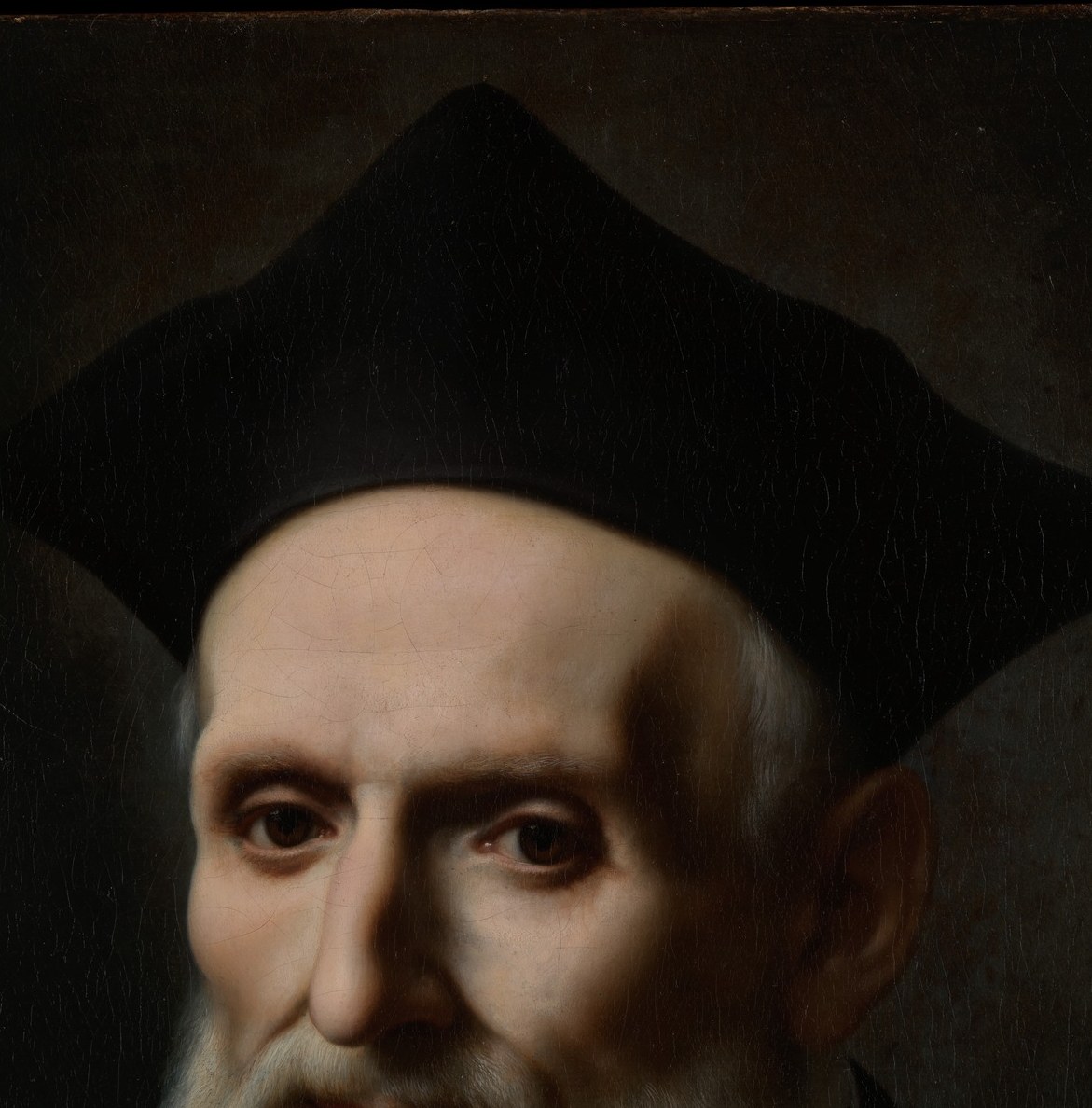
This is Carlo Dolci's "Saint Philip Neri," painted in 1645 and now in the collection of The Metropolitan Museum of Art. It is a portrait with a quiet criminal past: the painting vanished from a private collection sometime in the 20th century and remained lost for decades, before resurfacing on the art market in 1994, when the Met acquired it.
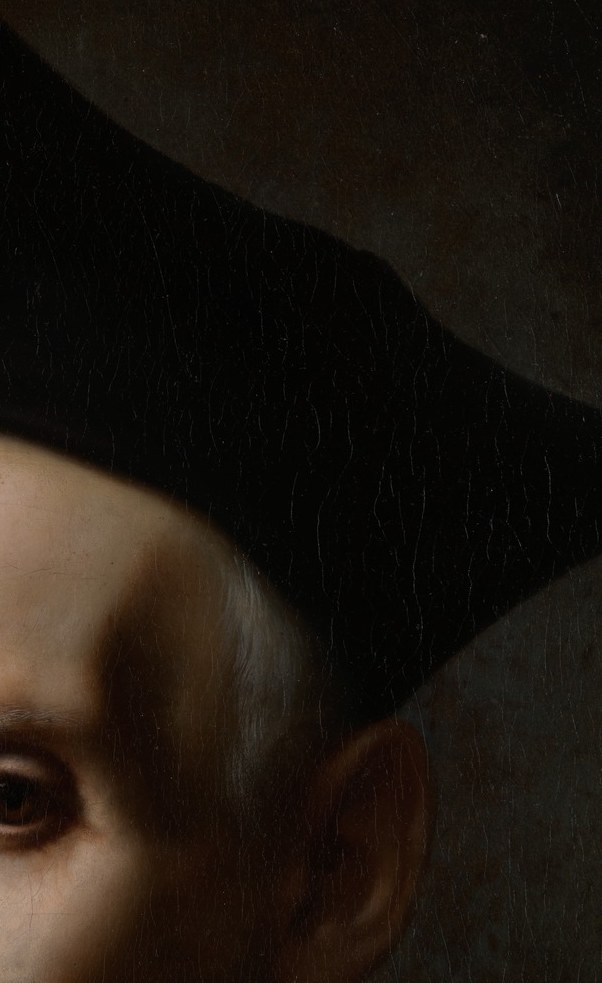
Look at the eyes. Dolci gives Philip Neri a lifted, inward gaze, a standard Baroque cue for mystical experience, but here it reads as unnervingly patient. The right side of his face dissolves into deep shadow so completely that his ear is barely legible. Everything withdraws into that dark void except the white collar, which glows at the bottom edge like a visual anchor, holding the whole composition in place.
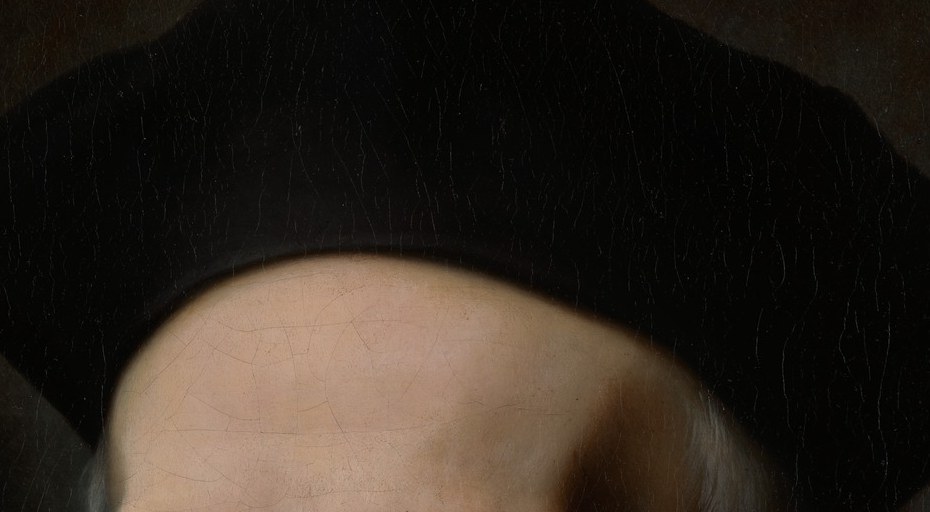
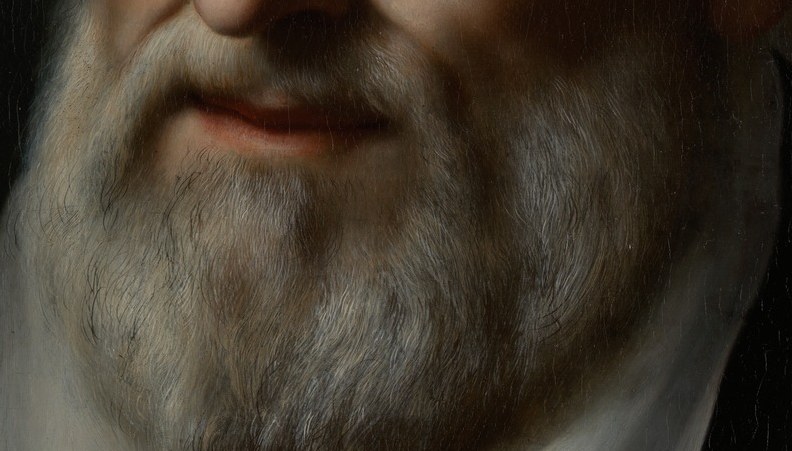
Dolci was a Florentine painter famous for his obsessive finish. You can see it in the beard, white hairs painted one stroke at a time over the dark ground, and in the forehead creases, layered with warm glazes over cool underpaint. Philip Neri was a real person, a Counter-Reformation saint who founded the Oratorians, but Dolci strips every narrative prop: no halo, no mitre, no gesture. Just a man in a black hat, waiting.
The painting's disappearance and reemergence is a small mystery that has never been fully explained. Who held it, and why it stayed hidden for so long, remains an open question. But the face itself seems built for the long silence.
Details

Transcript
This face has quietly vanished twice. Carlo Dolci painted him in 1645. The saint's eyes look toward something we cannot see. In the 20th century, the painting vanished from a private collection. It was simply gone. For decades. Then, in 1994, it reappeared on the art market. The Met moved fast and secured it. A face of silent patience, outlasting its own theft.