Willows and Farmhouse at Sainte-Catherine-lès-Arras by Jean Baptiste Camille Corot
Jean-Baptiste-Camille Corot's *Willows and Farmhouse at Sainte-Catherine-lès-Arras* (1871) offers a quiet scene from post-war France. Corot, a pivotal figure in landscape painting, created this work not on site, but from memory. It reflects the calm of rural life after the Franco-Prussian War, a sense of peace that the artist himself would soon leave behind.
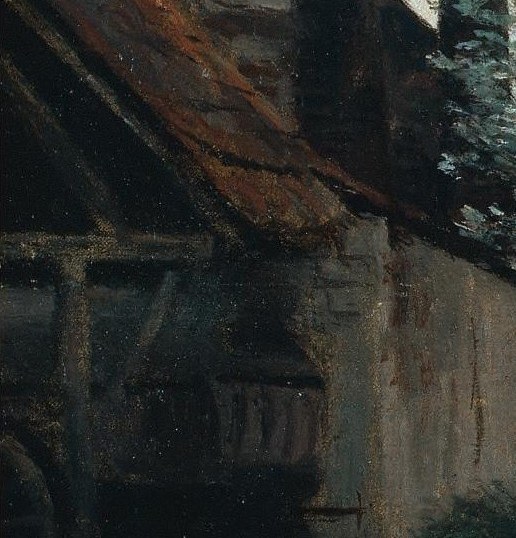
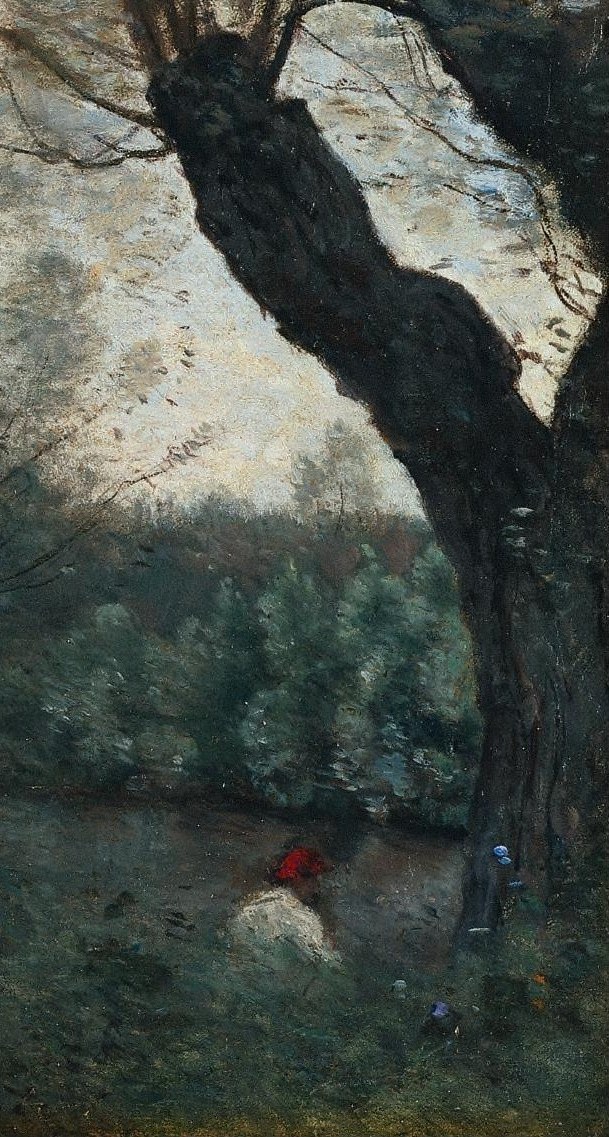
Observe the sturdy farmhouse, its textured walls suggesting a well-lived-in home. Notice the solitary figure in red, a small but vivid presence against the subdued landscape. Corot's signature is discreetly placed, a quiet assertion of his authorship.
Corot's prolific career bridged Neo-Classicism and Impressionism. He was known for his subtle atmospheric effects and deeply felt connection to nature. This painting, made in the last years of his life, captures a moment of enduring natural beauty and domestic tranquility.
Corot passed away just a few years after completing this work, leaving behind a legacy of serene and evocative landscapes.
Details
Transcript
France, 1871. The war has ended. This farmhouse was still standing. Corot painted it from memory. Look at the farmer in red. His signature anchors the work. The artist died the next year.