Queen Nefertari Playing Senet by Nina M. Davies
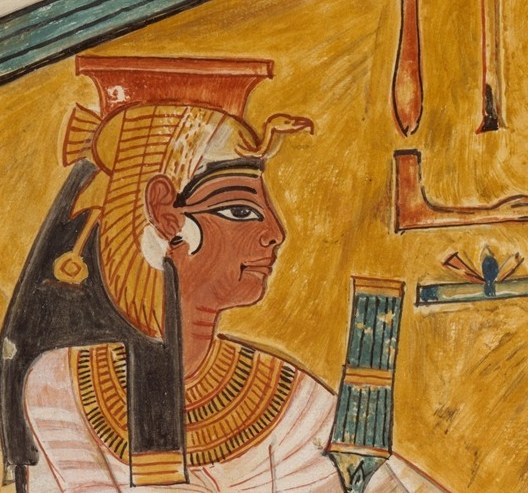
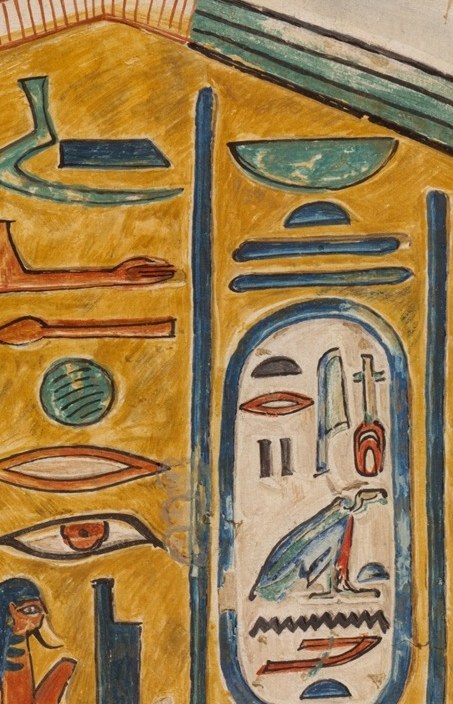
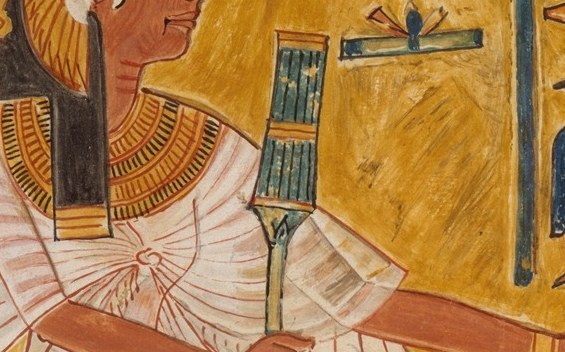
This watercolor records a scene from the tomb of Queen Nefertari, Ramesses II's chief wife, buried in the Valley of the Queens around 1255 BCE. The original wall painting exists inside a locked tomb that was closed to the public for decades after its discovery in 1904, its pigments so fragile that humidity alone could lift them from the stone.
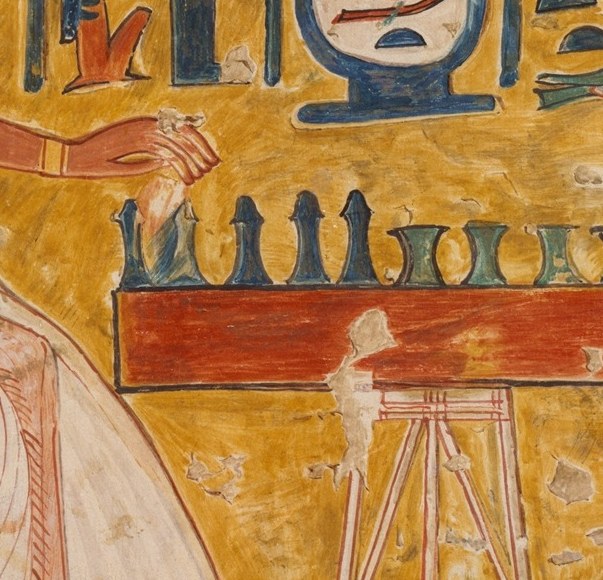
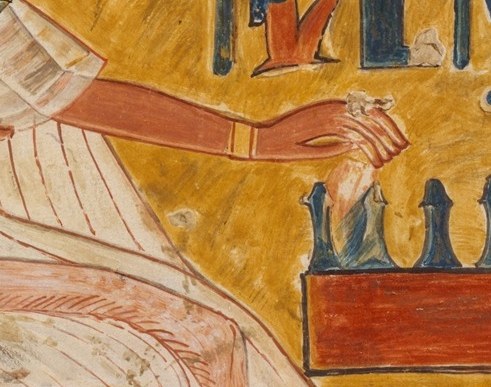
Look at the senet board on the red table. The conical pieces and thrown sticks are caught mid-game. Senet was not just a pastime. By Nefertari's era, it represented the deceased navigating obstacles toward rebirth, a spiritual journey the queen plays alone on this wall.
Nina M. Davies copied this panel in the early 1920s, working with her husband Norman inside tombs that had been sealed for three thousand years. The Metropolitan Museum of Art commissioned the Davieses to document Egyptian wall paintings before tourism and time destroyed them. Nina trained at the Slade School in London. Her copies are so exact that Egyptologists still study them when the originals degrade.
The pigments she captured, the sheer white linen, the gold collar, the black-lined eye, had never seen oxygen until the tomb was opened. Davies saw them before they faded. This copy is what remains of that moment.
Details
Transcript
1921. A painter working by lamplight 40 feet underground. She is copying something the world cannot see. Queen Nefertari, playing the game of the afterlife. Look at the board. The pieces are mid-game. When her tomb was sealed, the paint was a secret. Those pigments had never met oxygen. They glowed.