Judith at the Banquet of Holofernes by Rembrandt
View the artwork: Judith at the Banquet of Holofernes →
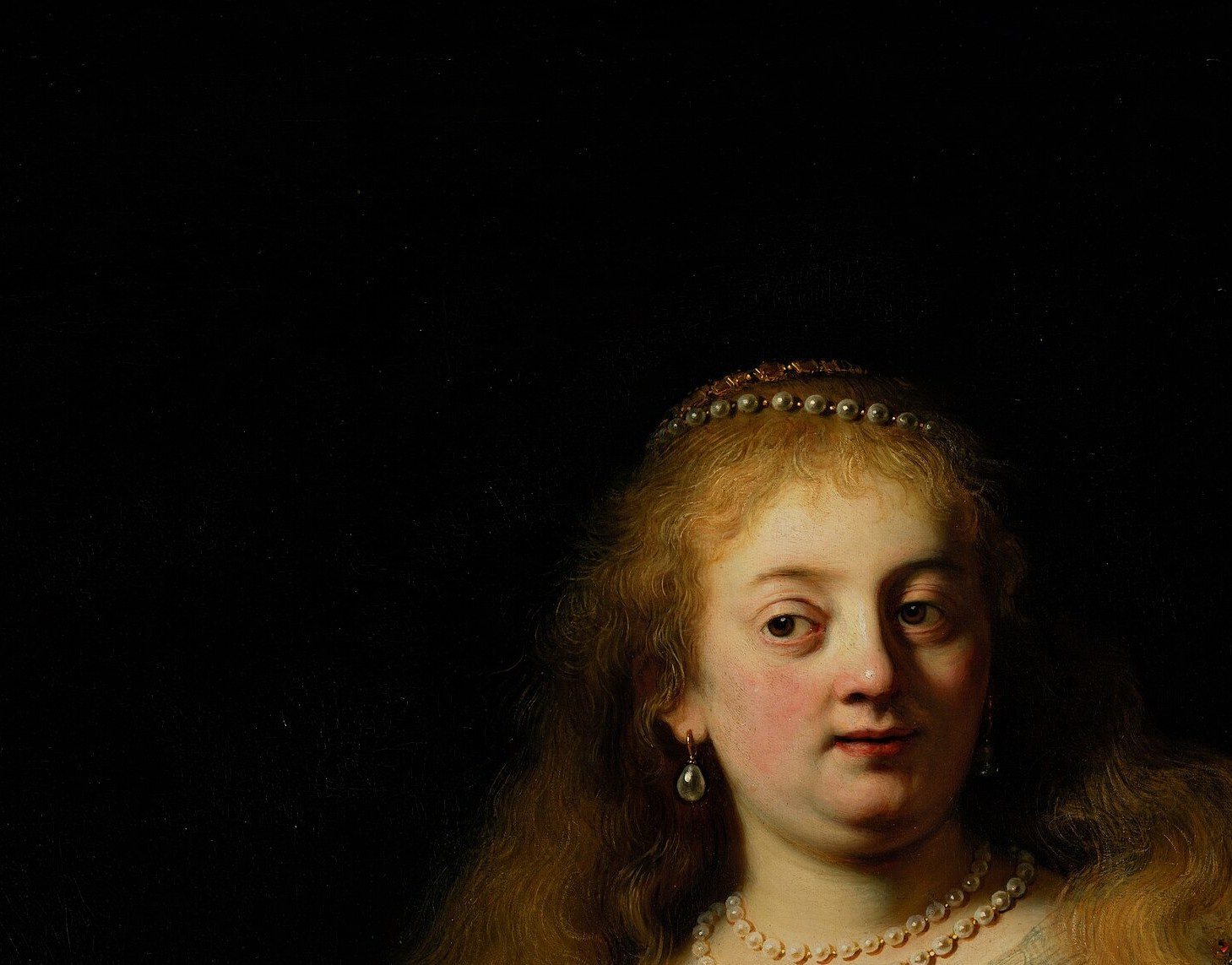
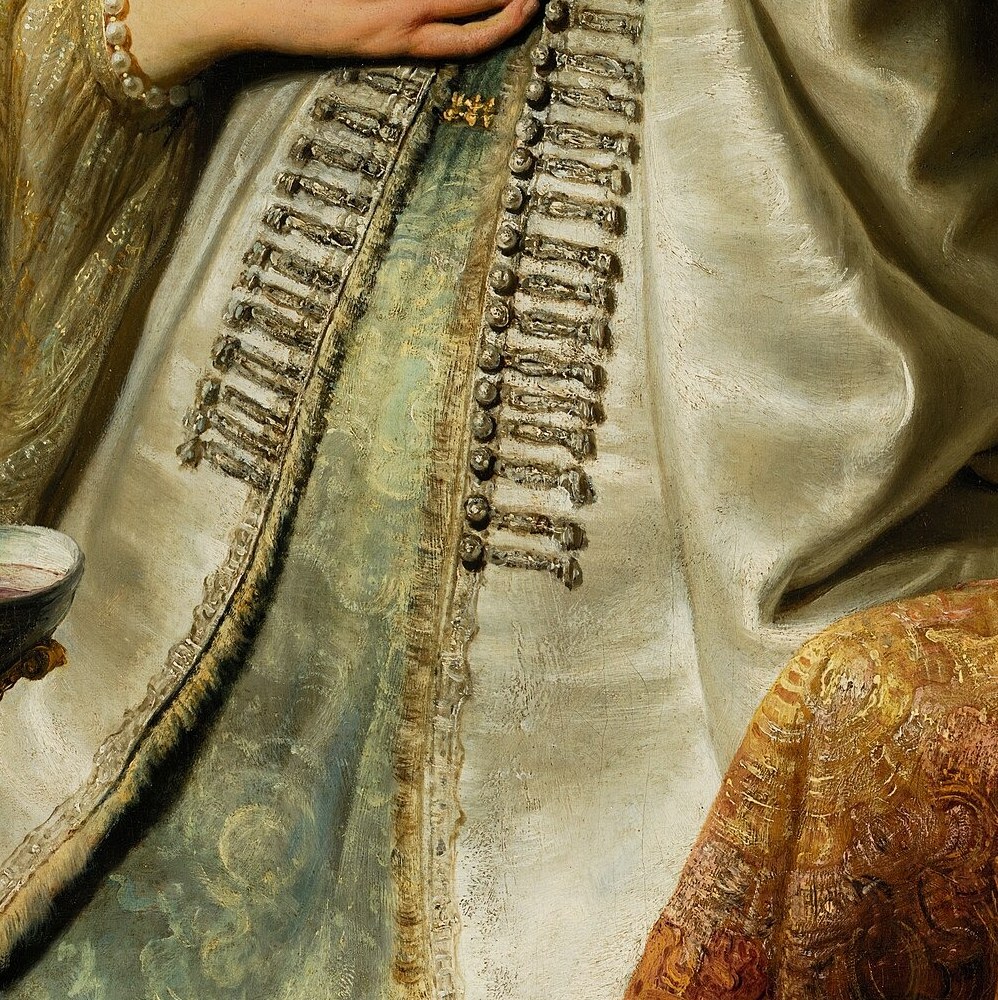
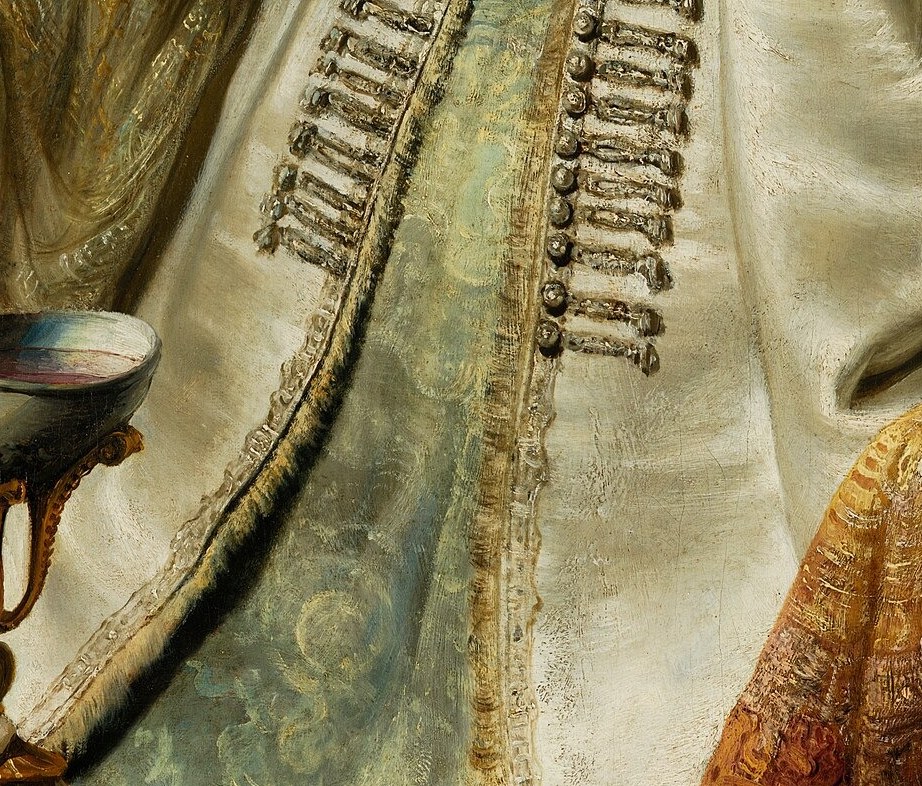
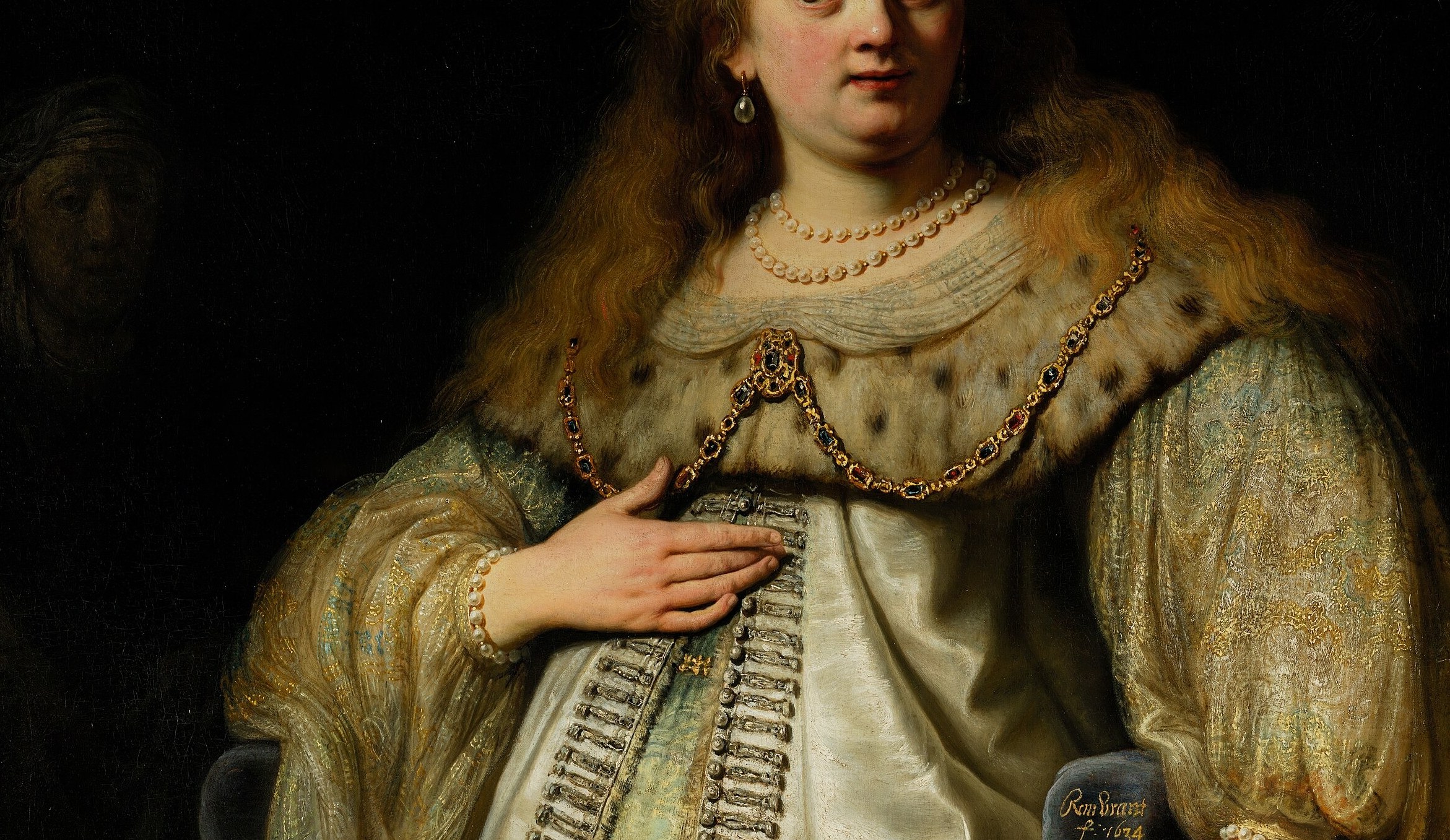
For three hundred years, Rembrandt's *Judith at the Banquet of Holofernes* (1634) was a painting without a fixed name. It was called *Artemisia Receiving Mausolus' Ashes* or *Sophonisba Receiving the Poisoned Cup*. Scholars could not agree on who the richly dressed woman was, because her crown-like ornament and opulent bodice read as the costume of a generic noblewoman rather than a specific biblical heroine. The painting now hangs in the Museo del Prado in Madrid.
Look at her face. The expression is suspended, unreadable. Her eyes are downcast, not meeting the cup the servant extends from shadow. Rembrandt likely used his wife Saskia as the model, and the intimacy of that choice adds another layer to the ambiguity. Is this composure, dread, or consent? The single golden cup condenses the entire story of betrayal into one object.
The identification puzzle was finally resolved in the 20th century when scholars connected the cup and the furtive, shadowed attendant to the biblical story of Judith, the Israelite widow who seduced and beheaded the Assyrian general Holofernes. The moment Rembrandt chose is not the violence itself but the charged instant before it, when the plan is already in motion.
The painting is signed and dated 1634, squarely in Rembrandt's early Amsterdam success. It shows him already in full command of the theatrical light and psychological depth that would define his career. A queen, a poisoner, a savior: the painting never changed. Only the name did.
#arthistory #rembrandt #dutchgoldenage
Details

Transcript
For three hundred years, no one knew who she really was. She was called Sophonisba. Sometimes Artemisia. A generic queen. The rich garments and crown-like pearl ornament confused everyone. But the story is right here, in the cup she takes from the shadows. She is Judith. And this is the banquet before she kills Holofernes. Scholars finally agreed in the 20th century. Her name was restored.