Artwork
Judith at the Banquet of Holofernes
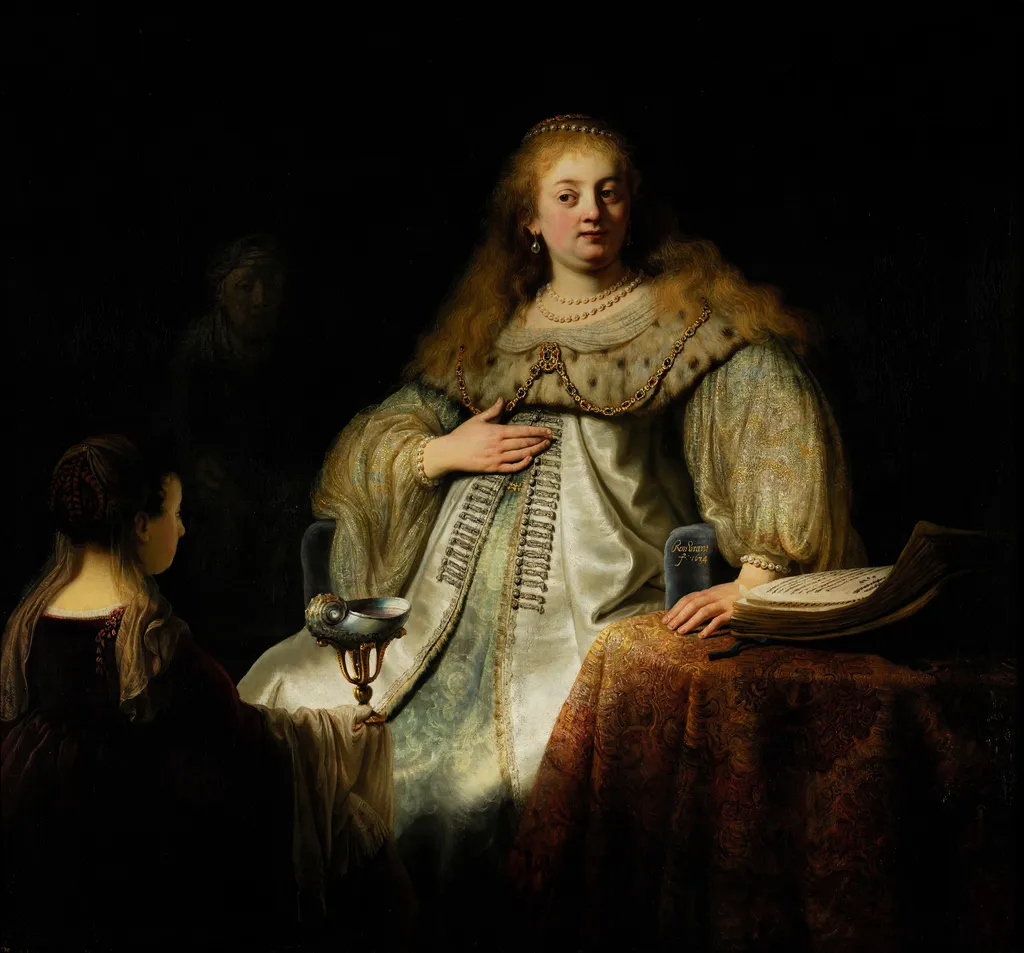
Judith at the Banquet of Holofernes is an oil painting by the Dutch Golden Age artist Rembrandt van Rijn. It dates from 1634 and is held in the collection of the Museo del Prado.
About this work
Subject & Meaning
The painting depicts a young woman, identified in modern scholarship as the biblical heroine Judith, seated at a banquet and receiving a cup from a maid.
The painting depicts a young woman, identified in modern scholarship as the biblical heroine Judith, seated at a banquet and receiving a cup from a maid. Historically, the subject was ambiguous for centuries, with the figure variously interpreted as Artemisia II of Caria drinking her husband's ashes or Sophonisba consuming poison to avoid capture. The woman's rich garments and jewels signify her royal status.
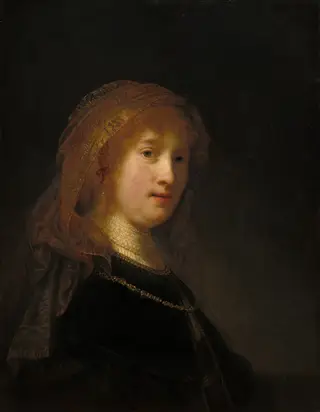
Art historical analysis suggests Rembrandt used his wife, Saskia van Uylenburgh, as the model, linking the biblical narrative to a personal portrait. While the work is now classified as Judith at the Banquet of Holofernes, the iconography retains echoes of the Artemisia and Sophonisba traditions, where the cup symbolizes either eternal union with a spouse or a fatal act of defiance. The scene captures a moment of tension between the recipient and the servant, central to these classical and biblical narratives of female agency.
Technique & Style
Executed in 1634, Judith at the Banquet of Holofernes is an oil painting on canvas by Rembrandt. The work measures approximately 143 by 154.7 centimeters and bears the signature "REMBRANDT F: 1634". As a product of the Dutch Golden Age, the piece is classified within the history painting genre.
The medium consists of oil paint applied to a canvas support, a standard combination for the period. While the specific handling techniques are not detailed in the provided records, the formal qualities emphasize a richly adorned female figure wearing jewels and elaborate garments, seated at a table. The composition focuses on the interaction between the central woman and a maid offering a cup, rendered with the period's characteristic historical narrative style. The painting remains in the collection of the Museo del Prado in Madrid.
History & Provenance
Judith at the Banquet of Holofernes was painted by Rembrandt in 1634, as evidenced by the artist’s signature and date on the canvas. The work’s subject was long debated, with earlier attributions including Artemisia receiving Mausolus’ ashes and Sophonisba receiving a poisoned cup, before being identified as the biblical scene of Judith at Holofernes’ banquet. Rembrandt likely used his wife Saskia as the model for the central female figure.
The painting entered the collection of Ferdinand VII of Spain and has remained in Madrid, where it is housed in the Museo del Prado.
Overview
Rembrandt's oil painting, Judith at the Banquet of Holofernes, was completed in 1634 and bears the artist's signature. This significant work is now part of the collection at the Museo del Prado in Madrid, Spain. For many years, the precise narrative depicted remained a subject of scholarly discussion, with various interpretations proposed.
It is now widely accepted to portray the biblical figure Judith, a subject that allowed Rembrandt to explore themes of resolve and dramatic tension.
Own this work as a print
Artist & collection

Artist
Rembrandt Harmenszoon van Rijn, known mononymously as Rembrandt, was a Dutch Golden Age painter, printmaker, and draughtsman.



- Judith offering the Head of Holofernes
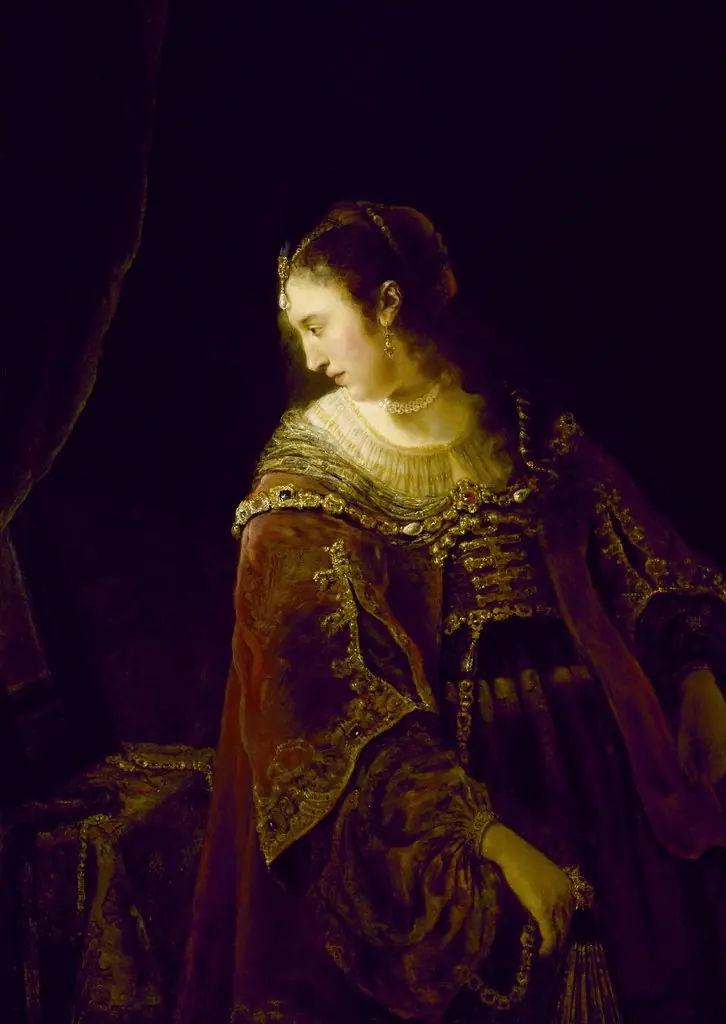 Woman at her Dressing Table
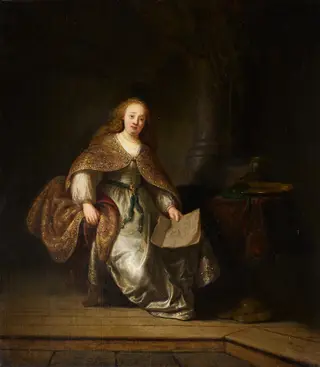 Esther
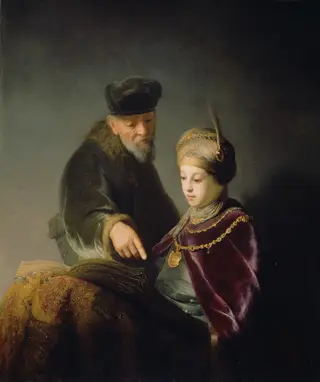 A Young Scholar and his Tutor
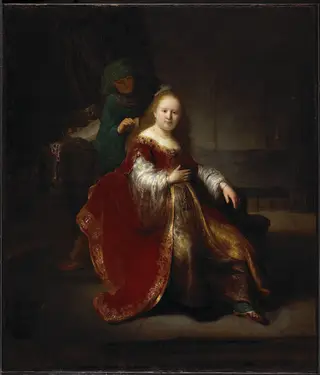 Heroine from the Old Testament
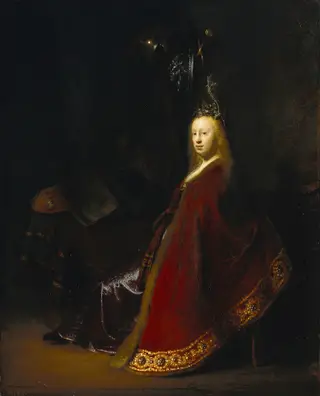 Minerva
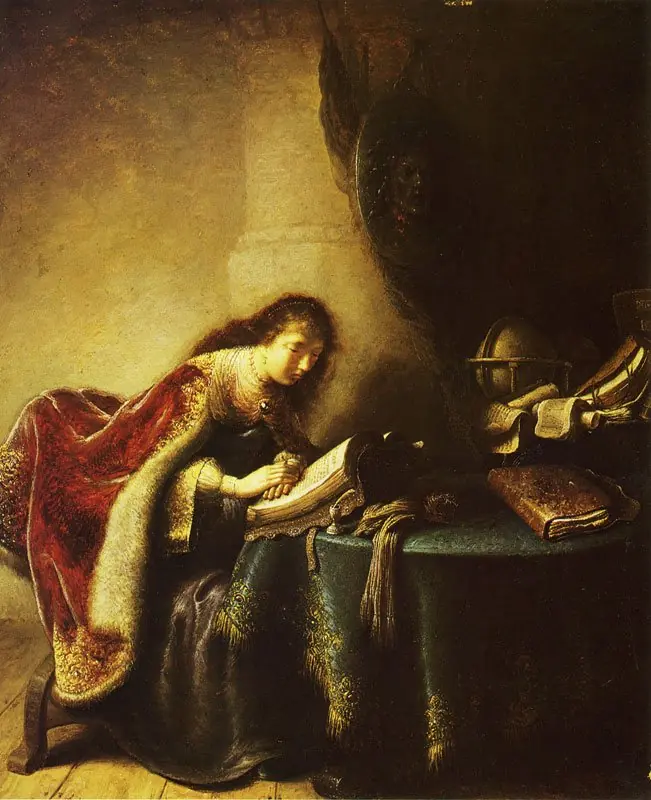 Minerva reading
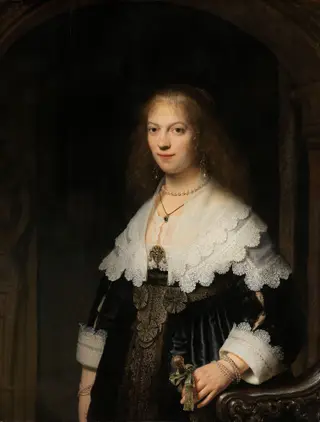 Portrait of Maria Trip
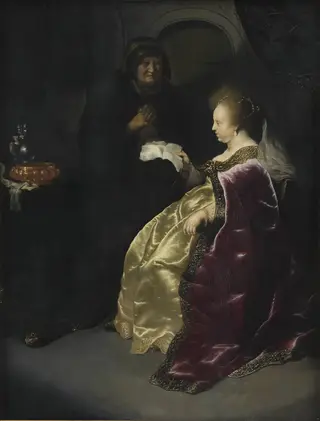 Esther reading Haman's Decree of the Extermination of the Jews
 Concert
 Saskia van Uylenburgh, the Wife of the Artist
 Head of a Young Girl