Halt of Caravans at the Wells of Saba (Beersheba) in the Desert South of Hebron by Charles Louis de Frédy, Baron de Coubertin
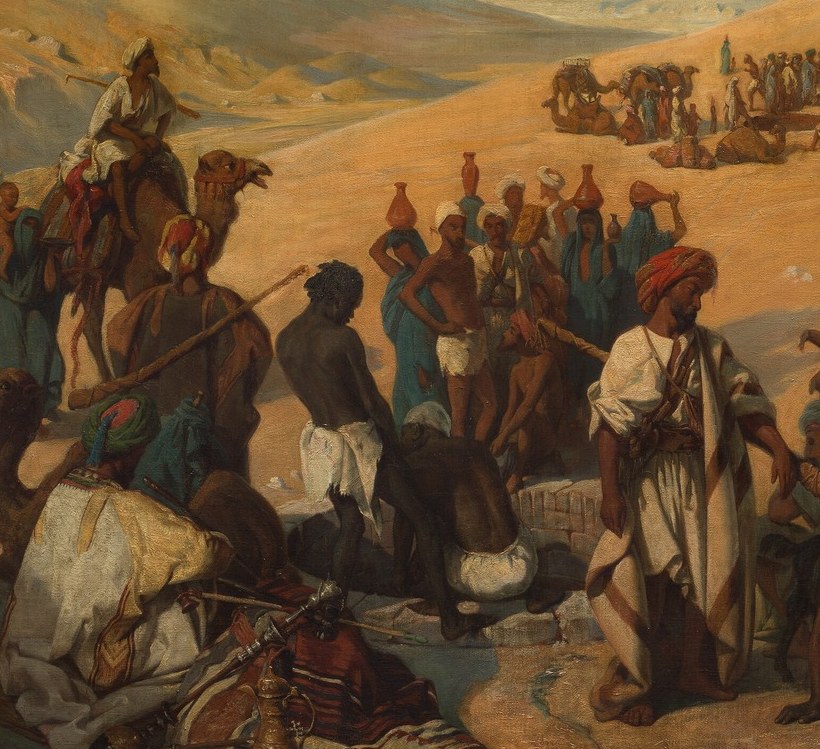
This is Halt of Caravans at the Wells of Saba (Beersheba) in the Desert South of Hebron, painted in 1850 by Charles Louis de Frédy, Baron de Coubertin. It lives in the Louvre. The well at its heart is the biblical Beersheba, a place where Abraham, Isaac, and Jacob all made covenants, a water source so ancient and vital it is claimed by three faiths.
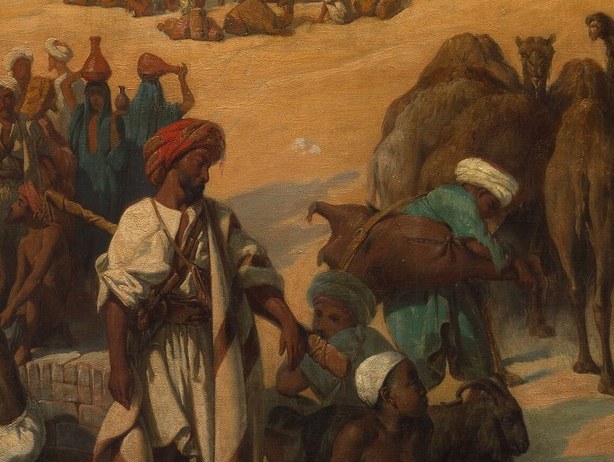
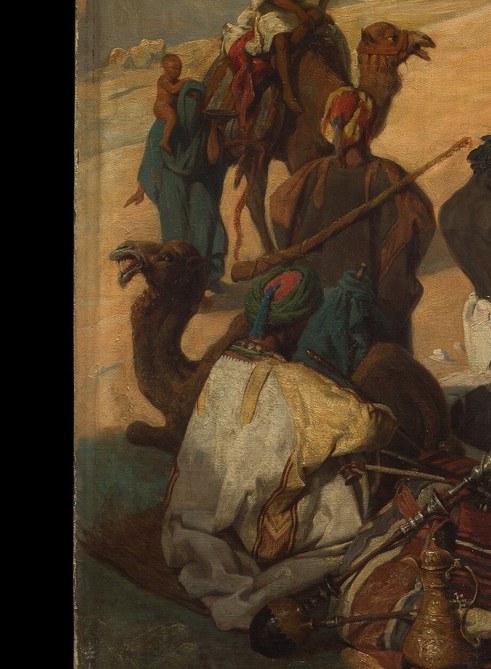
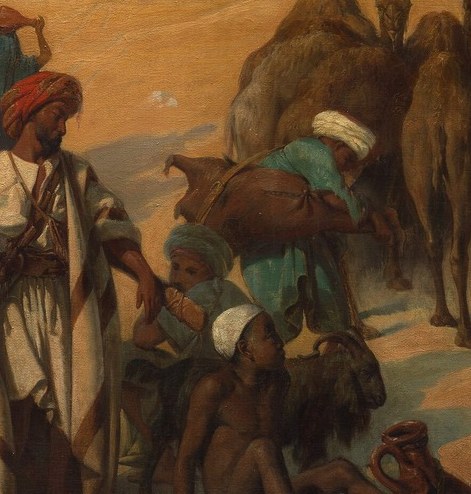
Look first at the shadows on the left margin. Two dark-robed figures stand apart, barely discernible, art historians read them as Jewish travelers. Near the center, a man in a vivid red-orange robe may be a local guide who knows the well. All paths in this painting converge on a single stone well, and the camels have been kneeling long enough to fully rest: scarcity is measured in posture as much as distance.
Charles Louis de Frédy was a mid-tier French academic painter, but his son is the reason his name survives. Pierre de Coubertin founded the modern Olympic Games in 1896. One painting about a desert congregation of strangers, and one son who spent his life trying to bring the world's strangers together peacefully.
What do you notice when you scan the margins of a crowded painting? It is often the quiet figures no one painted just to impress you.
Details
Transcript
A halt in the desert. Camels kneel; the journey is long. All movement leads here. A single well in the wilderness. Now look to the left margin, into the shadows. Two figures in dark robes, almost invisible at first glance. Art historians believe they are Jews, pausing on a journey. Near the well, a guide in a red-orange robe directs the crowd. This well is Beersheba, a site sacred to Jews, Christians, and Muslims. The painter's son grew up to invent the modern Olympic Games.