A Village Street: Dardagny by Jean Baptiste Camille Corot
Jean-Baptiste-Camille Corot painted A Village Street: Dardagny in 1842, and it hangs today at The Metropolitan Museum of Art. He was 46 years old, and he had just lost his mother, who had supported his painting for years when others doubted him. He traveled to the Swiss border and made this quiet street his subject.
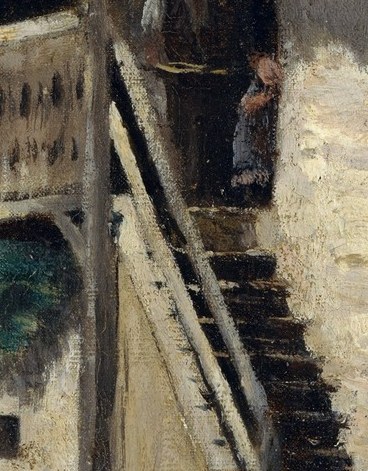
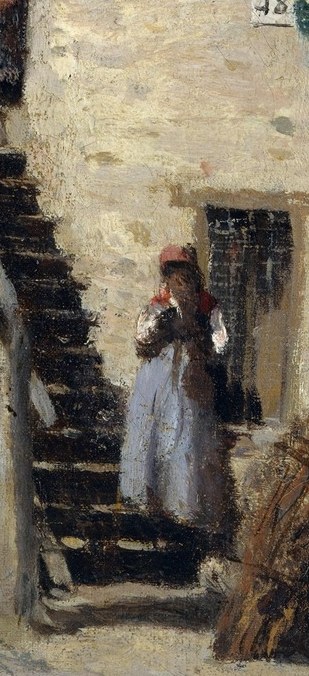
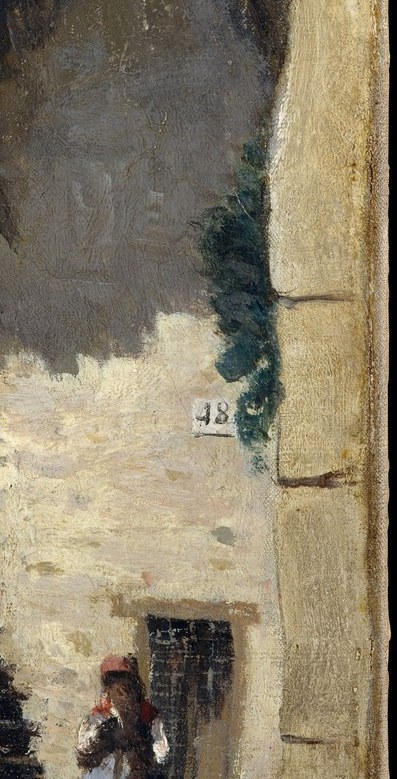
The painting is almost empty. A cobbled lane bleached by sun, a few shuttered windows, a wooden staircase climbing out of frame. The only person is a woman standing still in a doorway, her face shadowed, her hands catching the light. Corot does not give her a task or a name. She is simply there, waiting, the way a village waits through the long middle of a day.
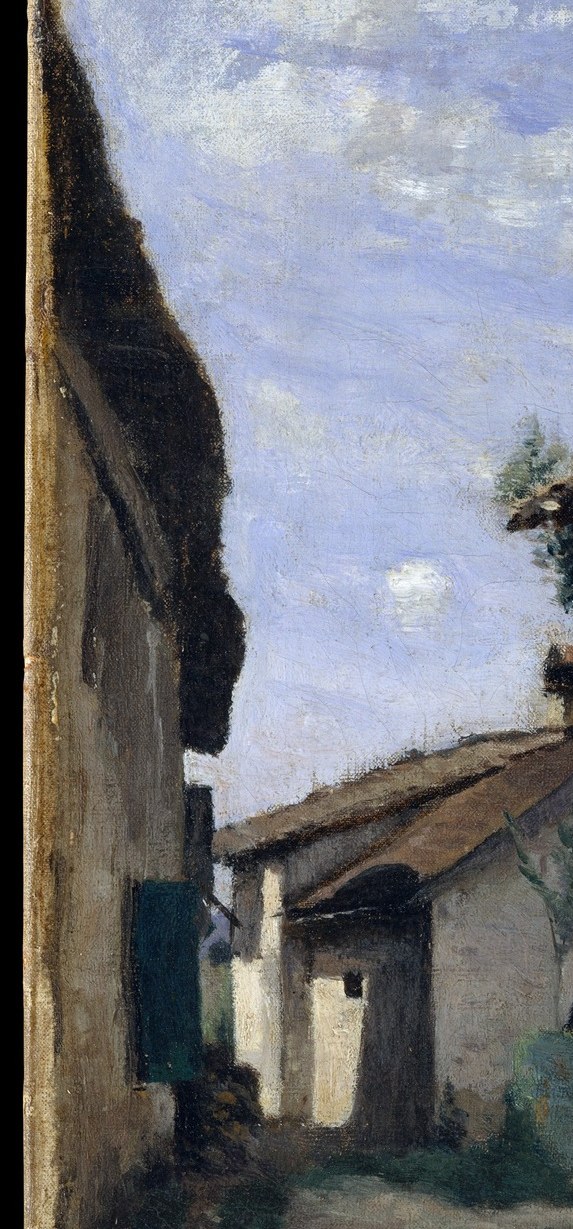
Corot stood between two worlds. He had trained in the Neo-Classical tradition, sketching Roman ruins and composing landscapes in the studio. But by the 1840s he was going outside, working en plein air, recording light as it actually fell on stucco and timber. This painting holds both impulses at once: the careful geometry of the roofline against the sky, and the raw, sun-bleached stillness of a place where nothing is happening except time passing.
She is the only figure in the whole street. Whether Corot asked her to stand there or found her that way, we will never know. But the painting is not really about the village. It is about what it feels like to be alone, and to stop, and to let the light find you anyway.
Details
Transcript
A village street, emptied by the morning sun. Corot painted this in 1842, on the edge of the countryside. The shutters are closed. No one is watching. Except her. He was 46. His mother had just died. He came here alone. She stands in the shadow, but the light finds her hands. A life paused in a doorway. A painter painting his own quiet.