Poplars, Éragny by Camille Pissarro
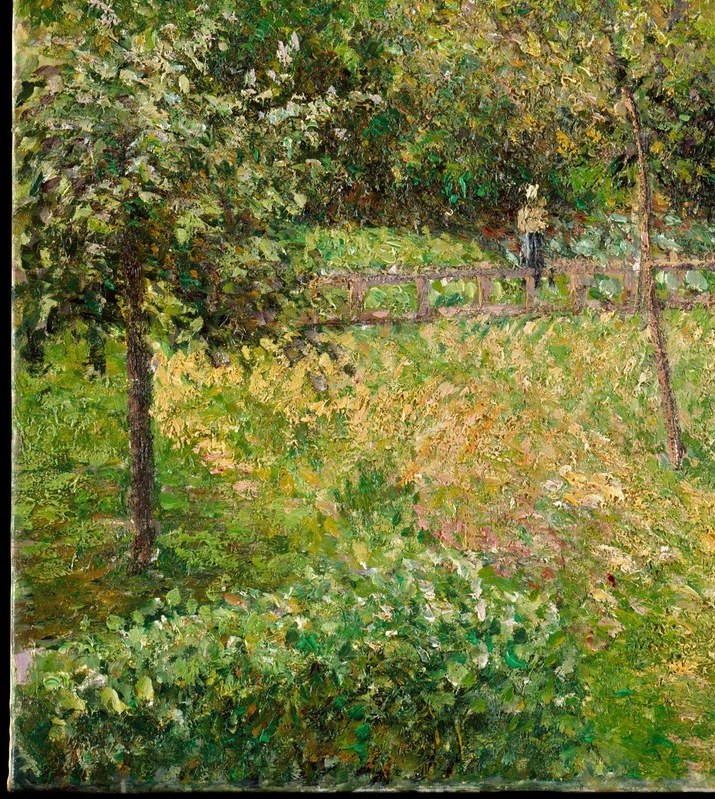
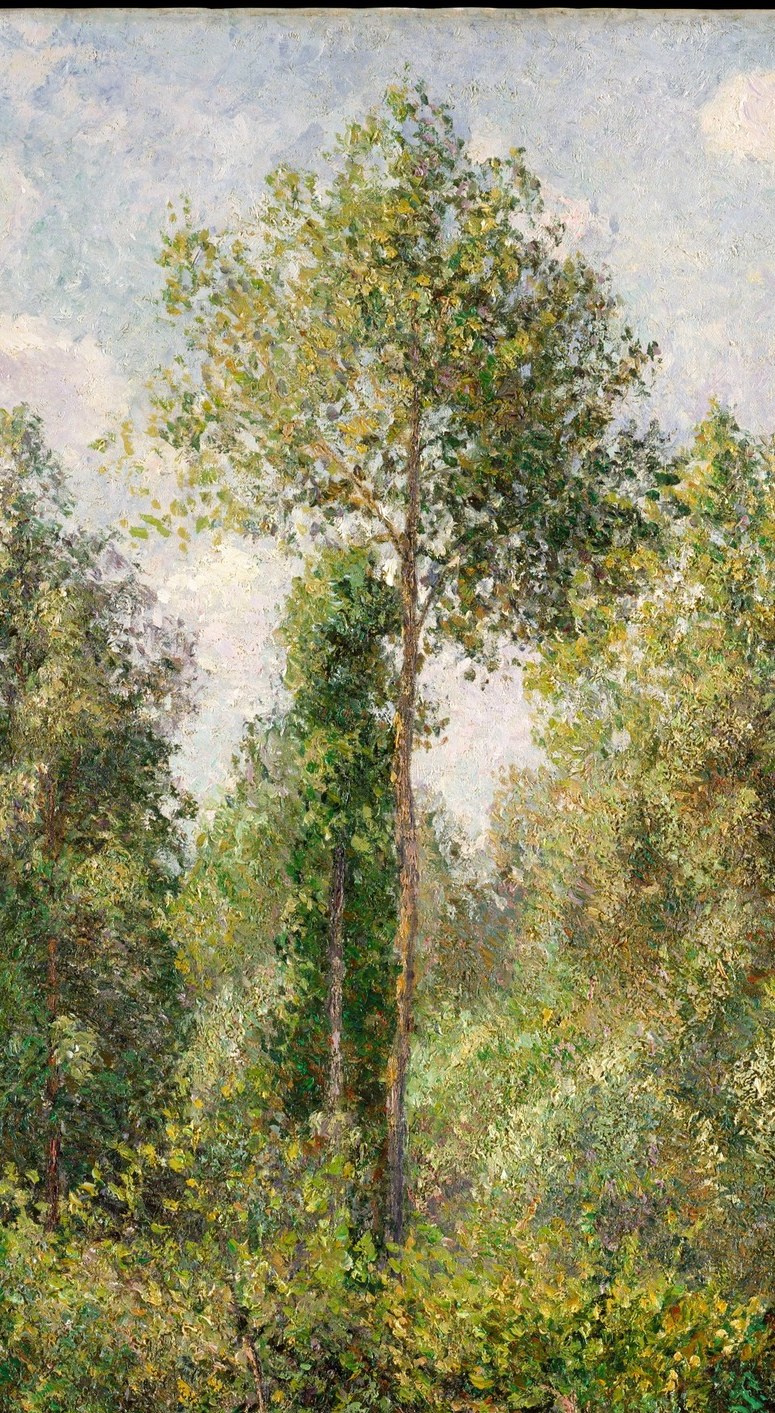
This is Poplars, Éragny, painted by Camille Pissarro in 1898. It shows the view from his home in the French countryside, executed in the short, luminous brushstrokes of his late Neo-Impressionist style. The painting itself survived an ordeal far darker than its tranquil surface suggests.
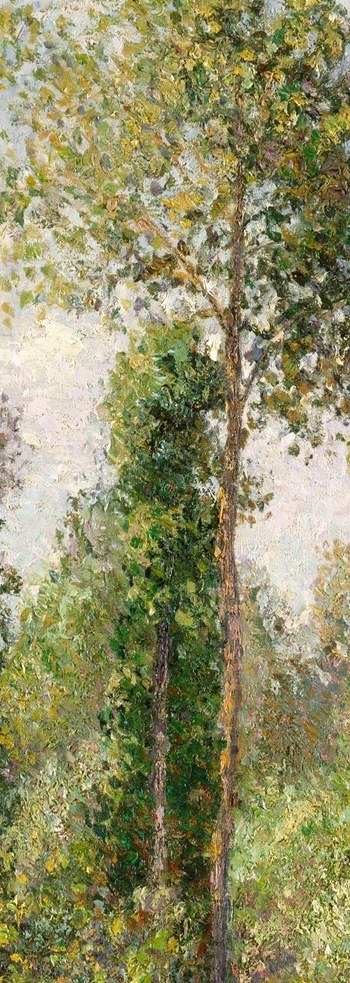
The fence drags your eye diagonally into a warm field, and a tiny figure in the middle distance reminds you this is lived, worked land. But the real tension is vertical: those poplar trunks march upward and trap a sliver of bright sky between them, holding the whole composition together like a hidden spine.
Pissarro died in 1903, but his son Lucien, himself a painter, guarded his legacy. When the Nazis occupied France in 1940, Lucien gathered more than a hundred of his father's canvases and hid them inside an abandoned stone quarry near Angers. For years, the paintings sat in total darkness while the war ground on above them.
What other paintings survived the war hidden underground, unrecorded, still waiting to be found?
Details


Transcript
They look like ordinary poplars beside a sunny field. Look at the short bright strokes building the grass. This is the view from his own house in Éragny. Painted in 1898, three years before his death. Forty years later, the Nazis marched into France. His son Lucien hid over a hundred canvases in an abandoned stone quarry. Sunlight fell on his garden. His paintings waited in the dark.