Daniel in the Lions' Den by Rubens, Peter Paul, Sir
View the artwork: Daniel in the Lions' Den →
Peter Paul Rubens painted "Daniel in the Lions' Den" around 1614 to 1616, and he kept it close. He called it "the flower of his stock", the painting in his studio he valued above all others. Today it hangs in the National Gallery of Art in Washington, D.C., still radiating the personal conviction he poured into it.
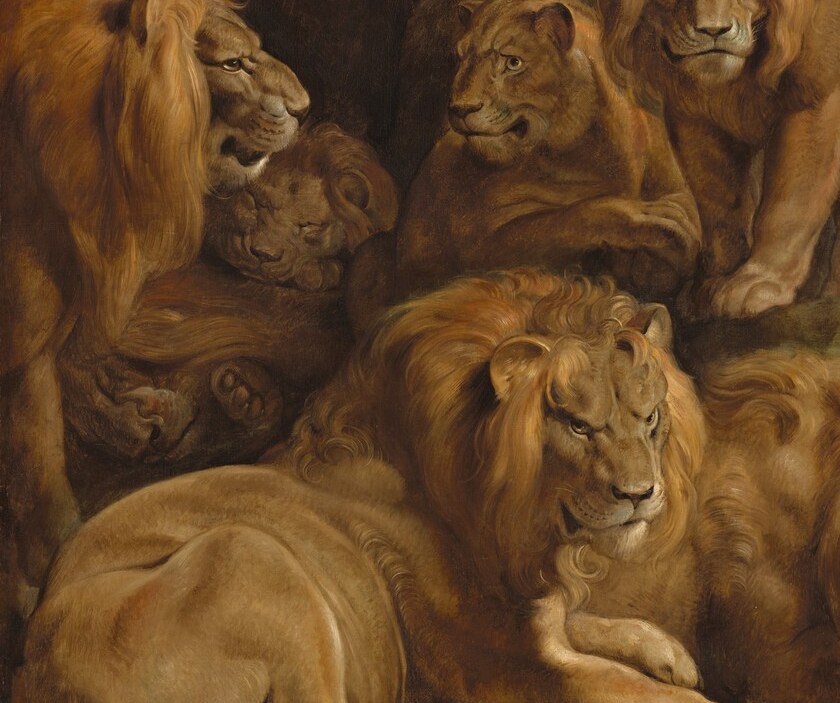
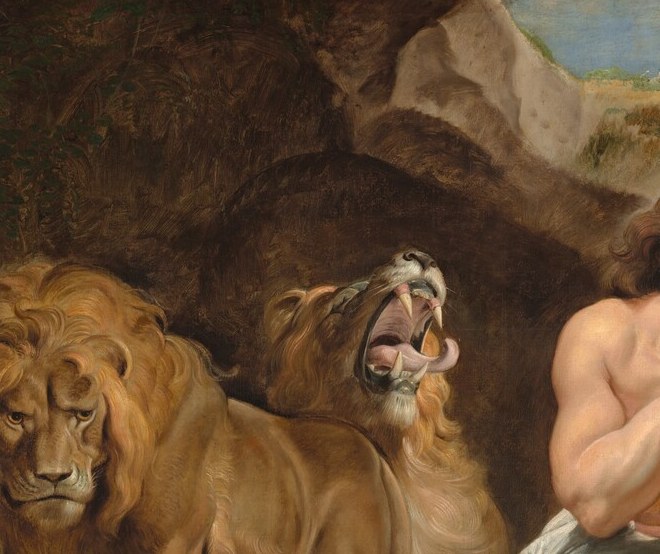
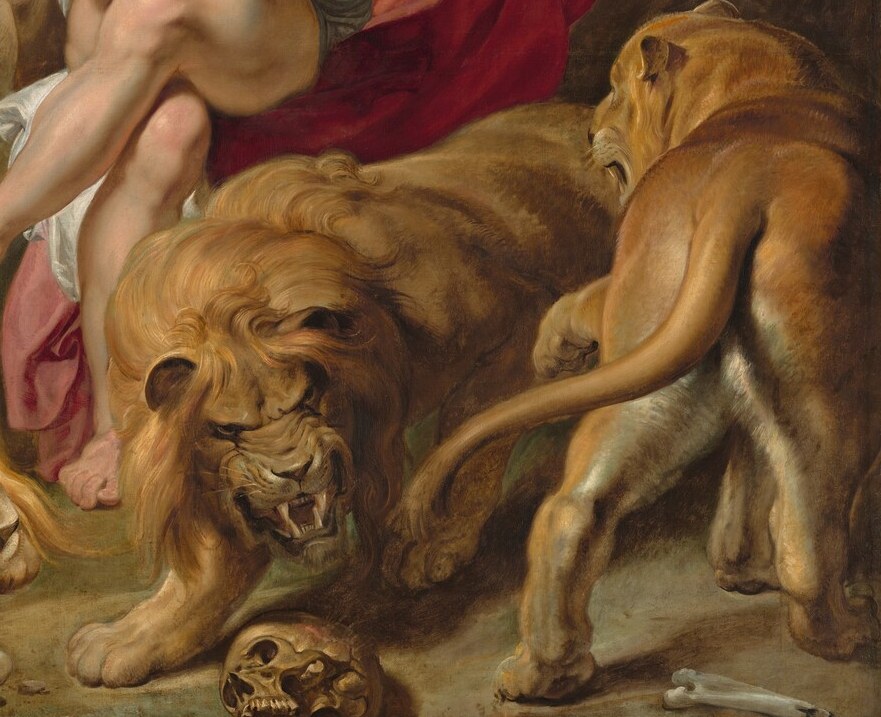
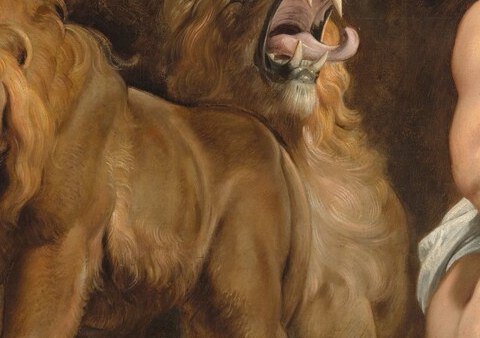
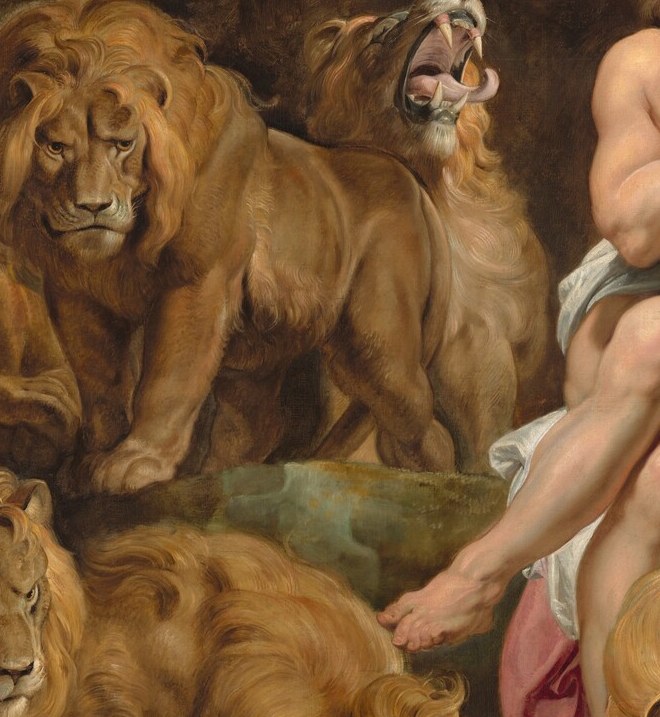
The first thing the painting asks you to feel is the enclosure. Rubens built a ring of ten life-size lions around the prophet, each one studied from live North African lions kept at the Brussels royal menagerie. The enormous paw in the foreground lies passive. The open jaws just above Daniel's head stay frozen. The animals form a living wall that should mean certain death, and yet nothing touches him.
And then there is Daniel's face. The biblical story describes a much older man, but Rubens painted a youth, bare-chested and unarmed, looking upward with an expression of absolute calm. His clasped hands are not a frantic plea; they are a deliberate posture of trust. The single slash of red drapery across his shoulder is the only strong color in an otherwise tawny, shadowed den, and in Counter-Reformation visual language, that crimson signals a willingness to be a witness, even to the point of sacrifice.
Rubens eventually traded the painting to the English ambassador Sir Dudley Carleton in exchange for a collection of ancient Roman sculptures. It later entered the royal collection of King Charles I, hung in the Bear Gallery at Whitehall Palace, and passed through centuries of private hands, at one point even misattributed to Rubens's collaborators, before the National Gallery of Art acquired it in 1965. But it began as a painter's prized possession, a work he seems to have made partly for himself. What do you think he was holding onto?
#arthistory #peterpaulrubens #baroque
Details
Transcript
Ten lions. Life-size. Real enough to smell. Rubens studied them at the royal menagerie in Brussels. They form a living prison. There is no gap. One lock of fur, one lunge. That is all that separates him from death. And look at his face. No panic. No pleading. Just a young man looking up. The story says Daniel was an old man by then. Rubens painted him like this. Rubens called this painting 'the flower of his stock.' The one he prized most.