Artwork
Daniel in the Lions' Den
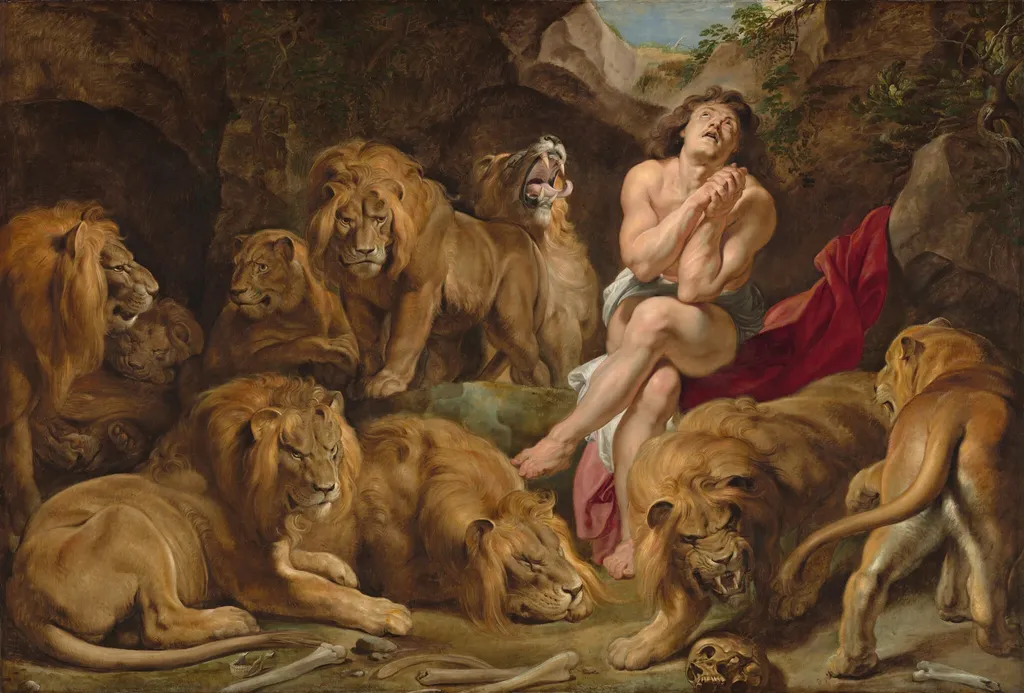
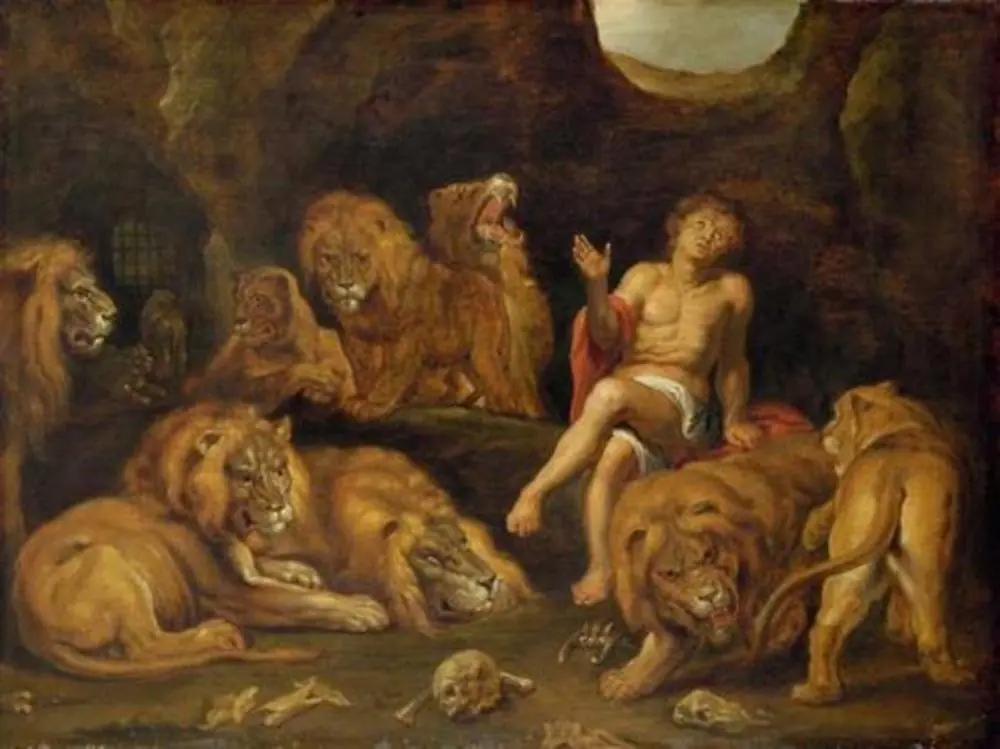
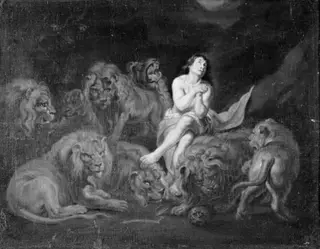
Daniel in the Lions' Den is an oil painting by the Baroque artist Peter Paul Rubens. It dates from 1615 and is held in the collection of the National Gallery of Art.
About this work
Rubens called it the flower of his stock and kept it for himself before trading it to the English ambassador Sir Dudley Carleton for ancient Roman sculpture.
Ten lions crowd a nearly nude prophet in a cavernous den, their fur drawn from the North African lions Rubens studied at the Brussels royal menagerie. Painted around 1614 to 1616, the canvas runs over seven by ten feet and entered the National Gallery of Art in 1965. Rubens called it the flower of his stock and kept it for himself before trading it to the English ambassador Sir Dudley Carleton for ancient Roman sculpture.
Subject & Meaning
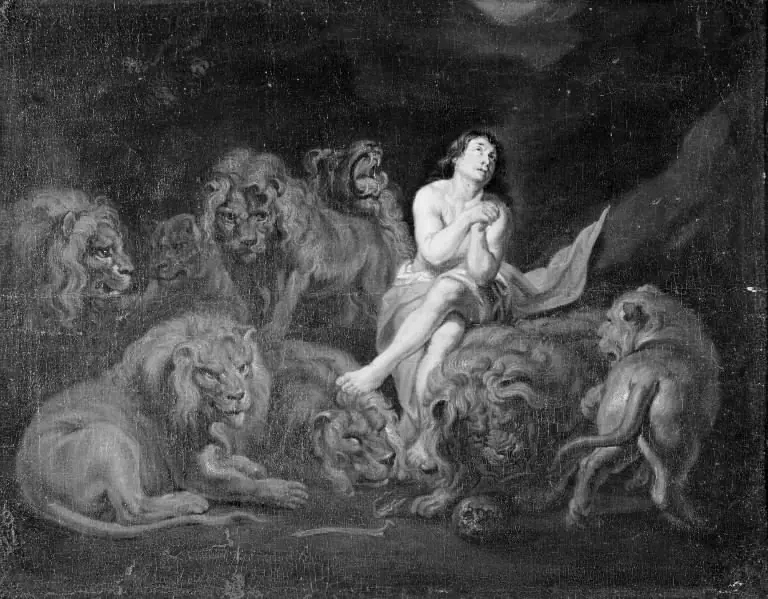
The painting depicts the biblical narrative from the Book of Daniel (chapter 6), in which the prophet Daniel is cast into a den of lions for defying King Darius the Mede's decree forbidding prayer to any god but the king. Rubens portrays Daniel as a youthful figure, despite biblical chronology suggesting advanced age, shown in prayer, a detail drawn from the deuterocanonical chapter 14 rather than the canonical text. He is surrounded by ten life-size lions displaying varied temperaments, from indifferent to fierce and hungry, heightening the dramatic tension.
Several lions stare directly at the viewer, creating an invasive, theatrical experience. The subject carries Counter-Reformation resonance, emphasizing personal faith and divine protection. Some scholars propose a political allegory referencing the Twelve Years' Truce, noting that the ten lions may correspond to the ten provinces of the Southern Netherlands.
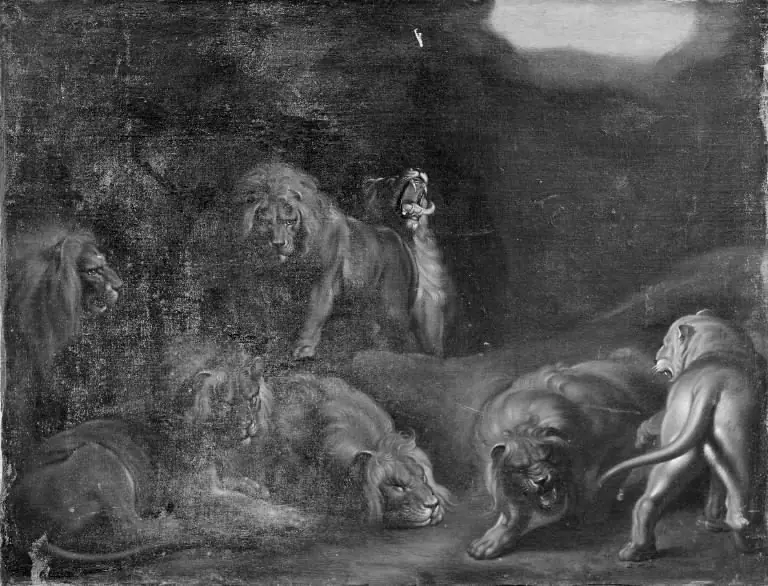
Rubens' classical influences shape Daniel's figure, modeled on Italian Renaissance and antique sculpture, while the lions were studied from live animals in the Brussels royal menagerie, likely Moroccan lions, possibly the extinct Barbary subspecies, with the lioness at the far right based on a sixteenth-century Paduan bronze statuette.
Technique & Style
Daniel in the Lions' Den is executed in oil on canvas, a medium typical of Flemish painters of the late 16th and early 17th centuries. The painting measures approximately 224.2 cm in height by 330.5 cm in width. Rubens' constructive method and technique show affinities with the practices of Leonardo, Titian, Tintoretto, Veronese, Palma Vecchio, Andrea del Sarto, and painters of the Bolognese School, reflecting the strong Italian influence absorbed during his eight years in Italy.
The lions are rendered life-size, intensifying their dramatic menace, and several appear to gaze directly at the viewer, combining realism with theatricality. Rubens had access to exotic animals through the royal menagerie in Brussels, where he could study lions from life. The lions are thought to represent a Moroccan subspecies already extinct in the wild.
For the lioness at the far right, Rubens drew on a copy of a sixteenth-century bronze statuette from Padua.
History & Provenance
Peter Paul Rubens painted Daniel in the Lions' Den around 1615, though some sources suggest it may have been begun as early as 1612 or completed as late as 1616. The painting was acquired in 1618 by Sir Dudley Carleton, 1st Viscount Dorchester, English Ambassador at The Hague, in exchange for antique sculpture. Carleton presented it to Charles I of England, who hung it in the Bear Gallery at Whitehall.
By 1643 it had passed to the Dukes of Hamilton at Hamilton Palace, Scotland, where it descended through the family and was offered at the Hamilton Palace sales of 1882 and 1919. It later passed through Christopher Beckett Denison and Weetman Dickinson Pearson, 1st Viscount Cowdray, at Cowdray Park. Offered at Bonhams on 1 August 1963, where it was misattributed to Jacob Jordaens and Paul de Vos, it was withdrawn and sold by private treaty. The National Gallery of Art in Washington, D.C., acquired the painting in 1965.
Context
Modern scholars interpret Rubens's Daniel in the Lions' Den as a work shaped by Counter-Reformation ideology and possibly political allegory. The painting's blend of Italianate classical influence, evident in Daniel's youthful, sculptural figure, and Flemish verisimilitude exemplifies Rubens's synthesis after his return from Italy in 1608. Researchers note the ten lions may allude to the ten provinces of the Southern Netherlands, suggesting the canvas functioned as commentary during the Twelve Years' Truce.
The work's dramatic theatricality and life-size animals align with Baroque aims of visceral emotional engagement. Misattributed to Jacob Jordaens and Paul de Vos for decades, the painting's rediscovery and scholarly reassessment underscore its significance within Rubens's oeuvre and Flemish Baroque art history.
Legacy
Rubens' Daniel in the Lions' Den has retained a notable place in the study of Flemish Baroque art, valued for its combination of realism and theatricality. The National Gallery of Art highlights how the work draws a strong emotional reaction, with several lions appearing to stare directly at the viewer and the animals rendered at life-size to heighten their menace. The painting has also gained attention for its zoological dimension: the lions are identified as a Moroccan subspecies, the Barbary lion, already extinct in the wild by the time of its creation, making the canvas an important visual record.
The work was misattributed to Paul de Vos and Jacob Jordaens before its authorship by Rubens was re-established, and it entered the National Gallery of Art in Washington, D.C., in 1965, where it remains part of the permanent collection.
Overview
Peter Paul Rubens, a foundational figure of the Baroque movement in Flanders, completed "Daniel in the Lions' Den" around 1614-1616. This monumental oil on canvas vividly portrays the biblical narrative of the prophet Daniel's miraculous deliverance from a den of lions. The painting, measuring over seven by ten feet, exemplifies Rubens's early mastery of dramatic composition and his ability to infuse religious subjects with intense realism and emotional depth, marking it as a significant work in his oeuvre.
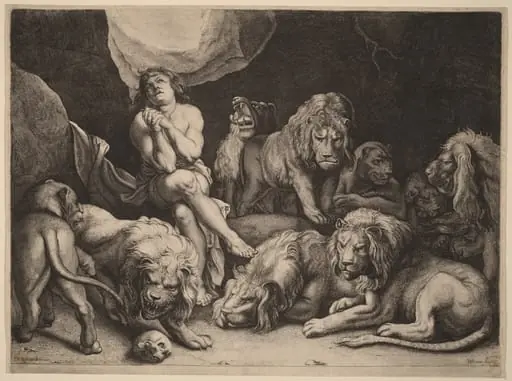
Own this work as a print
Artist & collection
Artist
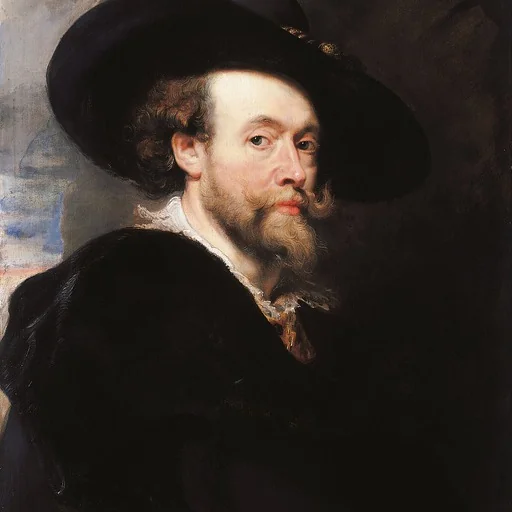
Sir Peter Paul Rubens ( ROO-bənz; Dutch:; 28 June 1577 – 30 May 1640) was a Flemish artist and diplomat.