The Artist's Daughter with a Parakeet by Morisot, Berthe
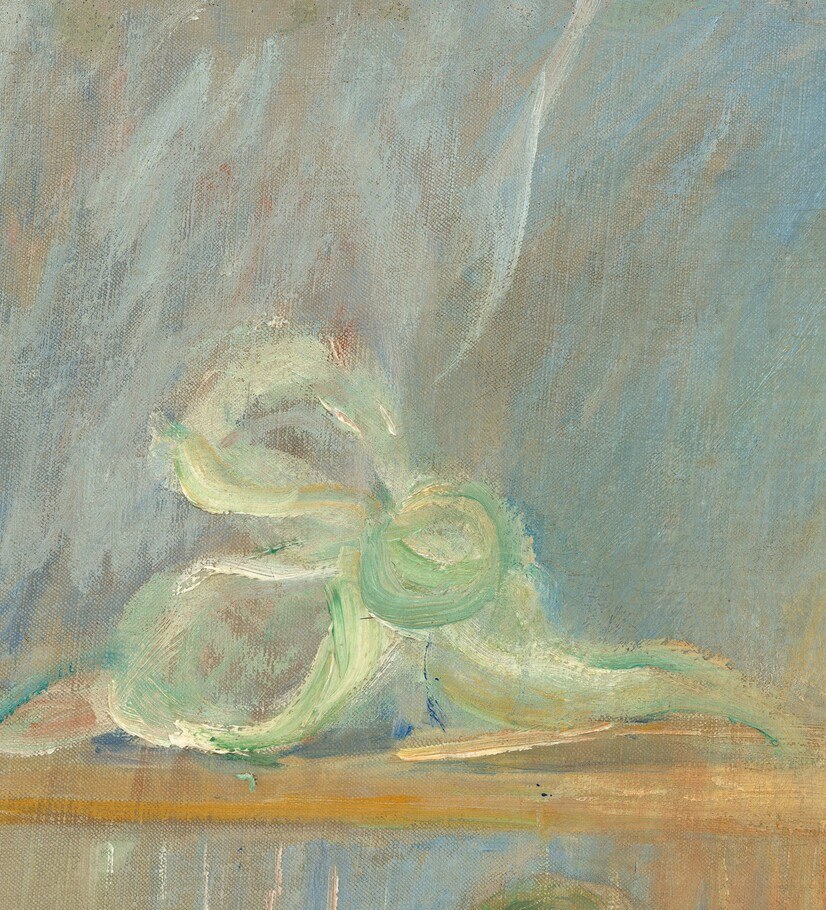
Berthe Morisot painted "The Artist's Daughter with a Parakeet" in 1890, and almost everyone stops at the bird. Her daughter Julie Manet sits with a vivid green parakeet perched beside her, and the composition reads as a charming domestic portrait of a girl and her pet. That reading is incomplete.
The first thing to look for is the second bird: a white parakeet upper right, mirroring the green one so the two form a symmetrical bracket around Julie's head. Then look even higher. Across the top of the canvas, so faint they dissolve into the pale background, are the horizontal bars of a cage. The birds are not free; neither is the space Julie occupies. Morisot framed her daughter inside a living halo that is also an enclosure.
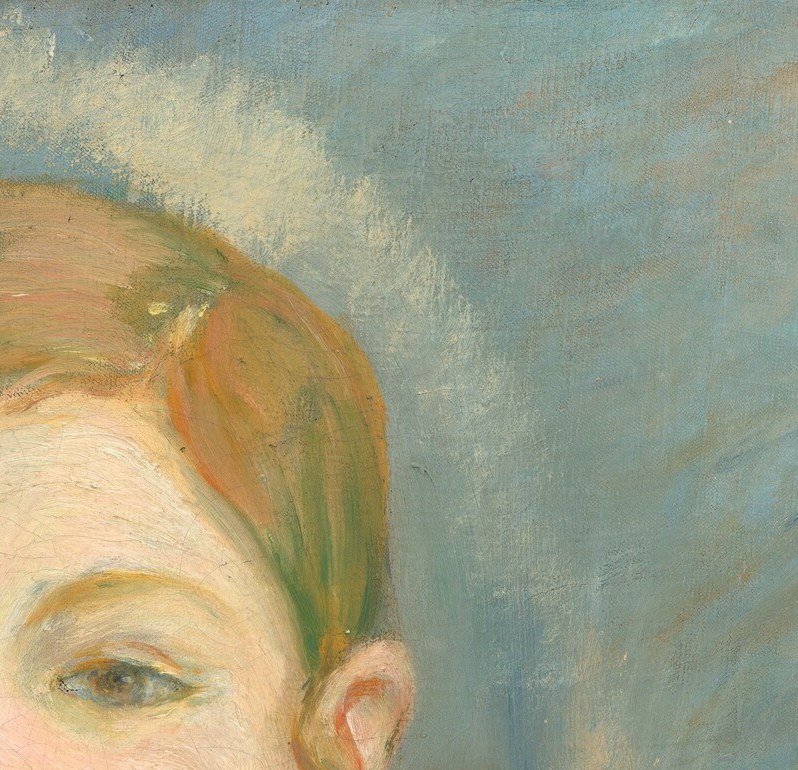
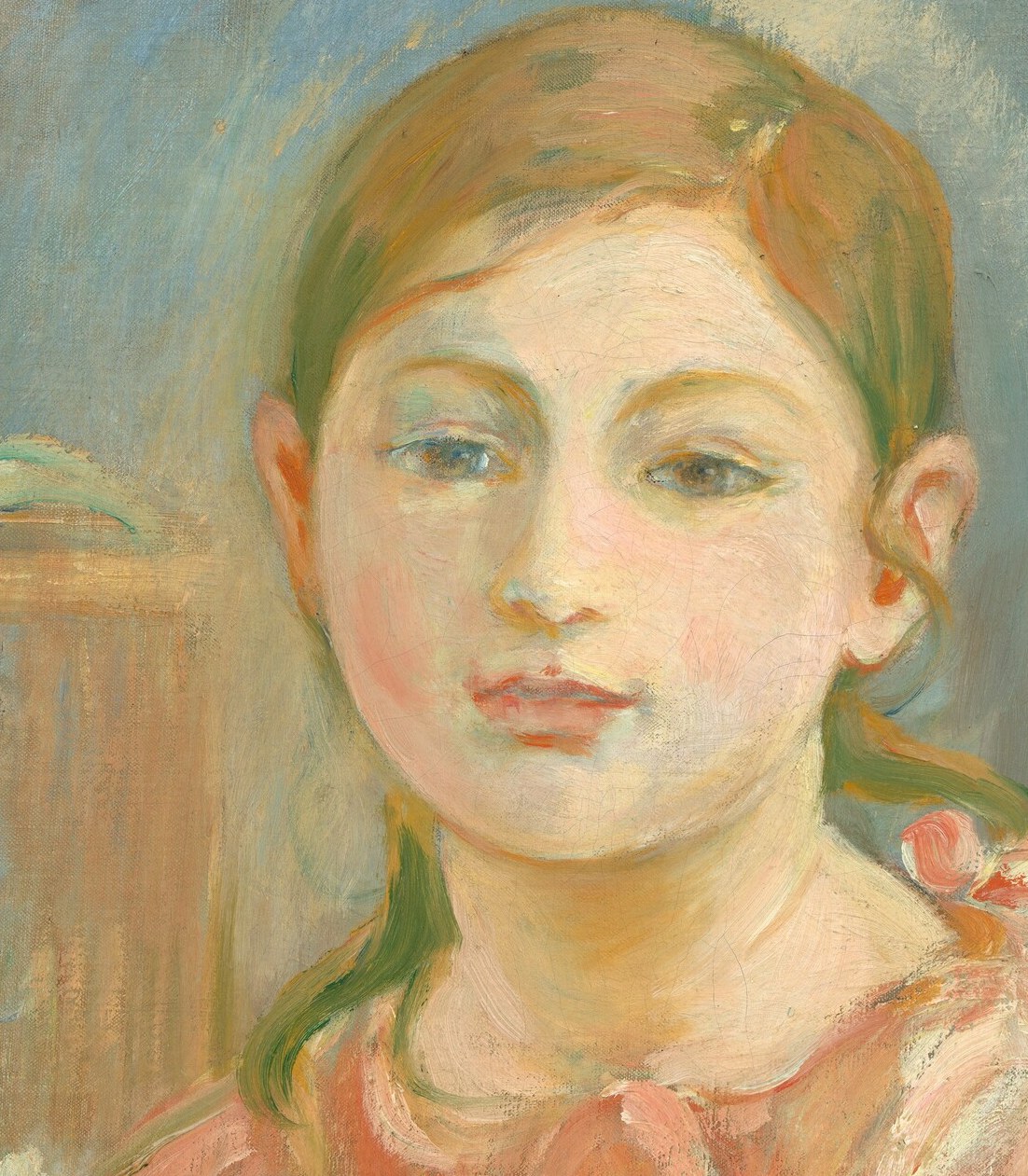
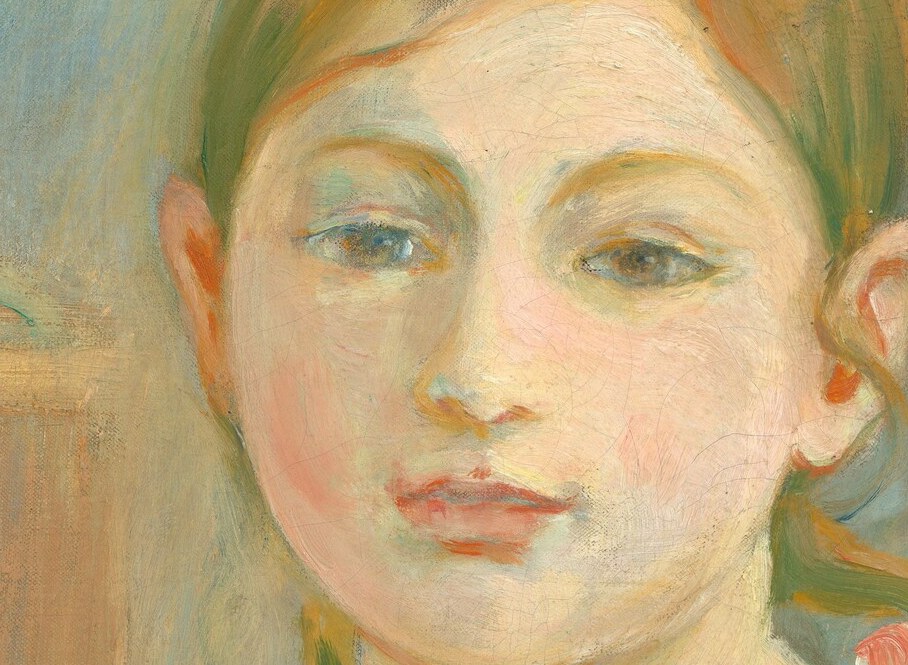
Morisot was one of the founding Impressionists, the only woman to exhibit in all but one of the group's eight shows between 1874 and 1886. She painted her daughter repeatedly, and always with the same unsparing respect. Julie's gaze here is direct and self-possessed, refusing to be looked through. For a woman artist in 1890 to render a girl this way, as a person meeting the viewer on equal terms, was itself a quiet political act.
The loose, dissolving brushwork around the dress and hands shows an Impressionist hierarchy of finish: the face is the most resolved passage, while the margins are barely indicated. Morisot cared about the person, not the inventory. Next time you see this painting, look past the first bird. There's a whole architecture of attention built above her head.
Details

Transcript
You noticed the green parakeet. But there is a second bird. And something even easier to miss. Faint lines of a cage frame her head. Two birds, a cage, and a composed girl who meets your eyes. She was the painter's daughter. Morisot painted her as a subject, not an ornament.