Family Portrait by Earl, Ralph Eleaser Whiteside
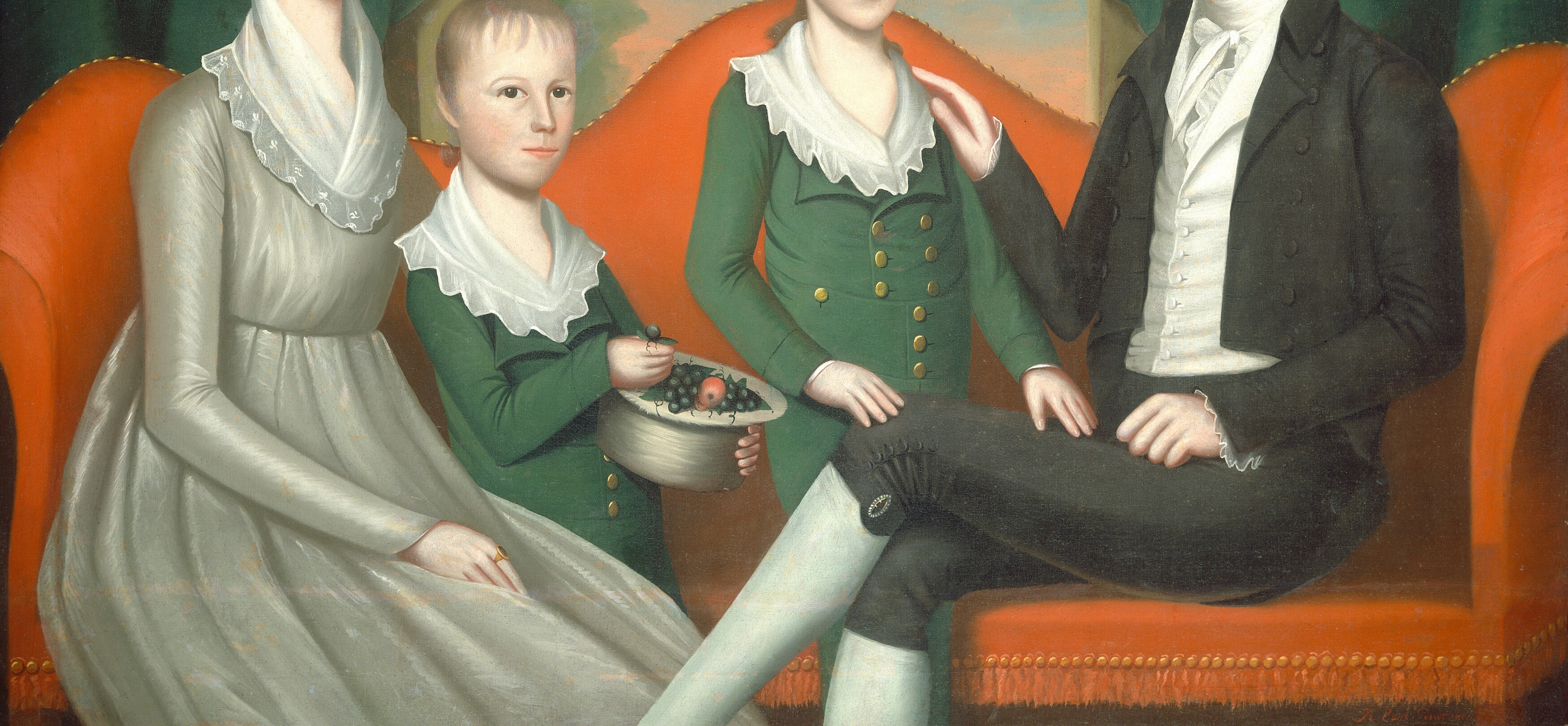
Painted in 1804 by Ralph Eleaser Whiteside Earl, this "Family Portrait" (1804) at an unknown museum offers a glimpse into the domestic life and social customs of the early 19th century.
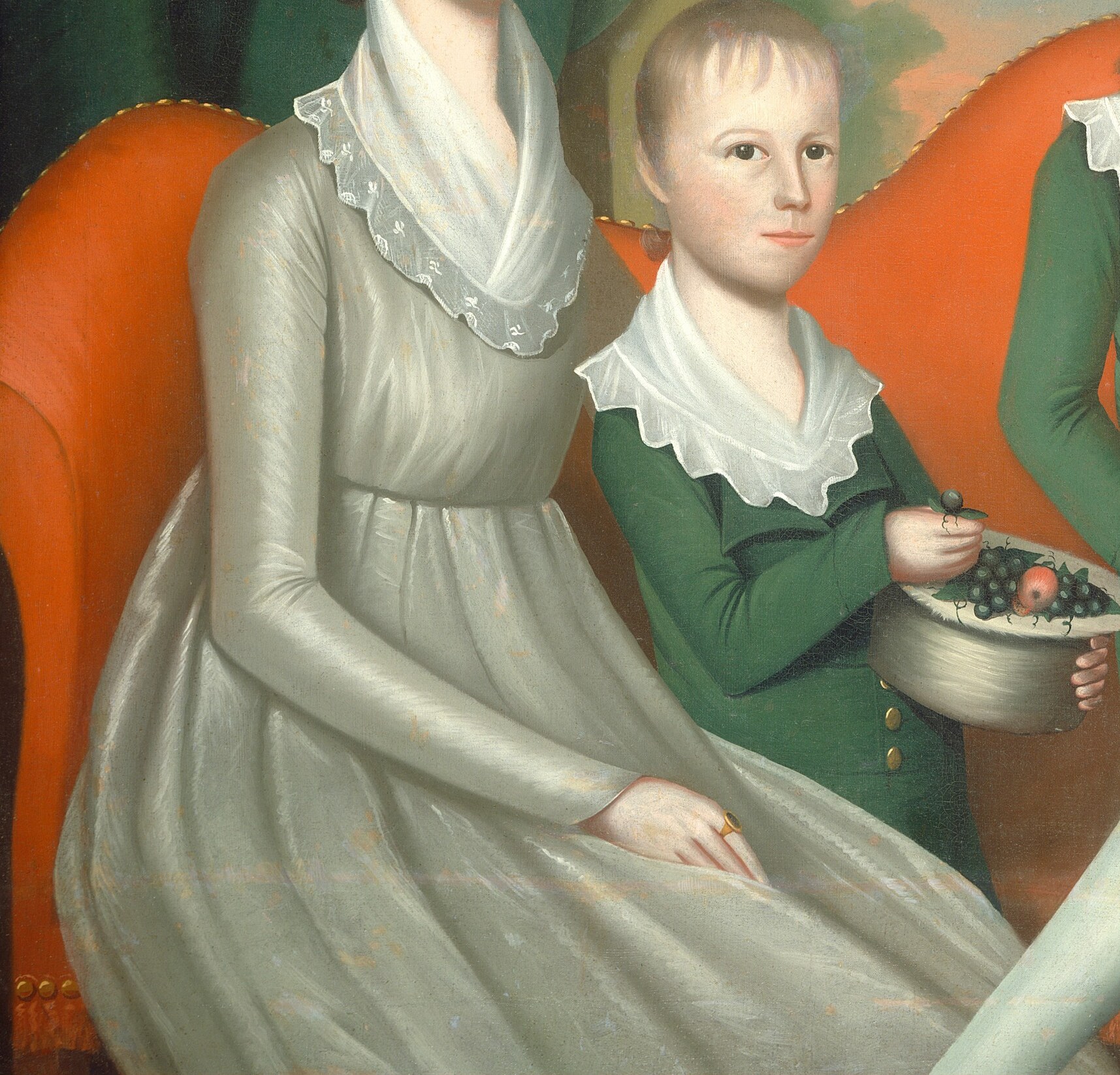
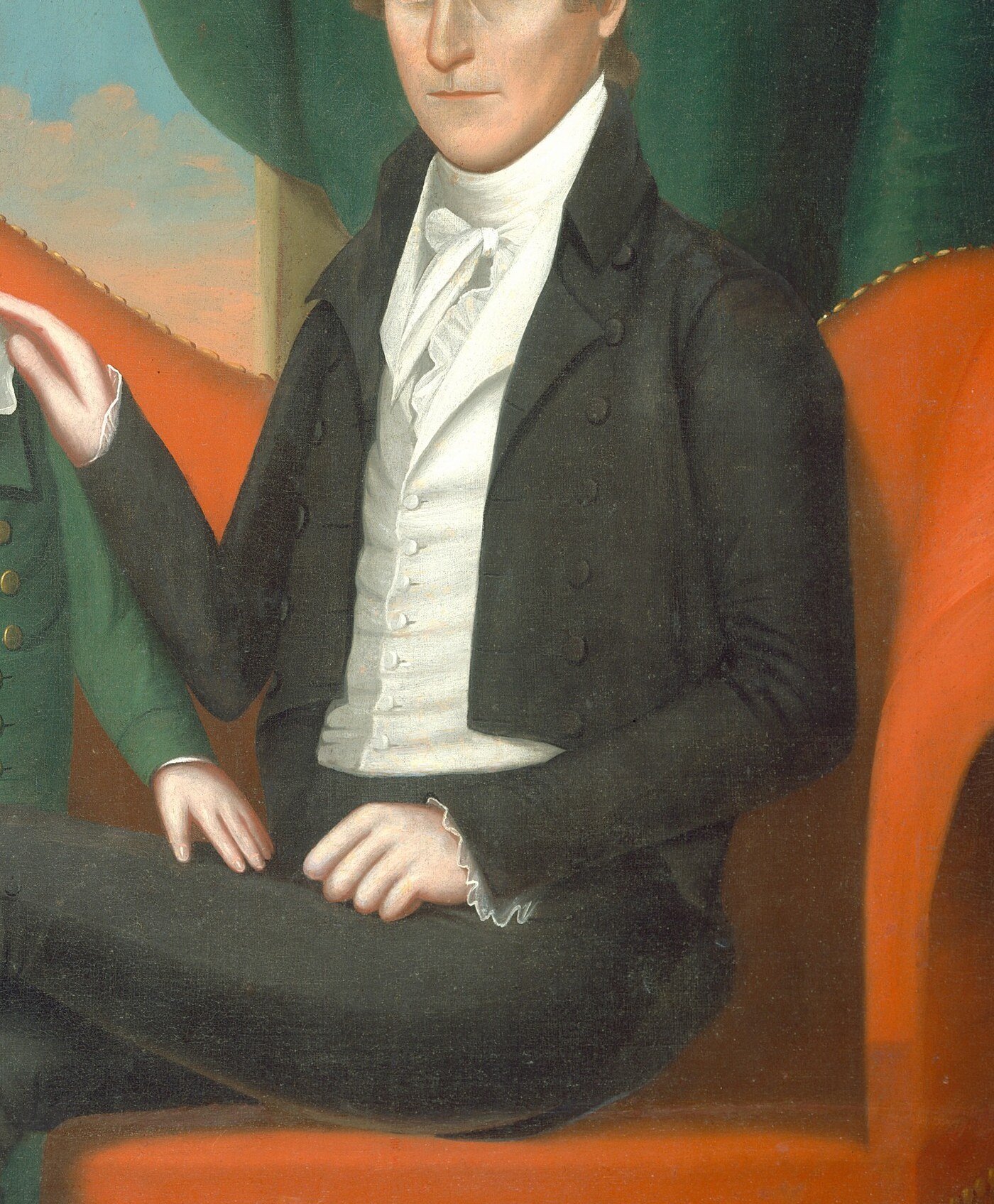
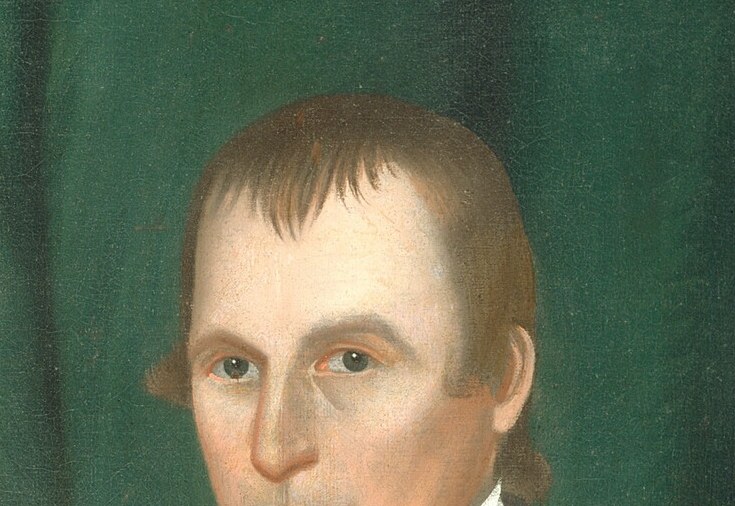
Observe the details: the woman's dress reflects the fashionable styles of the period, while the man's dark suit signifies his societal role. The rich orange couch creates a sense of warmth and intimacy, grounding the family in their home.
Earl was known for capturing such domestic scenes, focusing on the relationships within the family unit. The meticulous rendering of their clothing and expressions speaks to the artist's commitment to realism and character portrayal.
This painting invites us to consider the ways families presented themselves in a bygone era, balancing formality with genuine connection. How do family portraits today reflect our own times?
Details
Transcript
This family posed for their portrait in 1804. The woman's dress, with its soft folds, was the height of fashion. A man's dark suit was a statement of his position and responsibility. The orange couch creates a warm, inviting setting for the family. This family posed with dignity, a common theme in portraits then. Yet the older son's hand shows a protective family bond.