Portrait of Monsieur Aublet by Guillaume Voiriot
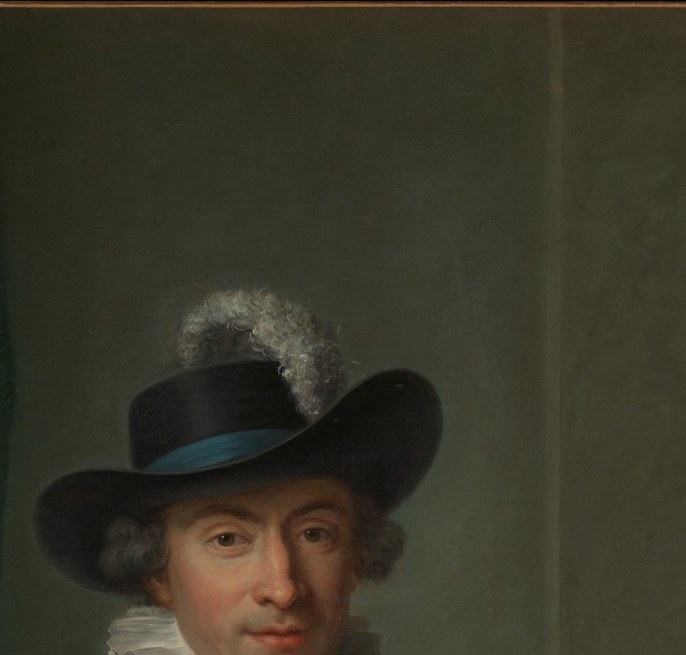
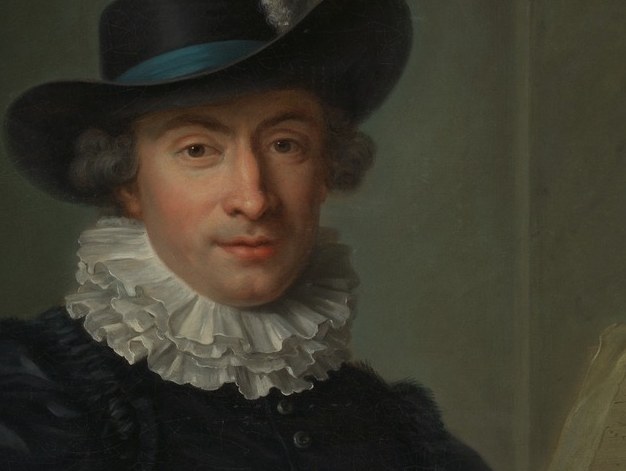
This is Guillaume Voiriot's 'Portrait of Monsieur Aublet,' painted in 1792. It hangs at The Metropolitan Museum of Art. The year tells a quiet story. While the French Revolution transformed the country outside the studio window, Voiriot painted a man absorbed in his music, dressed not for the chaos of the street but for an intimate, private performance.
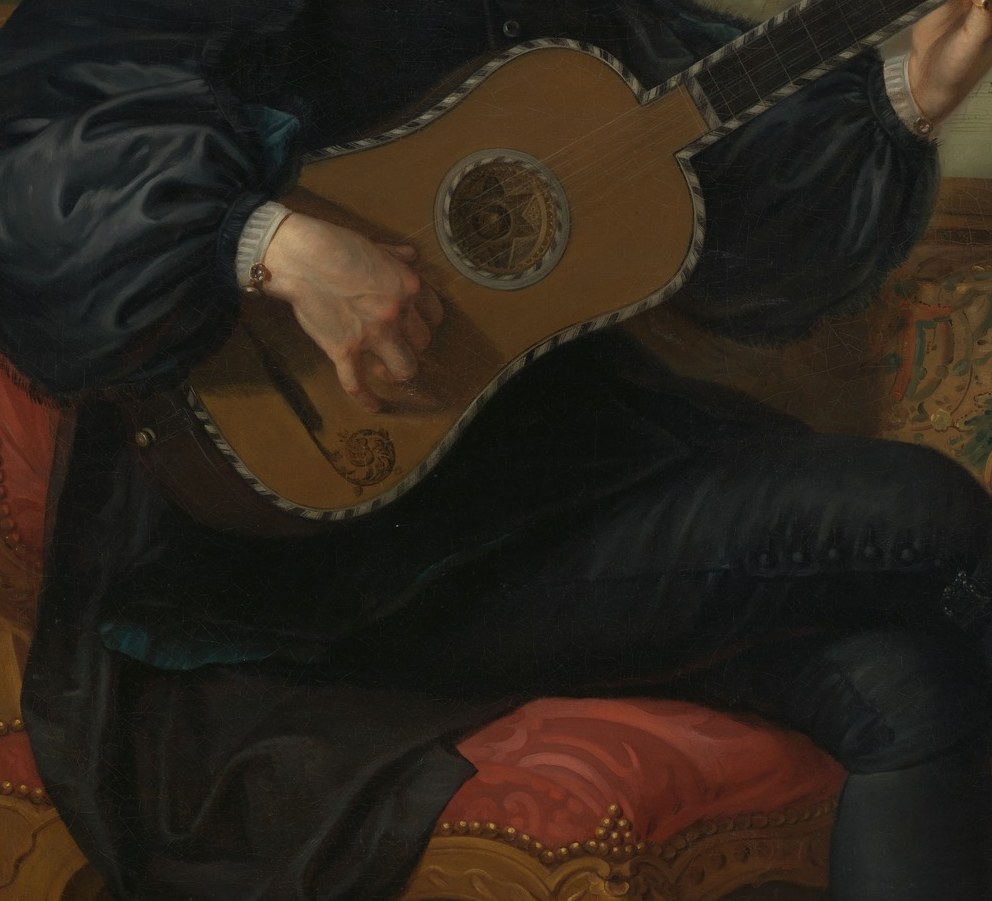
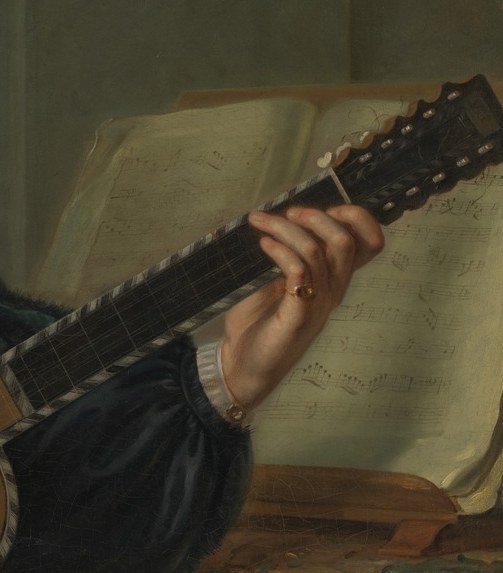
Look at the guitar. The strings are rendered as fine parallel lines, carefully depicting the real gut strings of an 18th-century baroque guitar. His left hand presses a specific chord on the fretboard, and his right hand is caught mid-strum. The open sheet music beside him contains partially legible notation. This is not a generic prop; it's a record of a genuine musical moment.
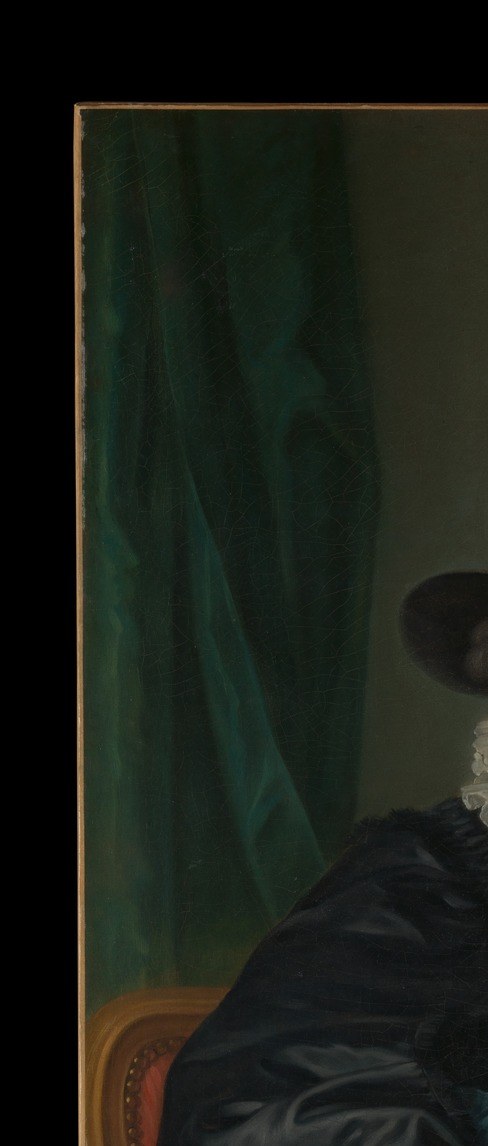
The only real warmth in the composition is the red cushion at the lower left. Everything else, the dark coat, the deep green wall, recedes, pushing the dramatic light onto Aublet's face and the polished wood of his guitar. Voiriot, who was 79 years old when he painted this, used strong chiaroscuro to give the figure weight and presence, capturing a cultivated world on the brink of disappearance.
Details
Transcript
This man is dressed for a private concert. His name is Monsieur Aublet. He commissioned this portrait in 1792. While the French Revolution raged outside. Look at his guitar. The strings are real gut. His left hand presses a specific chord. He isn't posing with a prop. He's playing. A quiet world of music, painted as that world vanished.