Madonna and Child Enthroned with Saint John the Baptist and Another Saint by http://www.wikidata.org/.well-known/genid/884b625a0f4640526240b1f9dddadf23
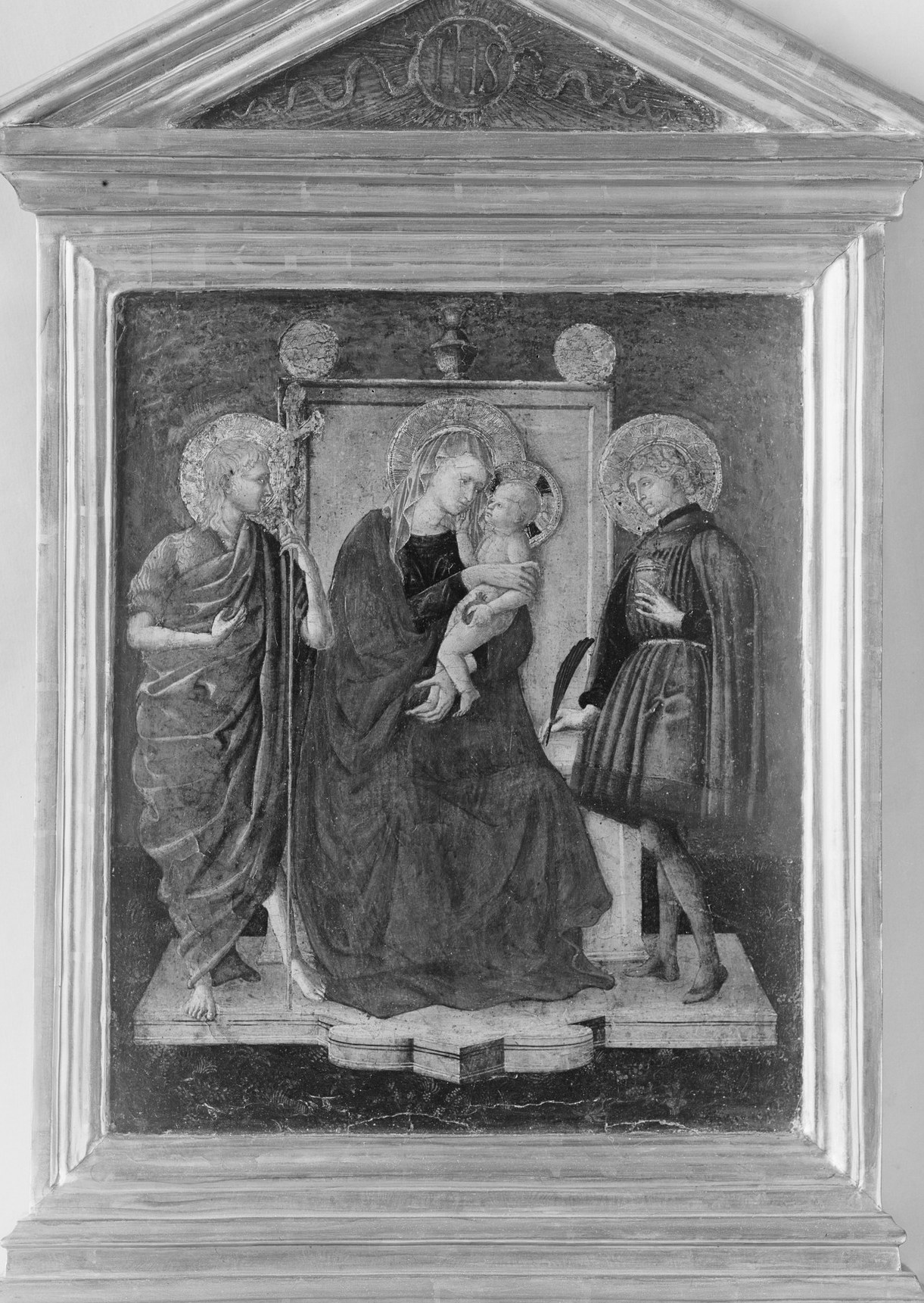
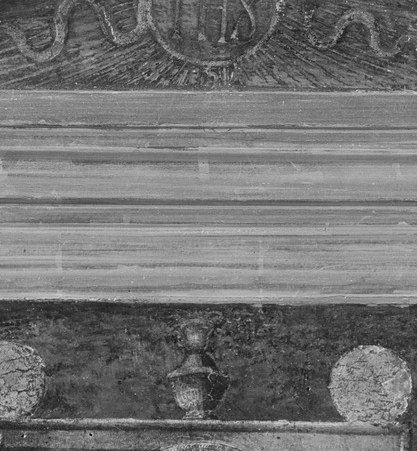
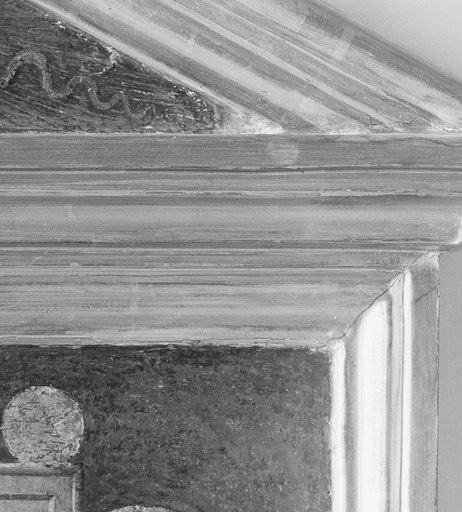
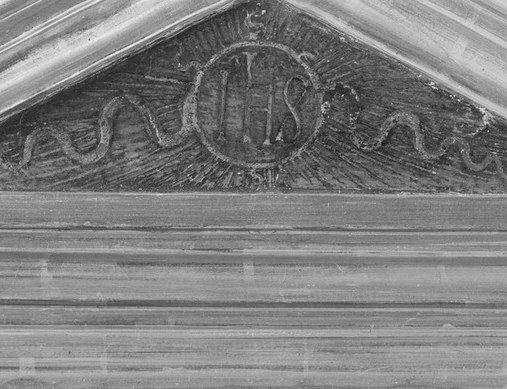
This is Raffaellino del Garbo's "Madonna and Child Enthroned with Saint John the Baptist and Another Saint," painted around 1500 in Florence. It is a small domestic altarpiece, a luxury devotional object commissioned by a wealthy family for a private chapel. At its heart, the work is a machine for prayer: the painted pilasters and pediment create the illusion of a sacred architectural space, turning a wooden panel into a miniature temple.
The camera moves through the painting's sacred geography. Look first at the reed cross held by Saint John the Baptist on the left, that slender staff is the sole attribute that identifies him and injects the Passion narrative into this otherwise serene gathering of saints. Notice how his face, and the face of the Madonna, are rendered with a quiet solemnity that was the visual language of private devotion. Then look into the halos: the gold is not simply applied, but punched, incised, and tooled with the precision of a goldsmith. The material cost of the gold leaf alone would have rivaled what the patron paid the painter.
The painting belongs to a tradition where the sacred and the luxurious were inseparable. Halos of burnished gold, an architectural throne that elevates the Virgin above the saints, and a dark, receding background that isolates the holy figures from the mundane world, all of it was designed to make the divine feel present, tangible, and worthy of immense expense. Raffaellino, a student of Filippino Lippi, ran a busy Florentine workshop that produced precisely this kind of polished, marketable piety for the city's mercantile elite.
When you look at the gilded halos, you are seeing what a Renaissance banker believed was the proper value to offer the sacred. What does it cost to look holy?
Details

Transcript
It looks like a window into a chapel. But the chapel is paint. The frame, the columns, the throne. A wealthy Florentine family paid for this, to pray for their souls. To the left, John the Baptist. You know him by his reed cross. He looks at the infant and already knows the end of the story. The Madonna's halo is not just gold leaf. It is punched, tooled, worked like jewelry. The cost of the gold alone rivaled the painter's fee. This was a luxury object. A gilded machine for prayer.