Boats with Mourners and Provisions, Tomb of Neferhotep by Nina M. Davies
Boats with Mourners and Provisions, Tomb of Neferhotep was painted in 1927 by Nina M. Davies, an Egyptologist who spent decades copying fragile tomb paintings before they vanished. It is held by The Metropolitan Museum of Art.
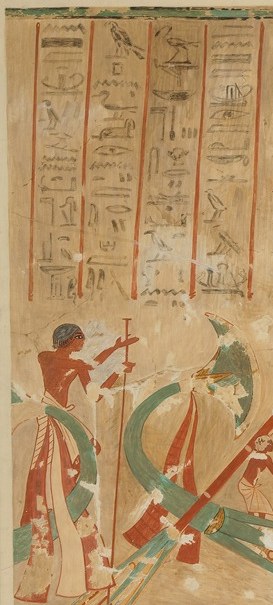
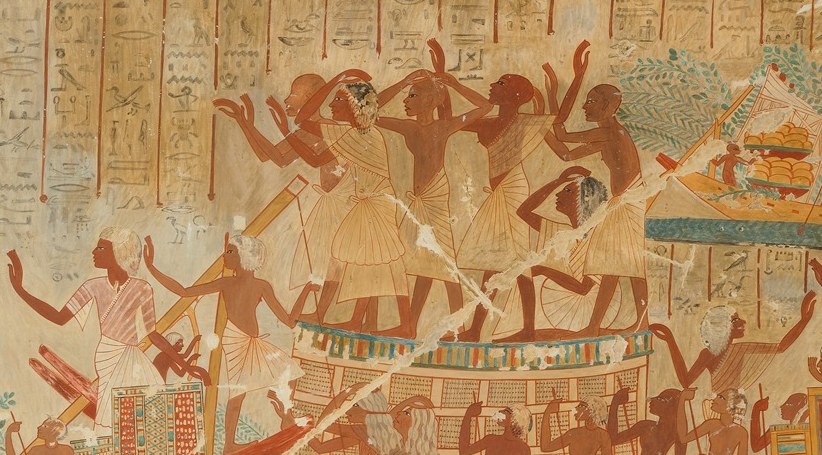
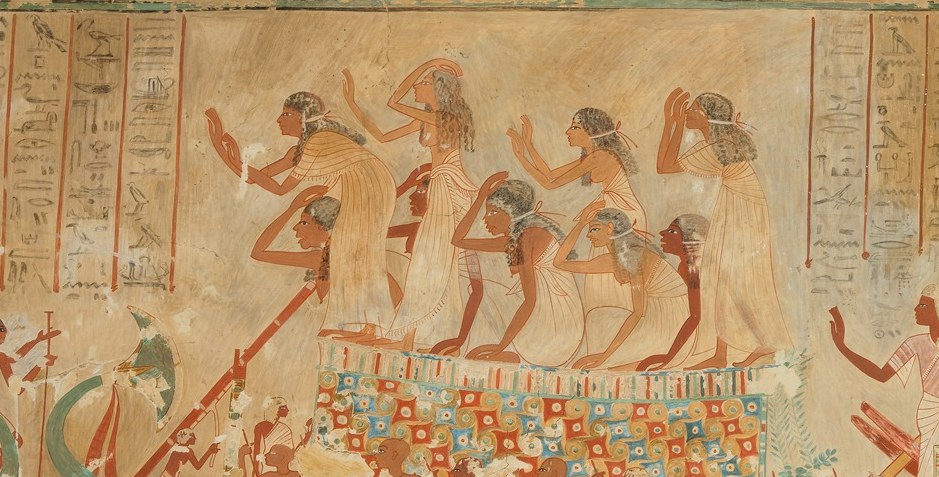
Two boats form the heart of the scene. On the left, mourning women raise both arms in the classic khener-gesture of grief, an image an Egyptian would read instantly. On the right boat, provisions are stacked high. The baskets and sealed jars look generic now, but each container type corresponded to a specific funerary offering the deceased would need in the afterlife.
Davies worked alongside her husband Norman de Garis Davies, and they often signed work jointly, so her hand is not always easy to isolate. She trained as an artist before she came to Egypt, and her copies are prized for preserving subtle facial details and color notes that the original tomb walls lost to time, flashbulbs, and humidity soon after she saw them.
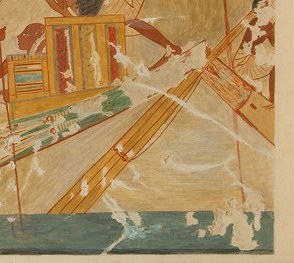
Most reproductions crop tight. Davies copied all the way to the right edge of the register. That little prow finial is her signature of discipline, proof that she saw the margin, and she chose to record it. Ask yourself: what else did she see that we only notice when the camera holds still?
Details

Transcript
Two boats carry the dead across the Nile. The women on the left raise both arms high, a gesture of grief older than Rome. Look closely at the stacked cargo on the right boat. Every jar and basket had a specific ritual use for the afterlife. Now check the prow of that same boat, the very end of the scene. The copy is complete to the edge. Davies recorded even the margin most painters would crop.