The Rocky Mountains, Lander's Peak by Albert Bierstadt
View the artwork: The Rocky Mountains, Lander's Peak →
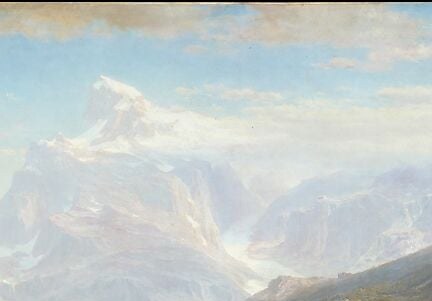
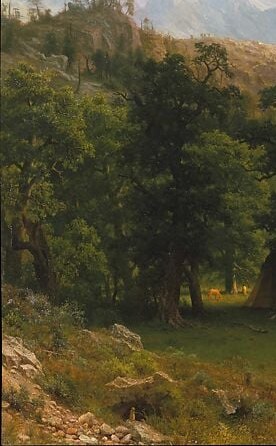
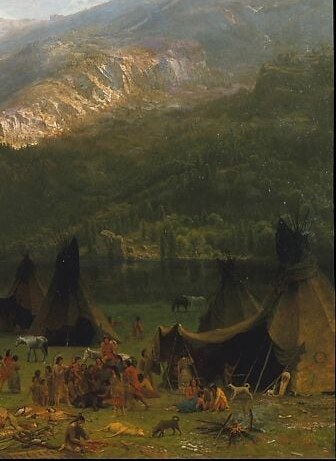
The Rocky Mountains, Lander's Peak, painted by Albert Bierstadt in 1863, is a landscape that doubles as an elegy. It hangs in the Metropolitan Museum of Art. The painting is enormous, over ten feet wide, and in 1865 it sold for $25,000, the highest price ever paid for an American painting at the time.
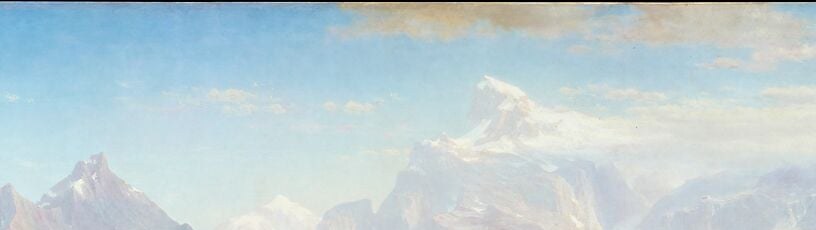
The peak at the center is not an ancient, inherited name. Bierstadt christened it himself, for Frederick W. Lander, the surveyor who led the 1859 expedition where the artist made his sketches. Lander was killed in the Civil War at the Battle of Ball's Bluff in 1862, before Bierstadt ever put brush to canvas. The mountain is a headstone.
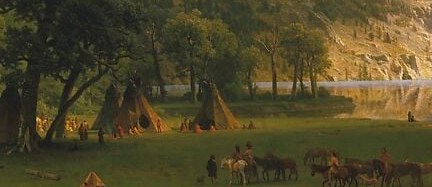
In the foreground, a Shoshone encampment rests in a golden meadow. Bierstadt painted it in 1863, the same year the Bear River Massacre killed hundreds of Shoshone people just over a hundred miles from this site. The light that bathes the valley is the light of American luminism, a light that reads as divine blessing poured onto a landscape. It is the most beautiful possible rendering of a world on the verge of disappearance.
Frederick Lander never saw the peak that carries his name. The people Bierstadt painted never saw the painting. It is a record of what was about to be lost, lit like a promise.
#arthistory #americanart #hudsonriverschool
Details
Transcript
In 1865, one American painting sold for an unheard-of sum. Twenty-five thousand dollars. A record. Albert Bierstadt painted it from sketches made six years earlier. He named this summit for Frederick Lander, who led that expedition. Lander died in the Civil War, two years before the painting was finished. So Bierstadt made his friend's name the center of a promised land. Below the peak, a Shoshone encampment catches the last of the light. The painting's light is a theology. Everything in this valley is about to change.