『画本葛飾振』|Picture Book in the Katsushika Style (Ehon Katsushika-buri) by Katsushika Hokusai
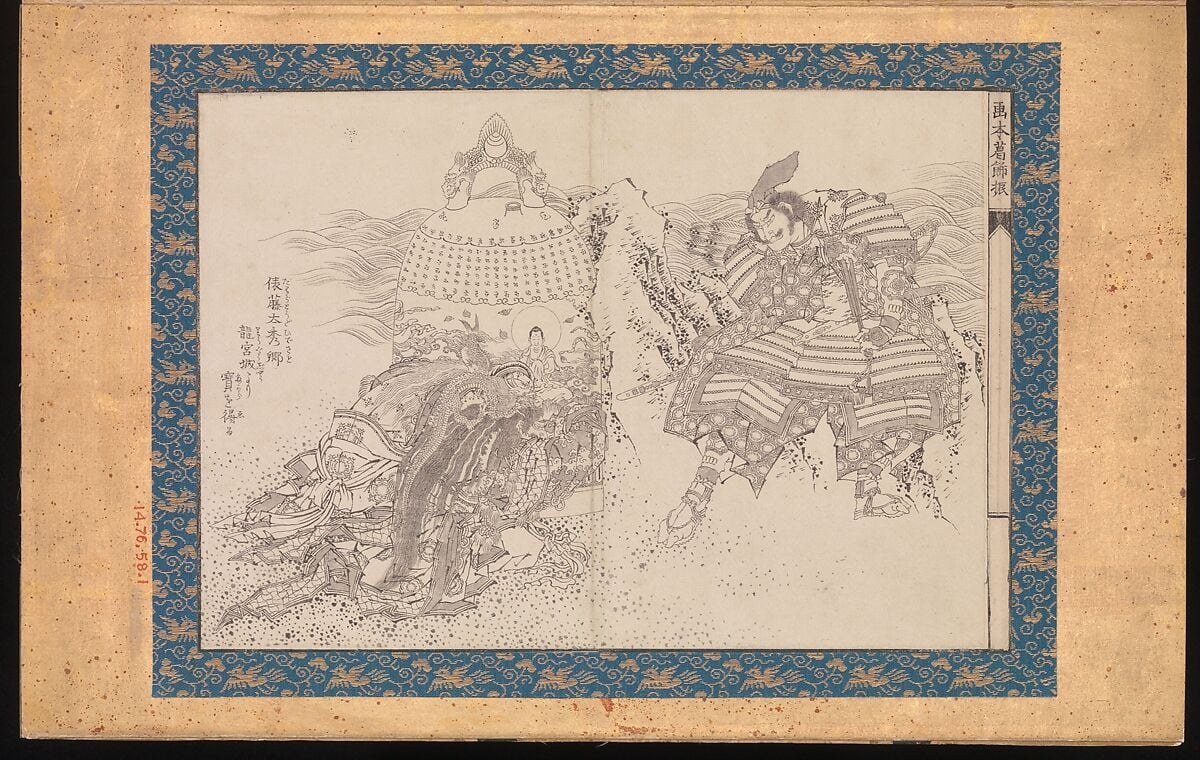
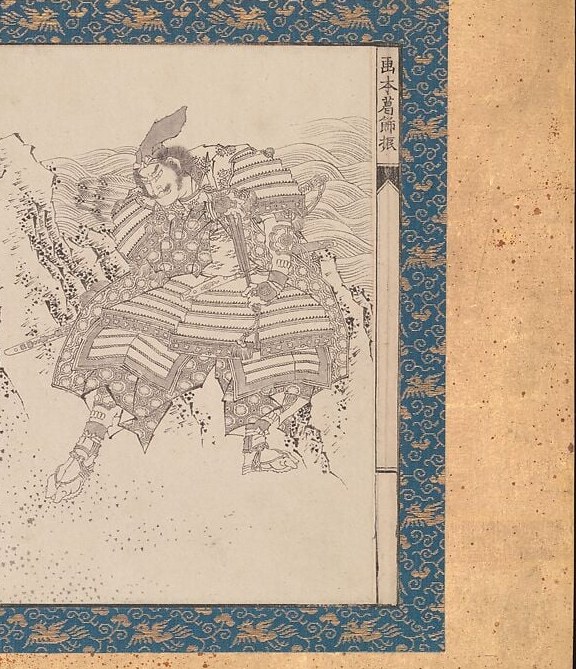
This is a page from Hokusai’s Picture Book in the Katsushika Style, an album of twenty-eight ink drawings made around 1836, now in the Metropolitan Museum of Art. These are not finished prints. They are hanshita-e, precise, block-ready guides that a master carver would paste onto cherrywood and cut, line by line, to create a woodblock print.
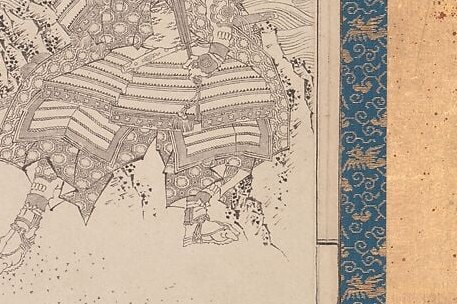
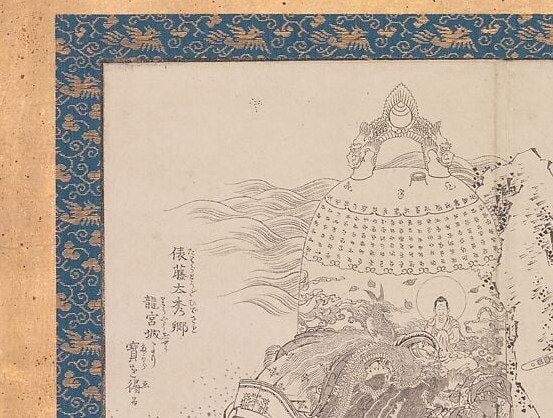
Look at the lacing of the samurai’s armor. Every cross-hatch is a carving instruction. The triangular mass on the left reads like a battle banner now, but its ambiguity is deliberate: the printer would resolve whether it was fabric, mountain, or canopy using color and tone. Hokusai drew the skeleton; the workshop gave it flesh.
Hokusai was around 76 when he made this album. He had already produced The Great Wave and was deep into his most experimental phase. He signed himself Gakyōjin, “the old man mad about art”, and claimed that at 70 he was only beginning to understand how to draw. This album, full of galloping horses and grappling wrestlers, is a study in vitality made for his pupils and carvers to follow.
Every line in this war scene is a transmission. It was drawn to be destroyed in the carving, yet it survives as a painting in its own right. What do you see behind the samurai, a battlefield tent or the side of a mountain?
Details
Transcript
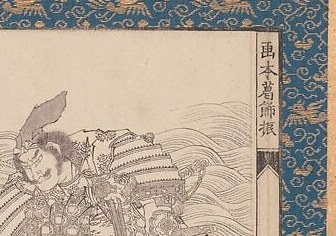
A samurai surges forward in full battle dress. Hokusai drew this not as a finished painting, but as a blueprint. See the pre-printed border? It frames a hanshita-e, a block-ready drawing. His ink lines had to be so precise that a carver could cut them into wood. At left, a banner looms. Or is it a mountain? The printer would decide. Hokusai was 76 and still calling himself a student of the brush.