The Hamlet of Optevoz by Charles François Daubigny
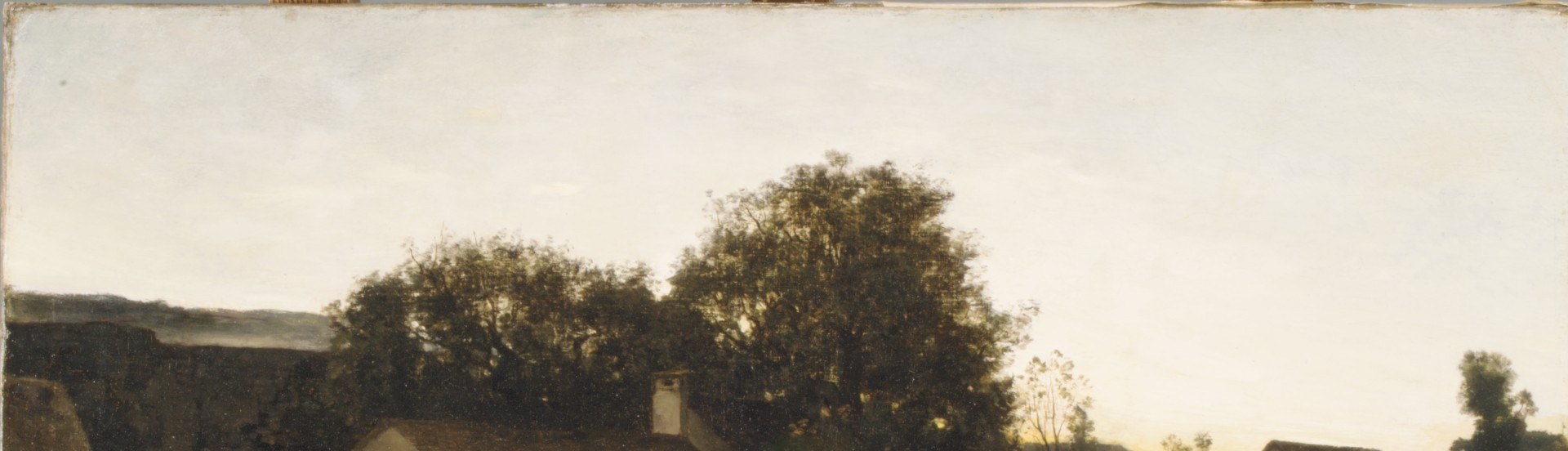
Charles François Daubigny's "The Hamlet of Optevoz," 1852, captured a serene rural moment. This painting exemplifies the Barbizon school's focus on naturalist landscape, showing an unadorned French village scene.
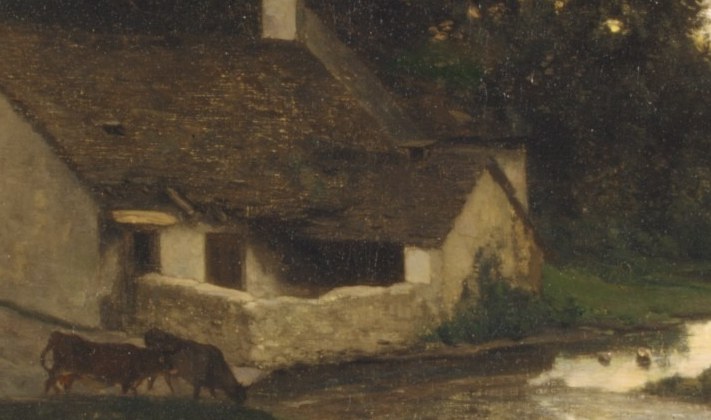
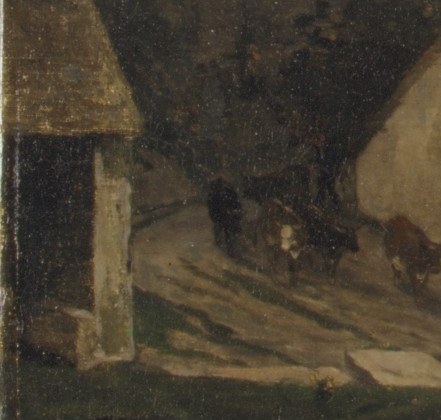
Observe the gentle placement of buildings and trees, with cattle grazing peacefully near a stream. The soft, hazy sky suggests either twilight or dawn, contributing to the tranquil mood.
Daubigny, a key figure in the Barbizon school and a precursor to Impressionism, often painted outdoors. His work here reflects a deep engagement with the natural world and a commitment to depicting rural life authentically.
This quiet scene invites us to pause and appreciate the simple beauty of the landscape.
Details
Transcript
Here is the hamlet of Optevoz in 1852. Cows graze by the stream in the evening light. Smoke rises from a chimney. Someone is home. The artist lived in this countryside. Daubigny painted nature for the Barbizon school. Look at the soft, hazy evening sky. The painter used muted colors for calm.