The Harrower by Horatio Walker
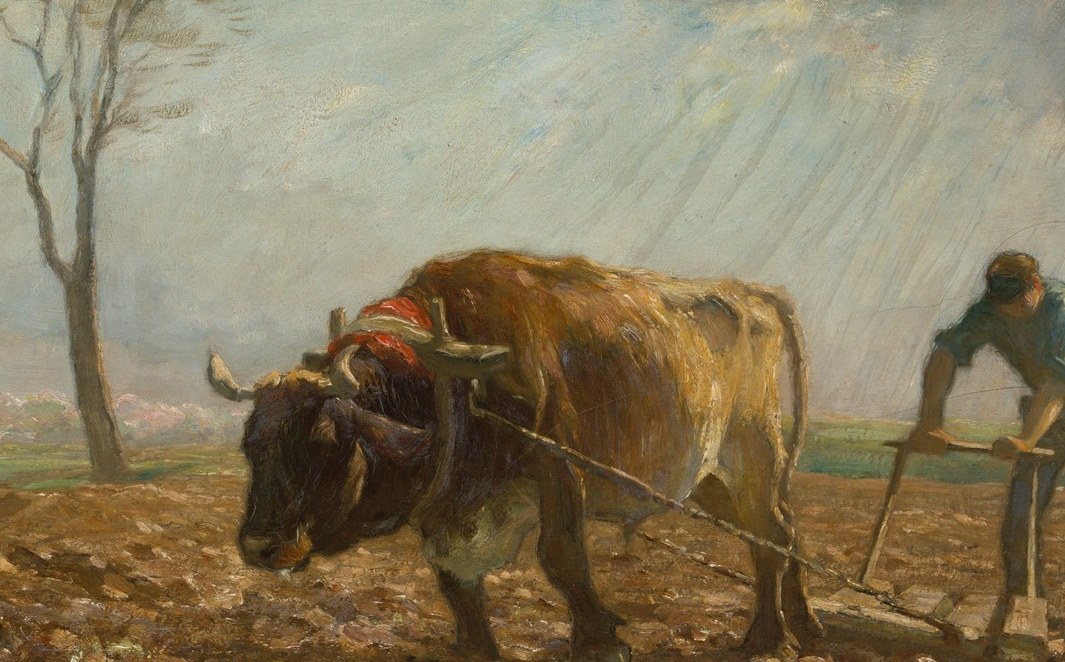
This is "The Harrower" by Horatio Walker, painted in 1890. It is a scene of stoic rural labor, but its backstory pulls it away from the field and into the boardrooms of industrial Canada. The painting was owned by Sir William Cornelius Van Horne, the American-born executive who built the Canadian Pacific Railway. The fortune he used to amass one of the country's most significant private art collections was generated by a government-granted monopoly that controlled the transport of grain, goods, and people across the nation, often at crushing prices for the very farmers depicted in works like this one.
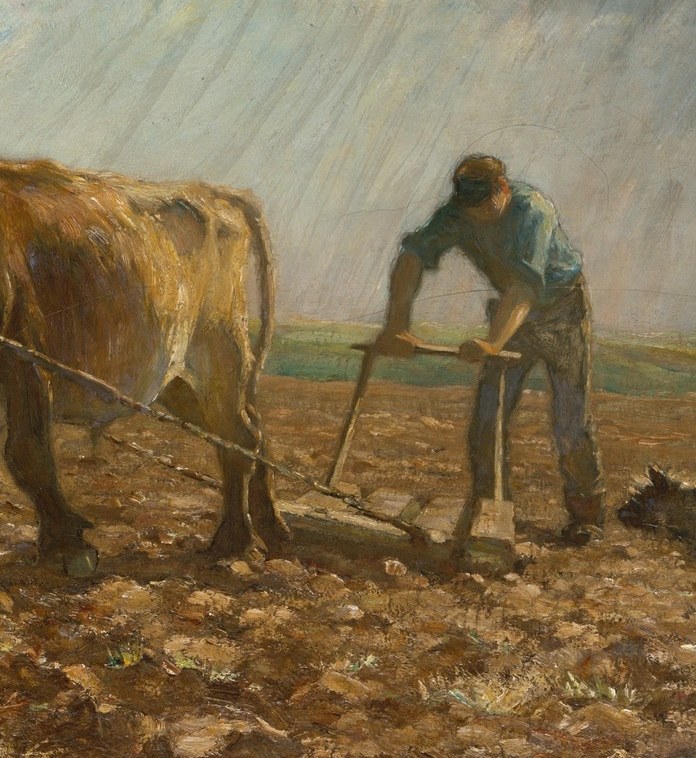
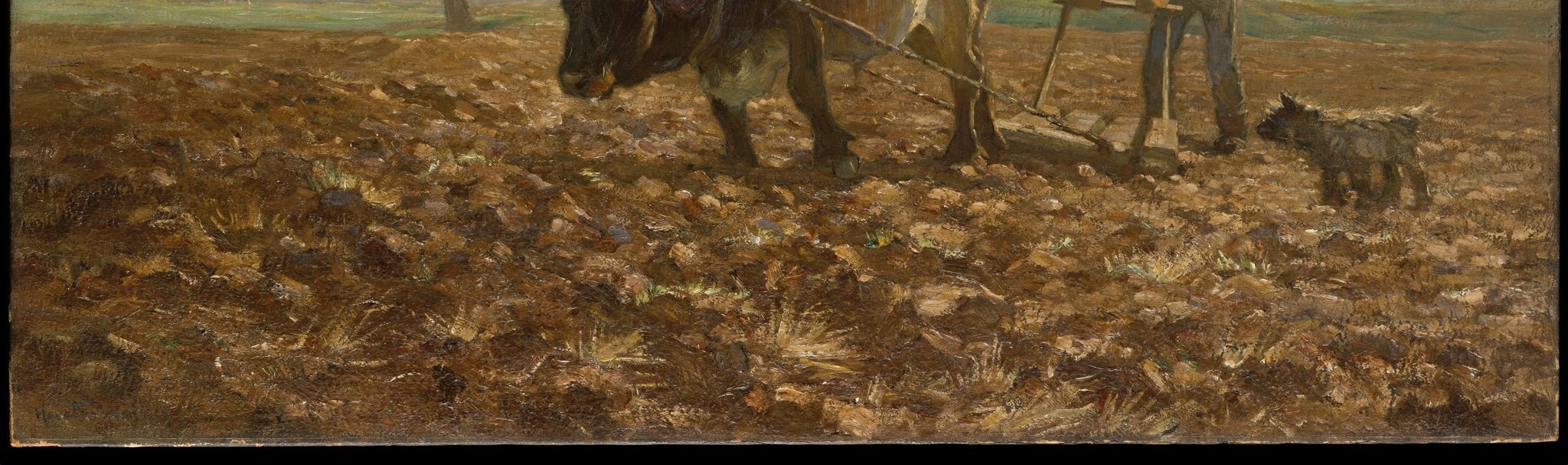
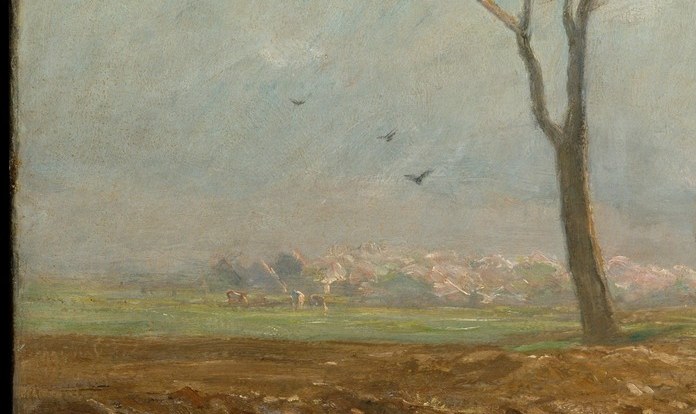
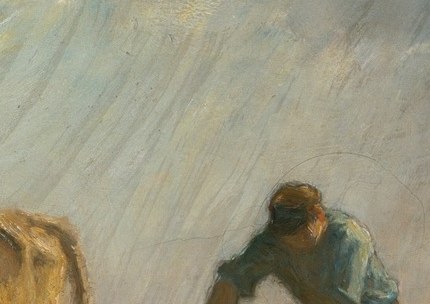
Look at the physical details Walker renders with such weight: the matted, wet clay of the freshly furrowed earth in the foreground, the heavy, patient bulk of the oxen bearing the yoke. The rain is a tonal wash, not individual streaks, a technique that unifies sky and ground into a single, saturated atmosphere. The farmer's downturned head is a deliberate choice; it obscures his face entirely, turning him into a universal symbol of labor rather than a specific individual. You might also spot a small dog near the farmer's feet, a tiny domestic touch in an otherwise severe landscape.
Horatio Walker was a Canadian painter deeply influenced by the French Barbizon school and the realist tradition of Jean-François Millet. He devoted his career to depicting rural French Canadian tradition, often with a hushed, almost religious reverence for agricultural life. This painting, created during a period when the industrial revolution was rapidly changing the countryside, acts as a memorial to a vanishing way of being. It now resides in the Montreal Museum of Fine Arts.
Van Horne may have owned the painting, but Walker painted the story. The canvas holds both the quiet dignity of hard work and the raw physicality of a world that the railway and its barons were already, irrevocably, changing.
Details
Transcript
A farmer works his field under a cold, grey downpour. The artist, Horatio Walker, was a Canadian painter of rural life. Look closely at the dark, freshly furrowed earth. This painting was bought by a man named Sir William Van Horne. Van Horne ran the Canadian Pacific Railway, a private monopoly. He used his fortune to build one of Canada's great art collections. The farmer's face is hidden. He is an archetype, not a portrait. A story of the land, bought by the man who carved it up.