Black Hawk and Five Other Saukie Prisoners by Catlin, George
George Catlin, known for his extensive portraits of Indigenous peoples, captured a poignant moment in his painting *Black Hawk and Five Other Saukie Prisoners*, created between 1861 and 1869. Now housed in a regional museum, this oil on card work depicts the Sauk leader Black Hawk and his fellow captives following the 1832 conflict.
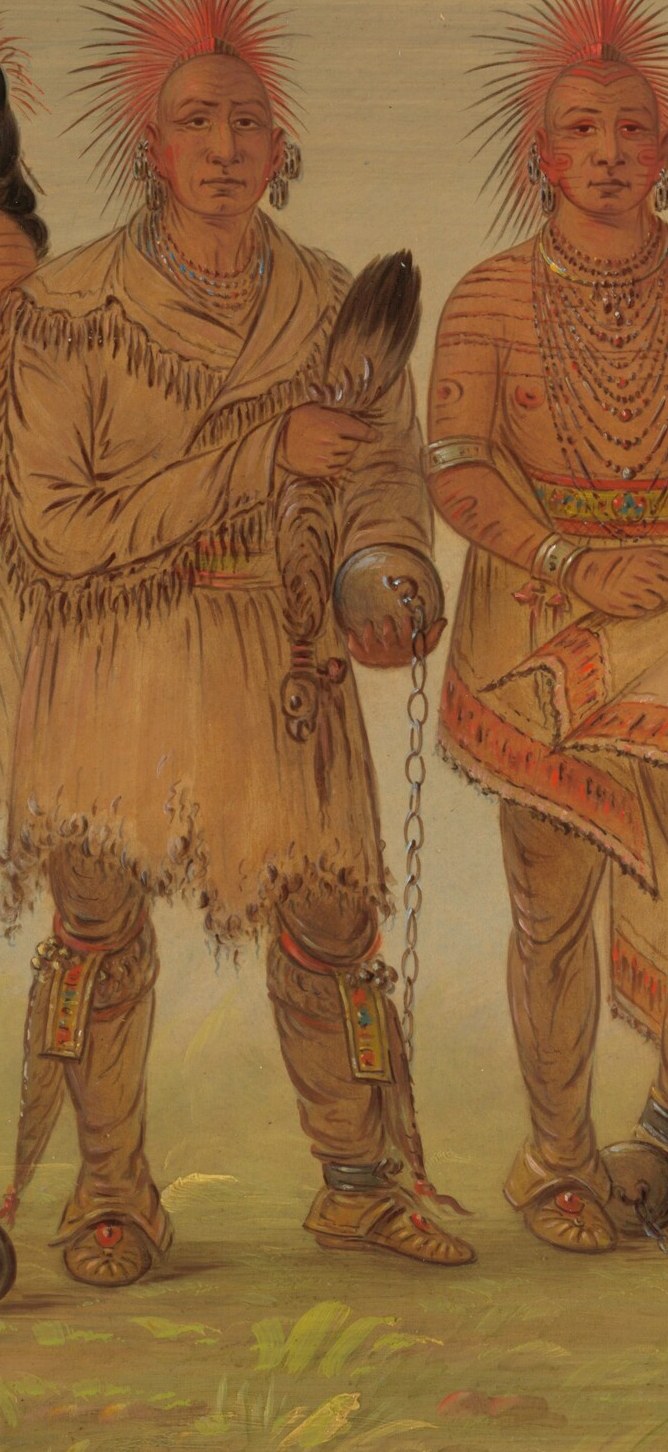
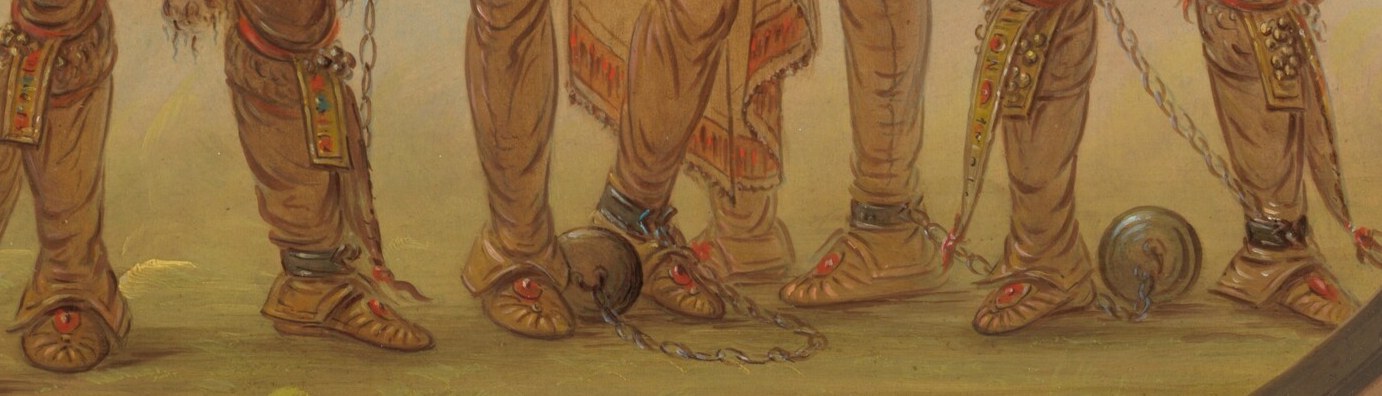
The painting focuses on the figures, showing Black Hawk and five other Sauk men in traditional attire, even as they are bound by metal chains. Details like the beaded necklace and a single feather hint at their cultural identity, despite their confined circumstances. The artist's straightforward, realistic style emphasizes the solemnity of the scene, with a muted landscape in the background keeping the focus on the individuals.
Catlin's career began with documenting Indigenous life during his travels through the American frontier in the 1830s. By the 1860s, his work shifted to reflect the consequences of U.S. policies towards Indigenous nations, making this piece a powerful example of his later, more somber perspective.
What stories do you see in the expressions of these men?
Details
Transcript
This painter specialized in portraits of Native Americans. He sought to document Indigenous life across the American West. Here, he depicts Black Hawk, a Sauk leader, in captivity. His companions, also Sauk prisoners, wear traditional adornments. The heavy chains are a stark symbol of their imprisonment. This somber painting reflects Catlin's later focus on U.S. policies.