清 王翬 倣巨然燕文貴山水圖 卷|Landscape in the Style of Juran and Yan Wengui by Wang Hui
Wang Hui's 1713 handscroll performs a quiet magic trick with ink and paper. Painted when the artist was 81 years old, it explicitly channels the styles of tenth-century masters Juran and Yan Wengui, reaching back seven centuries in a gesture of scholarly reverence. The scroll lives at the intersection of memory and material.
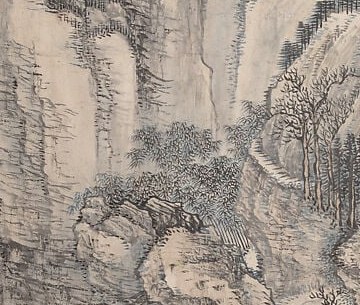
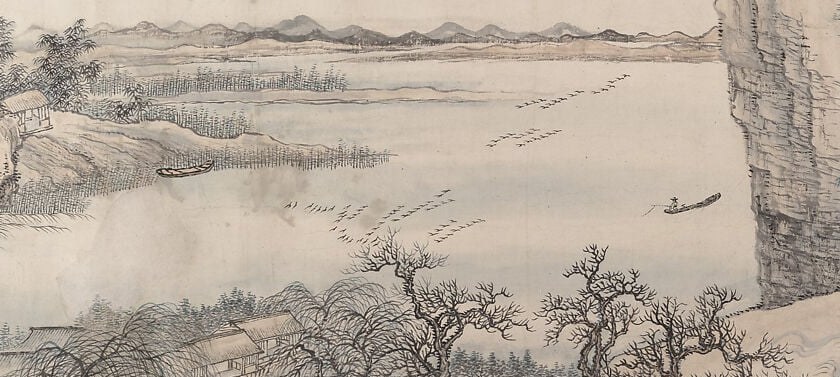
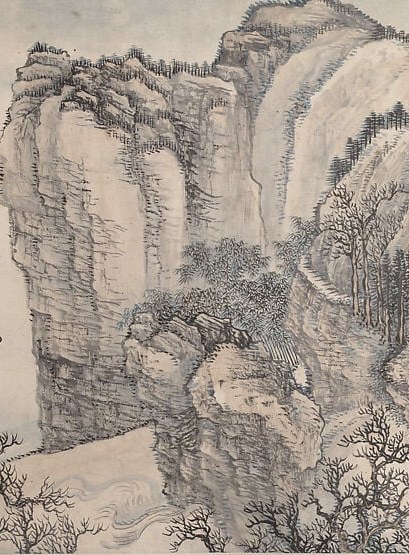
Watch the right cliff face up close. Its mass is conjured from 'hemp-fibre strokes', a disciplined texture method passed down through Chinese painting lineages. Each tiny line pulls its weight, layering into a rock face that feels utterly solid. Then, just inches away, the mist erases everything. That mist is not painted white. It is the naked paper, left untouched so the water beneath the mountains reads as boundless air and light.
This was never made for a gallery wall. A handscroll is an intimate format, unrolled section by section by one viewer at a time, the landscape revealed like a journey. Wang Hui, the last of the great 'Four Wangs' of the early Qing dynasty, spent his long life synthesizing a thousand years of brush language into works like this one. It is both a new painting and a conversation with ghosts.
A tiny boat sits on the open water, nearly invisible. In the vast silence of the scroll, it is the only sign a human was ever here.
Details

Transcript
A mountain, a river, some mist. Easy. Now get close to the cliff. This mass is built from a thousand tiny lines. They are called 'hemp-fibre strokes'. An ancient brush texture Wang Hui mastered to make painted rock feel heavier than real rock. Now look at the mist. There is no white paint here. This is the blank paper. The pure absence of ink makes the water feel infinite. The painter was 81. He called this 'Landscape in the Style of Juran', an artist from seven centuries before.