The Adoration of the Magi by Angelico, Fra
View the artwork: The Adoration of the Magi →
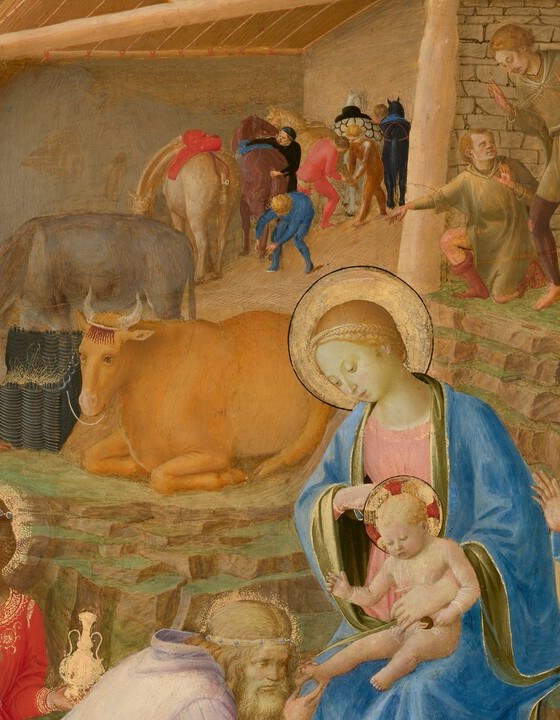
This is The Adoration of the Magi, a circular tempera panel painted in Florence around 1440 to 1460 and now held at the National Gallery of Art in Washington, D.C. It was begun by Fra Angelico and completed by Filippo Lippi, two of the most important painters of the early Renaissance, which makes the tondo a rare documented collaboration between major Florentine masters.
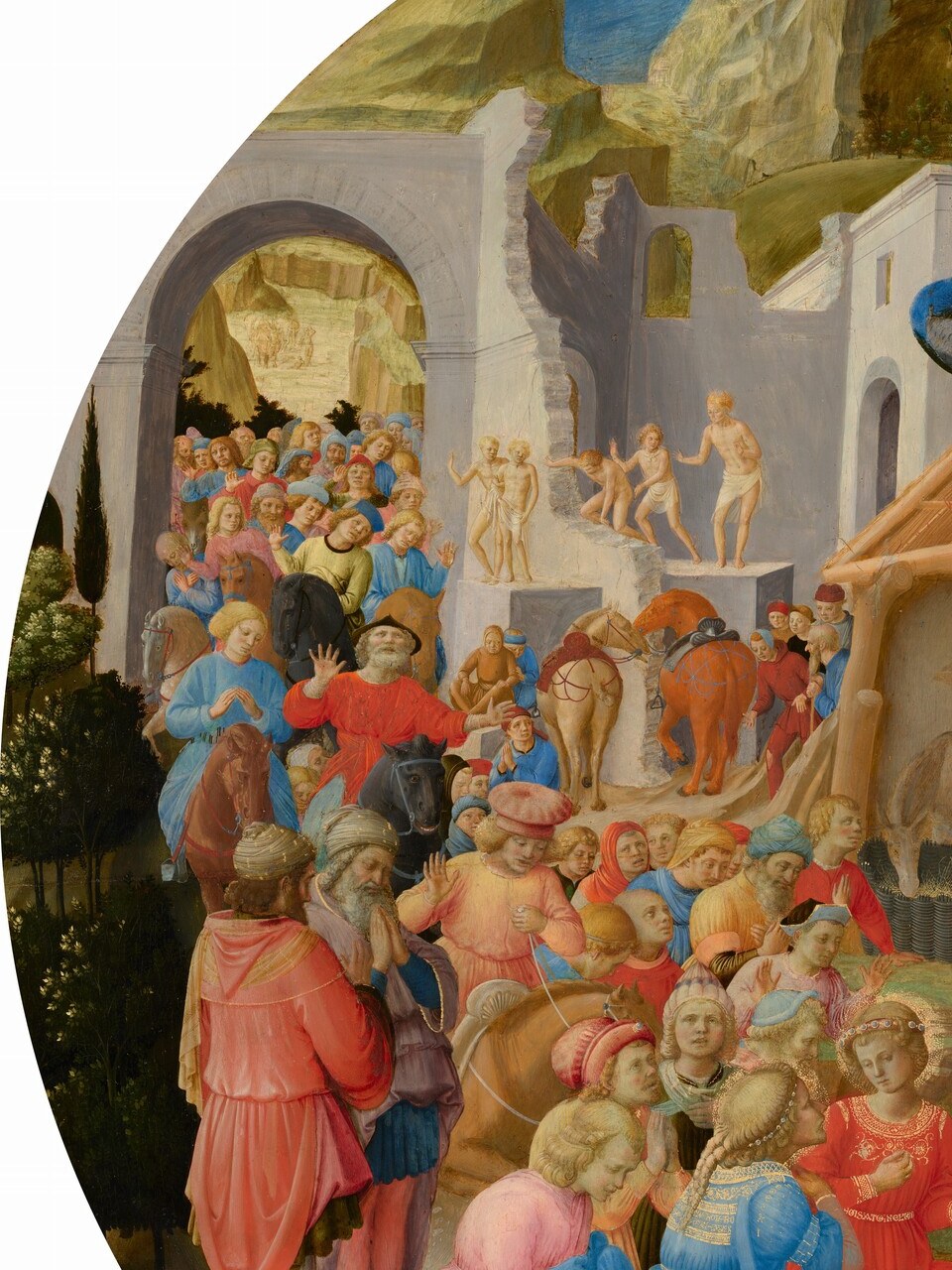
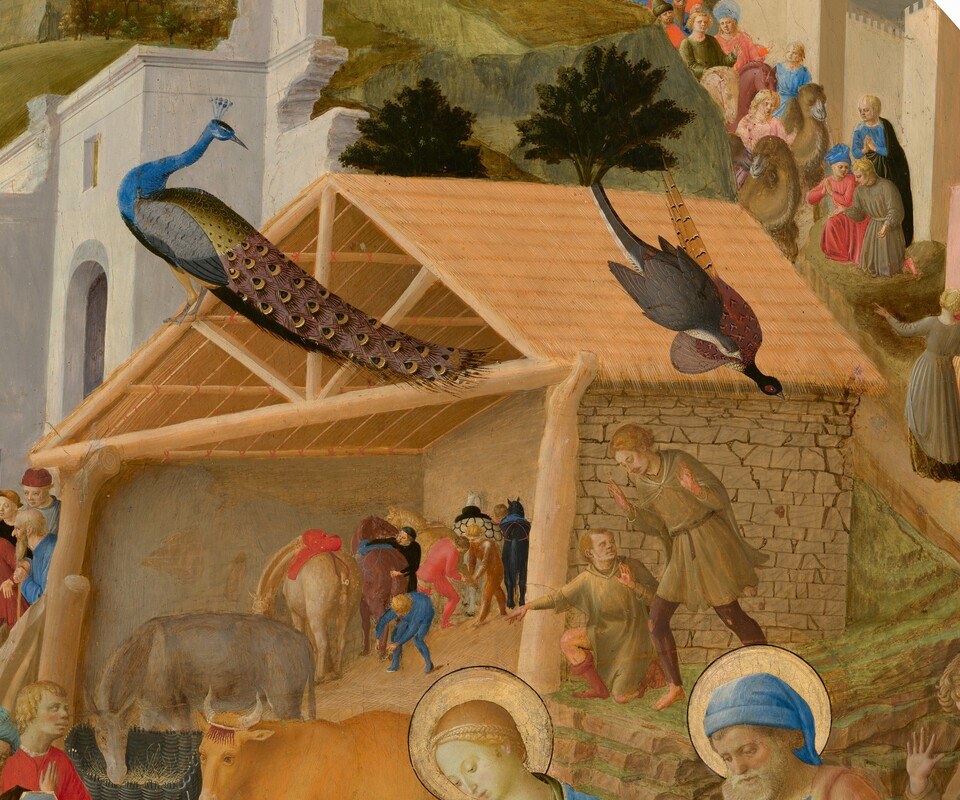
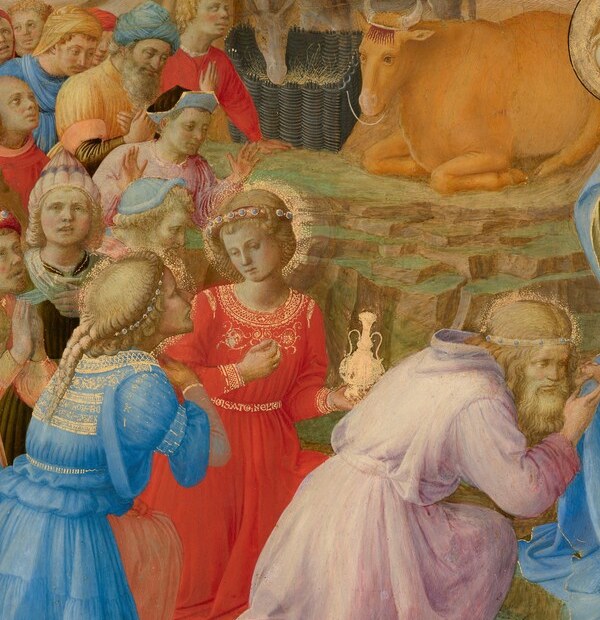
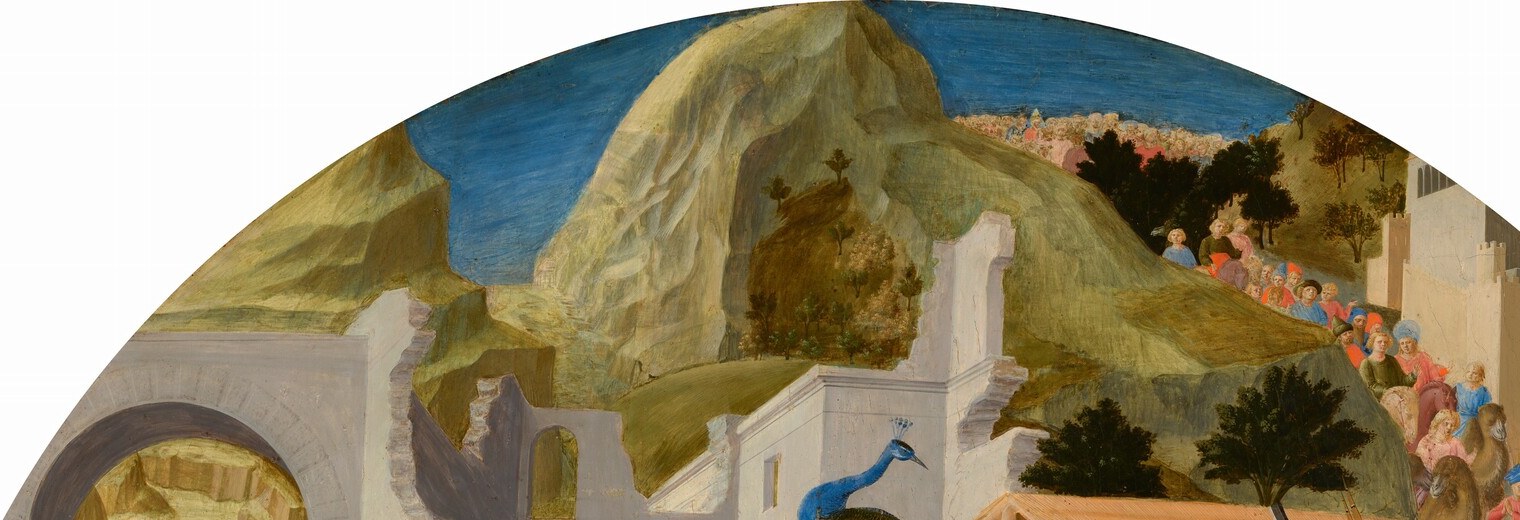
The painting rewards slow looking. Above the Christ Child, a peacock stands on the stable roof: a Renaissance symbol of bodily resurrection and eternal life, placed there as a coded prophecy of the Passion. The three Magi form a visual cascade of submission, the eldest prostrate at Mary's feet, the second and third approaching with gifts, each body more humble than the last. Across the left half of the composition, a dense retinue of attendants fills the scene with dozens of individualized faces, turbans, and rich courtly robes.
Those faces are part of why this painting mattered so much. Most scholars agree the crowd includes covert portraits of the Medici family and their circle, embedded as witnesses to the holy event. The tondo was likely commissioned by Cosimo de' Medici for the family's private residence, and by 1492 it was listed in Lorenzo de' Medici's estate inventory as the most valuable artwork he owned, above works by Botticelli and Donatello. Over the centuries it passed through several collections, picking up the names "Washington Tondo" and "Cook Tondo" along the way.
The gold gift vessel held by one of the Magi deserves a moment of attention, too. It was painted with tempera gold leaf that catches actual light rather than imitating it with pigment, a small technical choice that makes it glow differently from everything around it, drawing the eye across the crowd.
#arthistory #earlyrenaissance #fraangelico
Details
Transcript
Florence, around 1450. The Medici bank runs Europe. Their private chapel holds this tondo, a single circular panel of the Adoration. The eldest king collapses before the child. Look up. A peacock perches on the stable roof. In Renaissance art, the peacock meant resurrection, a prophecy of the Passion placed directly above the infant. Now look at the crowd. Dozens of faces, each one distinct. Art historians believe these are not generic attendants. They are portraits of the Medici circle. By 1492, Lorenzo de' Medici's estate listed this as his single most valuable painting.