Artwork
The Adoration of the Magi
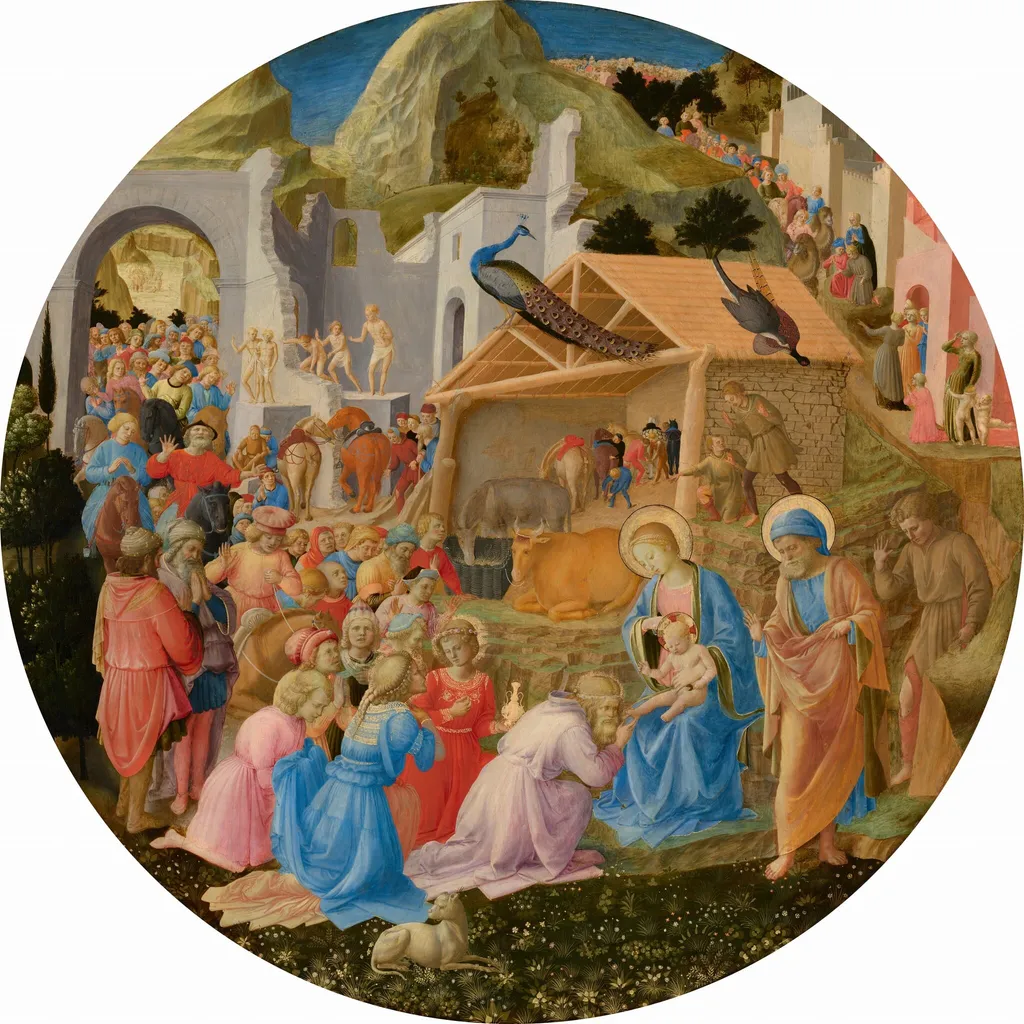
The Adoration of the Magi is a tempera painting by the High Renaissance artist Fra Angelico. It dates from 1450 and is held in the collection of the National Gallery of Art.
About this work
Cosimo de' Medici likely commissioned it for the family’s bedroom in Florence; by 1492 it was the most valued painting in Lorenzo de' Medici’s estate inventory.
A long procession of Magi and their retinue winds around a grassy hill and passes under a ruined arch toward the Virgin Mary and Christ Child in this monumental Florentine tondo. Painted in tempera on poplar panel around 1440–1460, the work was begun by the Dominican friar Fra Angelico and completed after his death by Fra Filippo Lippi. Cosimo de' Medici likely commissioned it for the family’s bedroom in Florence; by 1492 it was the most valued painting in Lorenzo de' Medici’s estate inventory.
Subject & Meaning
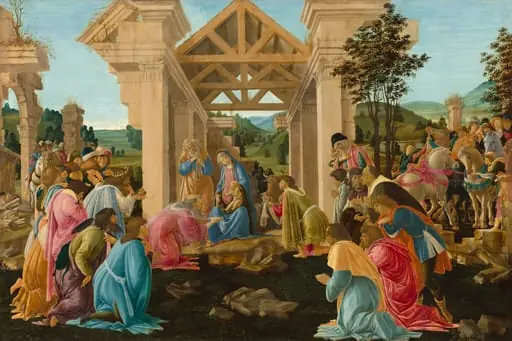
The painting depicts the Adoration of the Magi combined with the Adoration of the Shepherds. The three Magi present gifts to the Christ Child held by Mary, with Joseph nearby and the manger, ox, and ass behind. A large retinue processes through a ruined classical arch, while shepherds and townspeople populate the scene.
Iconographic symbols include a peacock atop the stable, representing immortality, and a goshawk seizing a pheasant, symbolizing immortality and redemption. Nearly naked youths standing on ruins signal an early Renaissance preoccupation with human anatomy. The composition, with its complex spatial arrangement and mixture of medieval splendor and emerging naturalism, is seen as a transition from medieval to Renaissance art, a 'crossroad of art.'
Technique & Style
The Adoration of the Magi is a circular panel painting (tondo) executed in tempera on poplar, measuring about 137.3 cm in diameter. Its creation spanned a considerable period, with Fra Angelico initiating the work (likely in the 1440s) and Filippo Lippi later completing it, along with contributions from workshop assistants. This multi-stage execution resulted in notable discrepancies in scale and spatial coherence, such as the oversized peacock and incongruities around the ruined arch.
Stylistically, the painting marks a transition: the vibrant, decorative late-medieval tradition gives way to Renaissance concerns with anatomy, perspective, and naturalistic observation. Angelico’s refined handling appears in the Madonna and the rosy city walls, while Lippi’s more incisive chiaroscuro and classical ruins dominate the left side. The work underwent a restoration in 1947–1948 that recovered much of its original appearance.
History & Provenance
The tondo was likely commissioned by the Medici family, possibly for the birth of Lorenzo de' Medici (1449), and is recorded in the 1492 inventory of the Palazzo Medici as by Fra Angelico. Its creation was protracted: Fra Angelico began the work in the 1440s, but it was completed by Filippo Lippi in the 1450s, with contributions from workshop assistants. The painting passed through several hands: from the Medici to the Guicciardini family, then sold in 1810 to François-Honoré Dubois.
It later entered the collection of Sir Francis Cook and remained with the Cook baronets until 1941, when it was sent to the United States. In 1952 it was donated by the Samuel H. Kress Foundation to the National Gallery of Art in Washington, D.C.
The Adoration of the Magi is held at the National Gallery of Art in Washington, D.C., as part of the Samuel H. Kress Collection. It was acquired by the Samuel H. Kress Foundation in 1947 and donated to the gallery in 1952. Previously, the painting was in the Cook collection in England, where it was known as the Cook Tondo, and it was sent to the United States for safekeeping during World War II in 1941. No specific exhibition history beyond its transfer is documented in the provided sources.
Context
Art historians widely agree that the Washington Tondo was produced over an extended period with significant compositional changes and contributions from multiple hands, including assistants from the workshops of both Fra Angelico and Filippo Lippi. Bernard Berenson first advanced the reconstruction of its production stages, initially attributing the completion to Filippo Lippi, though he later revised his view. John Walker, the second director of the National Gallery of Art, called the work “among the greatest Florentine paintings in the world” and described it as standing at a crossroad of art, encapsulating the transition from the medieval fairy-tale style to the scientifically observant Renaissance.
The painting’s critical history includes earlier attributions to Botticelli, Benozzo Gozzoli, and Filippino Lippi, reflecting scholarly confusion until the double-master consensus emerged. John Pope-Hennessy later confirmed the sequential intervention of both masters, anchoring the tondo as a landmark in early Renaissance Italian painting.
Legacy
The work, often referred to as the Cook Tondo or Washington Tondo, has maintained a significant reputation in art history, hailed as a climax of beauty that encapsulates the evolution of Italian painting from the medieval to the early Renaissance. This tondo is also noted as one of the earliest autonomous circular paintings (tondi) conceived as independent artworks rather than domestic objects. Despite its complex attribution and multi-stage creation, the painting's name, derived from the Cook collection, has persisted for decades after leaving that collection, attesting to its lasting legacy as a pivotal work that stands at the crossroads of artistic styles.
Overview
This monumental circular painting, known as The Adoration of the Magi, depicts the biblical scene of the Magi's homage to the Christ Child. Executed in tempera on a poplar panel, the work dates from the mid-15th century, approximately 1440–1460. It was initiated by Fra Angelico and subsequently completed by Fra Filippo Lippi, reflecting a significant collaboration between two prominent Florentine masters. The artwork is currently housed at the National Gallery of Art in Washington, D.C.
Own this work as a print
Artist & collection

Artist
Fra Giovanni da Fiesole (born Guido di Pietro; c. 1395 – 18 February 1455), known posthumously as Fra Angelico ( FRAH an-JEL-ik-oh, Italian: ), was an Italian Dominican friar and painter active during the early…

- The Adoration of the Magi
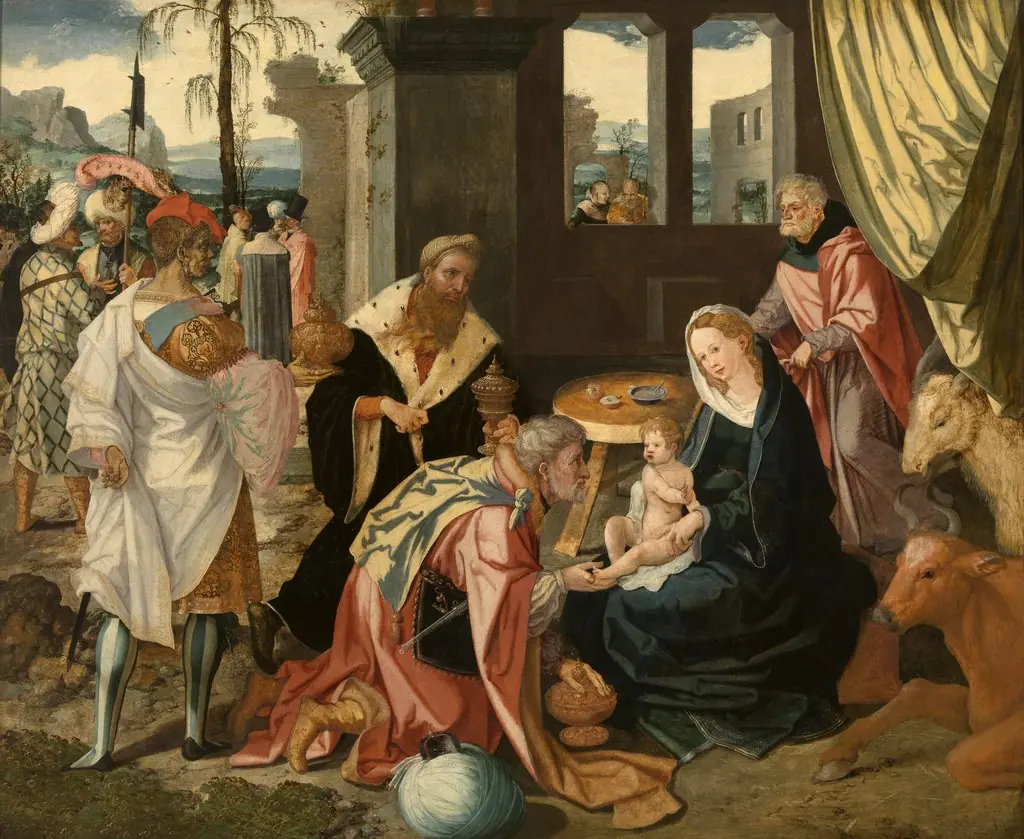 The Adoration of the Magi
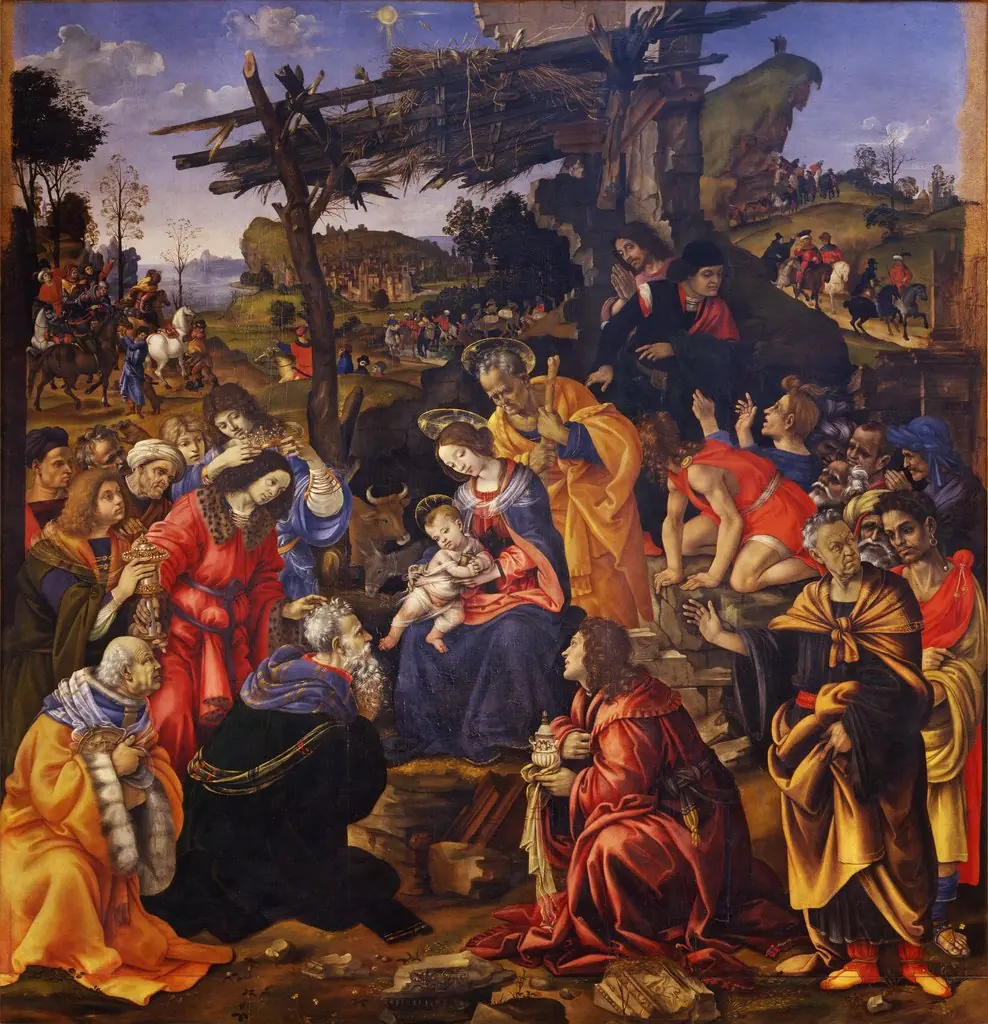 Adoration of the Magi
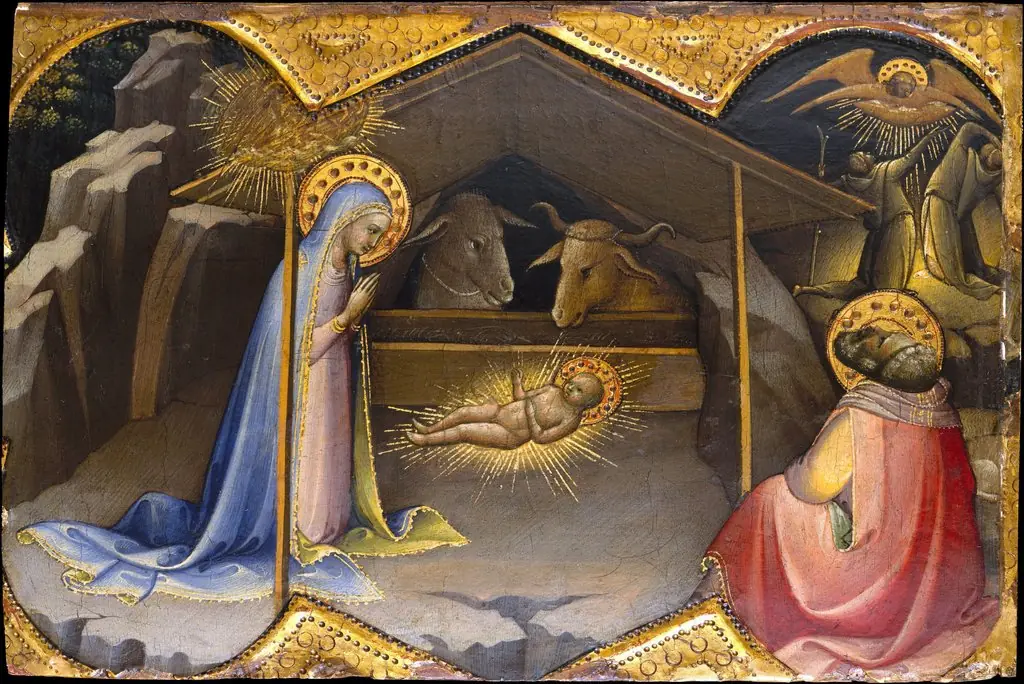 The Nativity
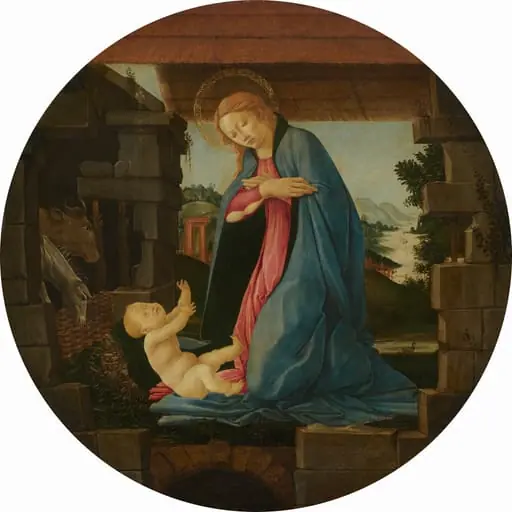 The Virgin Adoring the Child
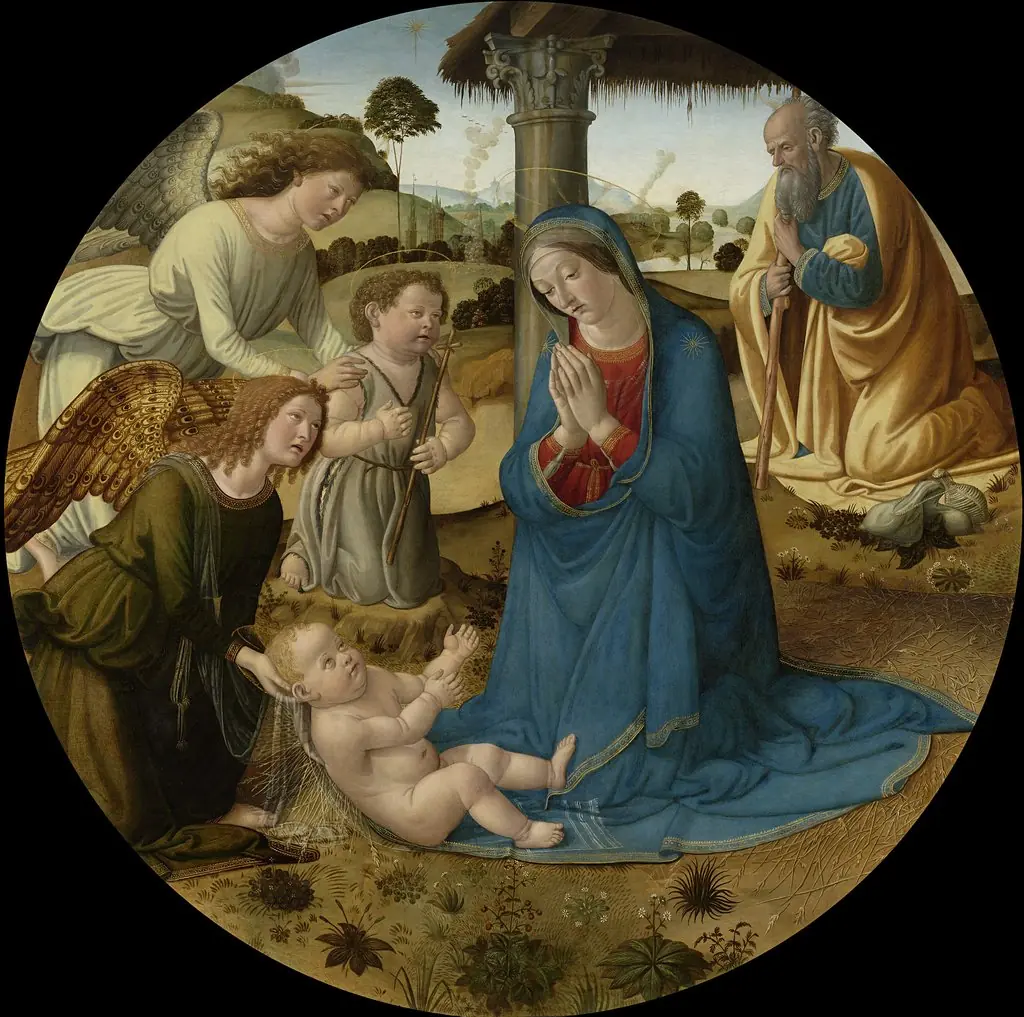 The Adoration of the Christ Child
 De aanbidding van het Christuskind
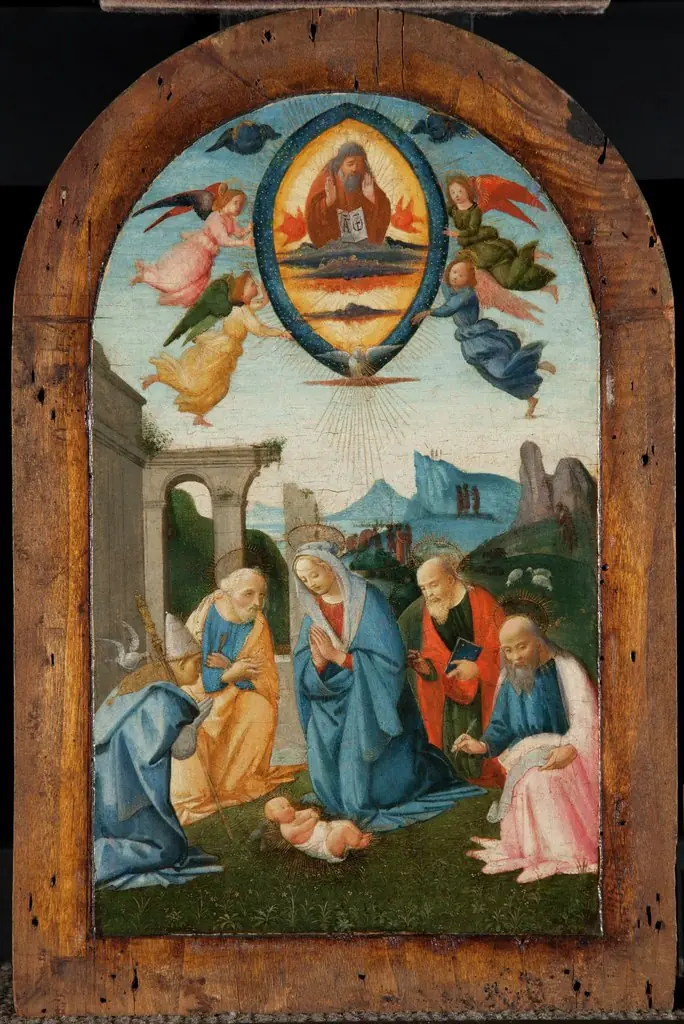 The Madonna and Four Saints Adoring the Infant Jesus
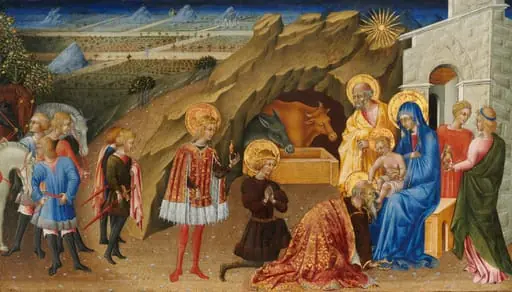 The Adoration of the Magi
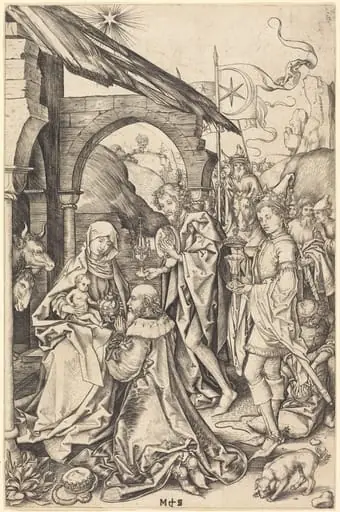 The Adoration of the Magi
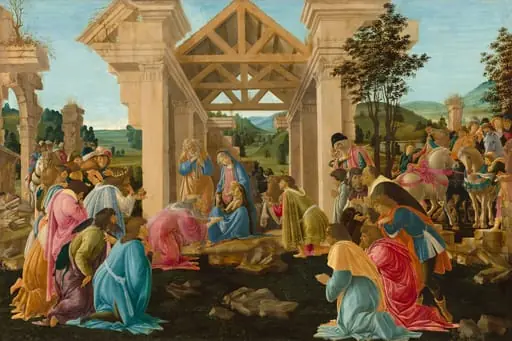 The Adoration of the Magi
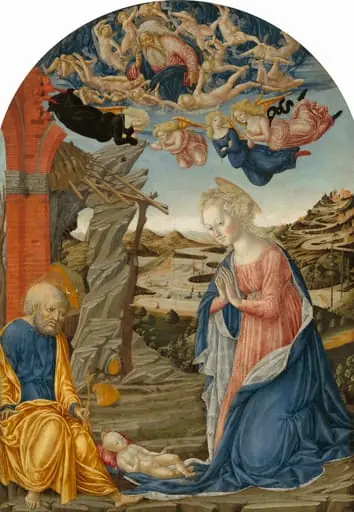 The Nativity, with God the Father Surrounded by Angels and Cherubim
 Studied in the Renaissance Florence course